
FAQ
Valley Glen landscaping questions, answered
What homeowners in Valley Glen ask us most.
All of it. We work the neighborhoods around Los Angeles Valley College, the residential streets off Burbank Boulevard and Victory Boulevard, and everything between Coldwater Canyon and Woodman. Valley Glen is compact enough that no address in it is a stretch for us, and we serve the surrounding central valley communities as well, so crews are already working nearby most weeks. If you are unsure whether your street counts as Valley Glen or one of the neighboring areas, it does not change anything for us. Give us the address and we will come look.
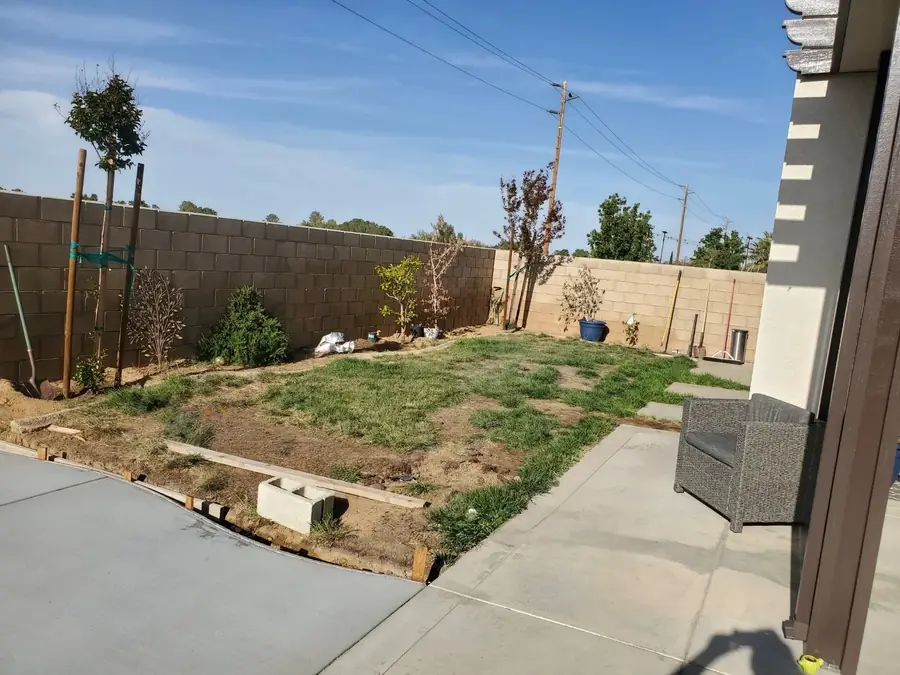
Usually a flat backyard on a standard lot that has not been touched in a long time. Old lawn that struggles every summer, a cracked patio slab, a few overgrown shrubs against the fence, and no real reason to spend time out there. The work tends to involve replacing the ground plane with something that survives the heat, building a usable patio or outdoor living area, adding shade and privacy planting, and updating irrigation so the new material actually lives. Front yards here are often done at the same time since the curb reads as one piece with the house.
Rarely. Flat ground means we are setting slope deliberately rather than fighting an existing grade, which is the easier problem. What we do watch for is water having nowhere obvious to go. On a lot with almost no natural fall, poorly planned hardscape can trap runoff against a foundation or leave standing water on a patio after a storm. We set positive drainage away from the house, run area drains where the layout calls for it, and pitch paving so it sheds. It is routine work here, just work that has to be done correctly rather than assumed.
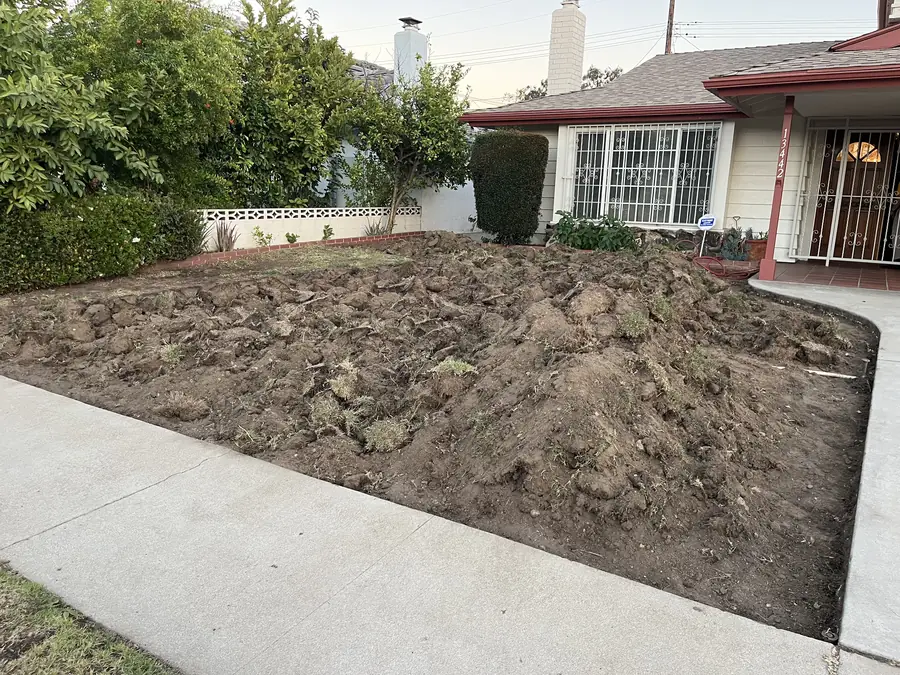
Central valley soil, generally workable, though on older Valley Glen properties it is often compacted hard from decades of foot traffic, old lawn, and construction. Compacted soil sheds water instead of absorbing it, which is why some yards seem to need constant irrigation and still look thirsty. Part of preparing a planting area is breaking that up and amending it so roots can actually establish. We evaluate what is there before we plan planting, because putting good material into poor ground is the fastest way to end up replacing it in two years.
Considerably. Valley Glen yards take direct sun for most of the day through a long, hot, dry summer, so plant material has to be chosen for that reality rather than for how it looks at the nursery in spring. We lean toward heat tolerant and drought adapted species that hold their form through the worst months, and we place anything more tender where it will get afternoon relief. Getting this right is the difference between a garden that matures into something and one you are patching every year.
Yes, and in Valley Glen it is usually the first thing worth solving. Shade comes from a few directions: built structures such as pergolas, covered patios, and shade sails, and planted shade from trees positioned where they will do the most good in late afternoon. Built shade works immediately, planted shade improves for years, and the two together are generally the right answer. We plan shade early in the design because it determines where the seating goes, which determines the rest of the layout.
Lots here are regular in size and homes sit at reasonable distances, so privacy is usually about specific sightlines rather than screening everything. We identify where you are actually being overlooked, a neighbor's second story window, a side yard gate, a view straight down the property line, and address those points with layered planting, a taller fence section, a trellis, or a structure placed to block that line. Selective screening keeps the yard feeling open, which matters on a flat rectangular lot where a wall of hedge on every side would make it feel like a box.
It depends on scope. Planting, irrigation, artificial turf, patios at grade, and most decorative hardscape generally do not require permits. Things change when you get into structures with footings, retaining walls above a certain height, electrical circuits, gas lines, or anything that alters drainage in a significant way. Valley Glen falls under the City of Los Angeles, so those requirements come from LADBS. We tell you plainly during the estimate whether your project triggers a permit and we handle that process rather than leaving it in your lap.
It depends entirely on scope, and we will not quote you a number before we have seen the yard. A planting and irrigation refresh is a short job. A full renovation with concrete, masonry, an outdoor living area, lighting, and new planting runs considerably longer, and concrete needs curing time that cannot be rushed. What we will give you is a realistic schedule in writing before we start, and a straight answer if something like weather or a material lead time moves it. Vague timelines are how projects go sideways.
One licensed contractor, always. Daniels Landscaping stays accountable for the work. The people who show up at your Valley Glen home work under one licensed contractor, trained by us, working to our standards, and accountable to us. That is why our work is consistent from one project to the next and why there is never confusion about who is responsible for what. When you hire us, you get us.
Southern California water rules change over time and we design for that rather than against it. In practice that means efficient irrigation, drip for planting beds instead of overhead spray where drip makes sense, proper zoning so thirsty and drought tolerant areas are not watered on the same schedule, and smart controllers that adjust to weather. Combined with plant material suited to Valley Glen heat, a well built system uses noticeably less water than the old lawn and spray setups on many of these postwar properties. Efficiency is a design decision, not an add on.
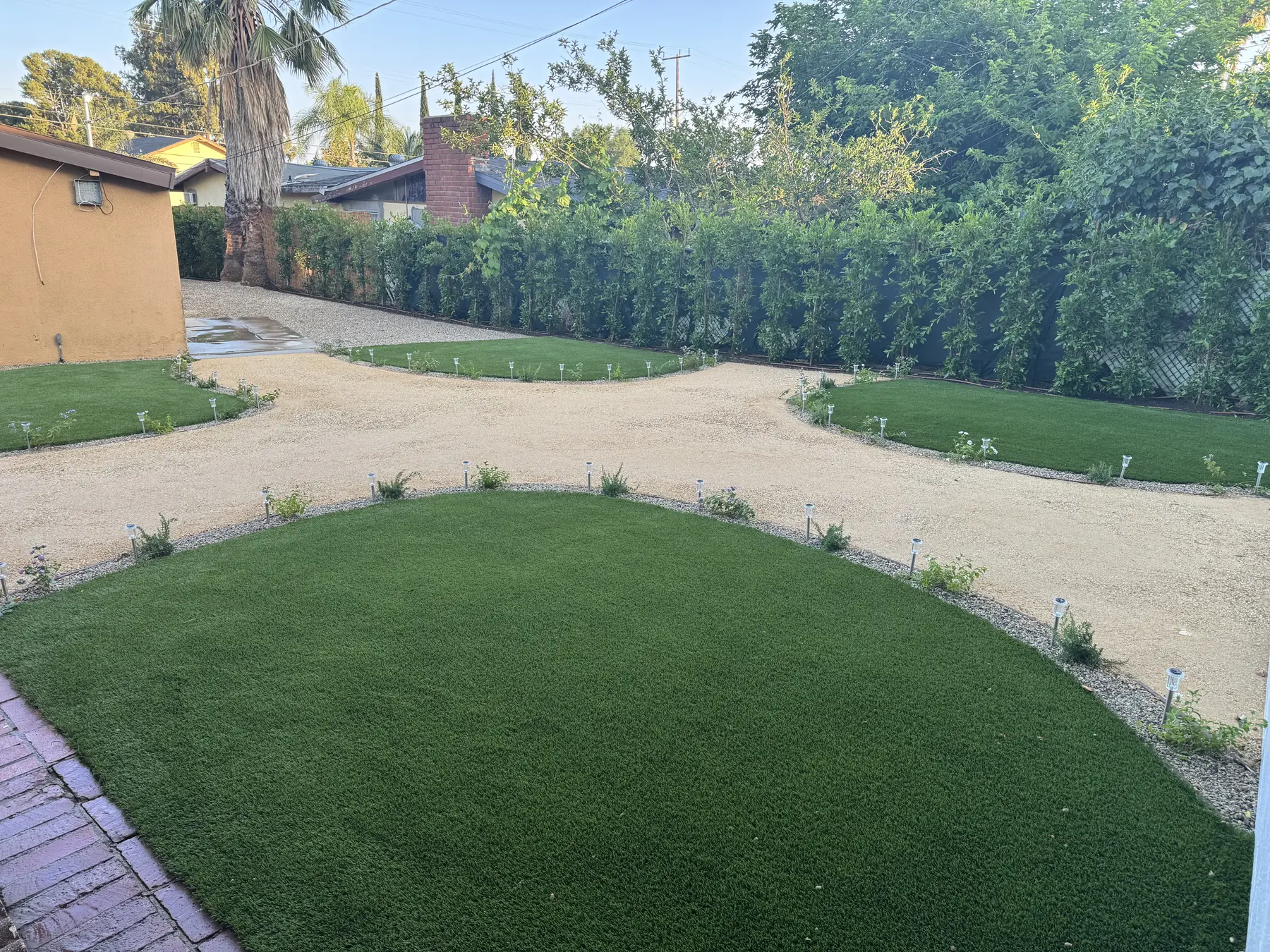
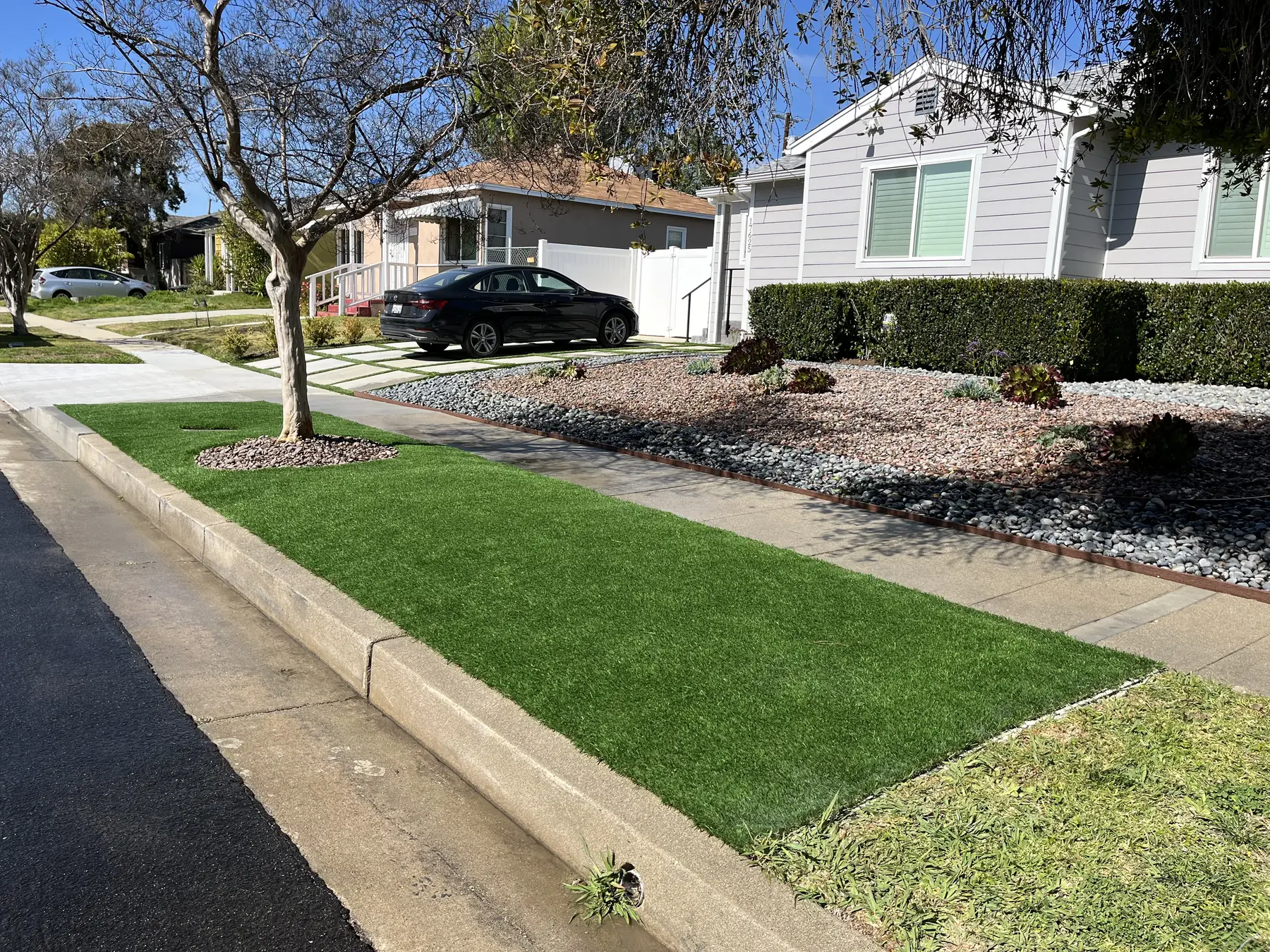
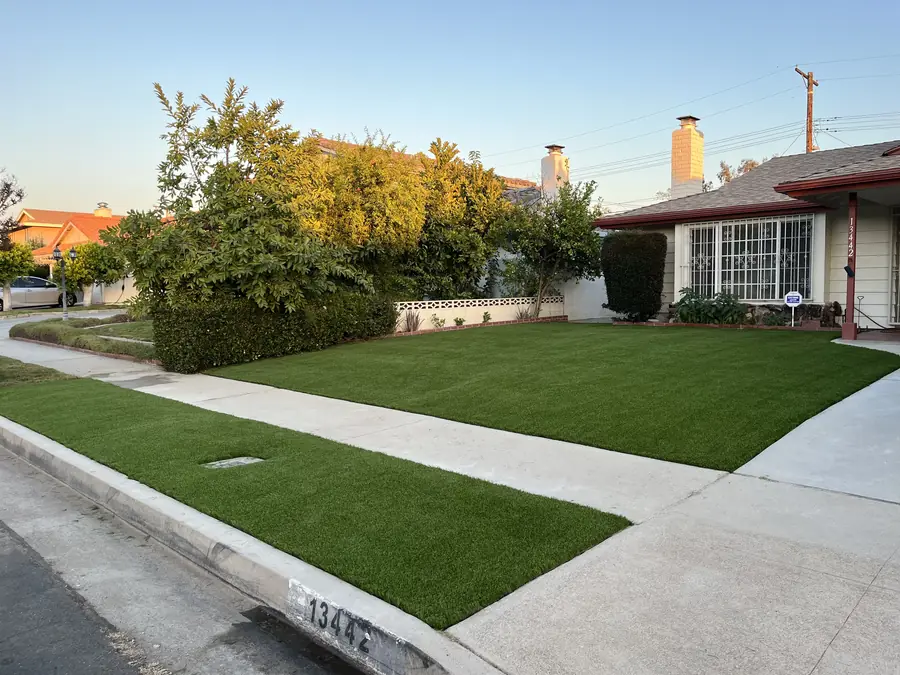
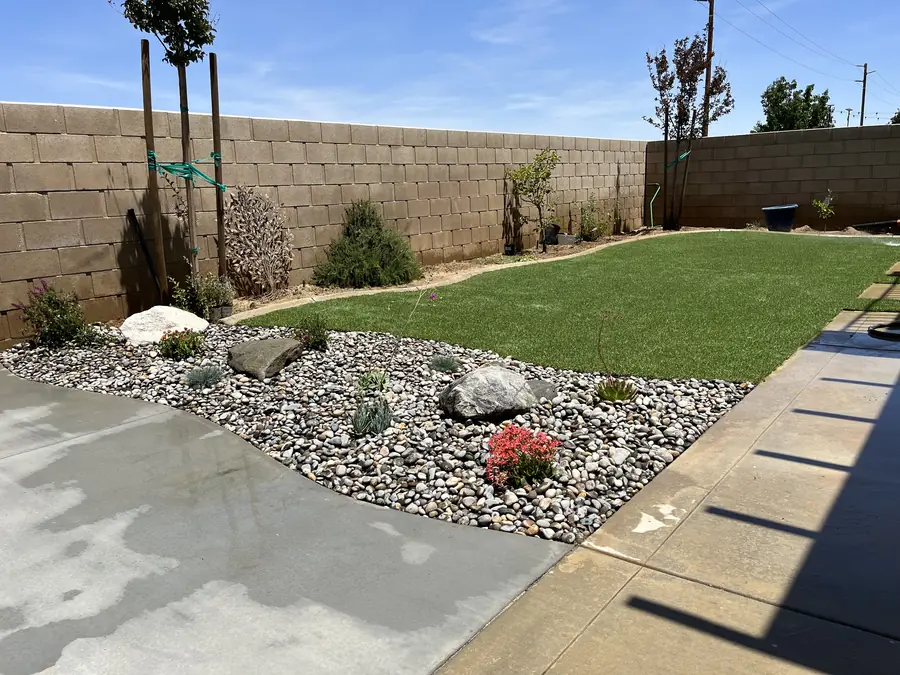
It works well for a lot of these yards, particularly where a family wants usable green space that survives full sun and a hot summer without constant water. The important part is installation. Turf needs proper base preparation, real drainage, and clean edge detailing, or it wrinkles, holds heat and odor, and looks obviously fake within a couple of years. We install it as a construction assembly, not a rollout. Whether it belongs in your yard depends on how you actually use the space, and we will tell you honestly either way.
Most Valley Glen homes have a side yard gate and a driveway, which covers the majority of what we need. Where a gate is narrow, we adjust to smaller equipment and move material by hand rather than tearing out fencing. We keep staging tidy, load and unload at sensible hours, sweep the street, and keep the sidewalk clear. These are quiet residential blocks and we would rather your neighbors barely register that a construction project happened next door.
Both, and that is deliberate. We design the yard and we build it, so the plan is drawn by people who know exactly what it costs and how it goes together. There is no handoff where a designer's idea meets a builder's objection and you are stuck mediating between two companies. If something needs adjusting once we are on site, we make the call and explain it to you. One company holds the whole project from first sketch to final walkthrough.
Call us at (818) 443-9300 and we will set up a time to walk your property. We look at the yard, listen to what you want out of it, talk through what is realistic, and then put together a free written estimate that spells out scope and cost so you can review it without pressure. Daniels Landscaping is licensed in California, license number 1138709. There is no cost and no obligation for the estimate, so the first conversation costs you nothing but an hour.