
FAQ
Artificial Turf in Van Nuys, answered
The questions we hear most from Van Nuys homeowners.
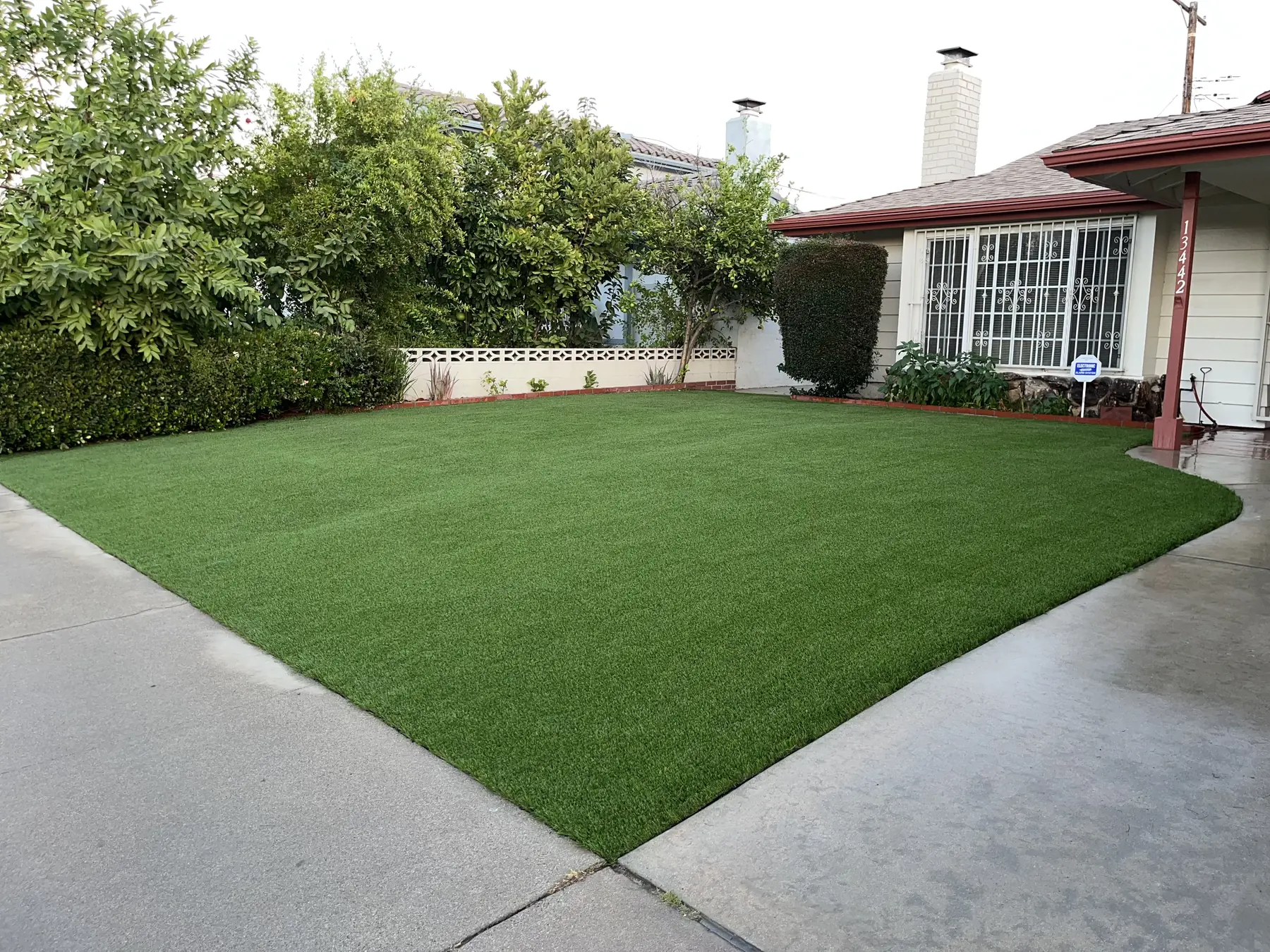
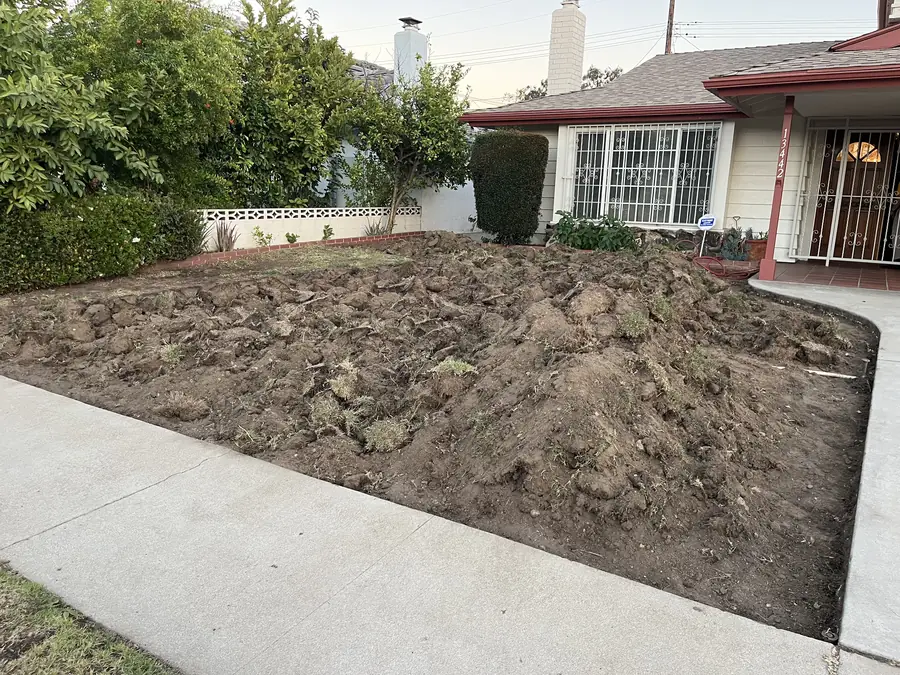
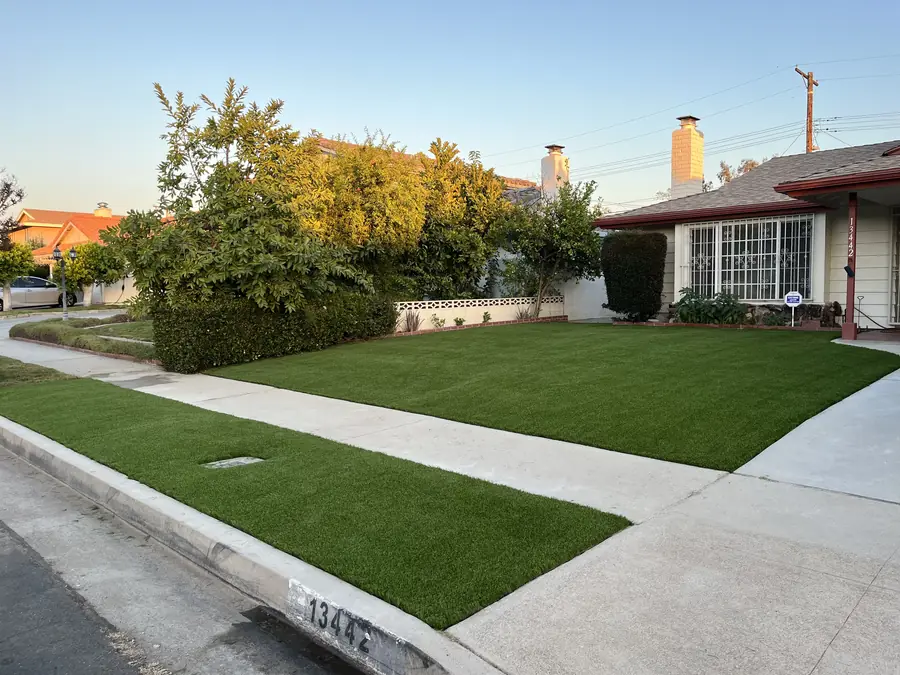
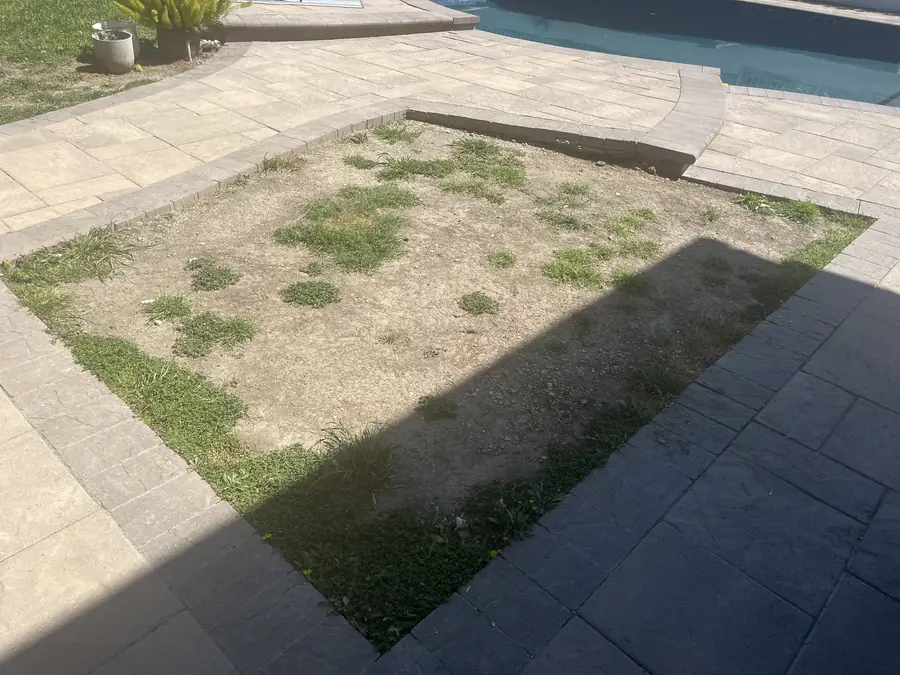
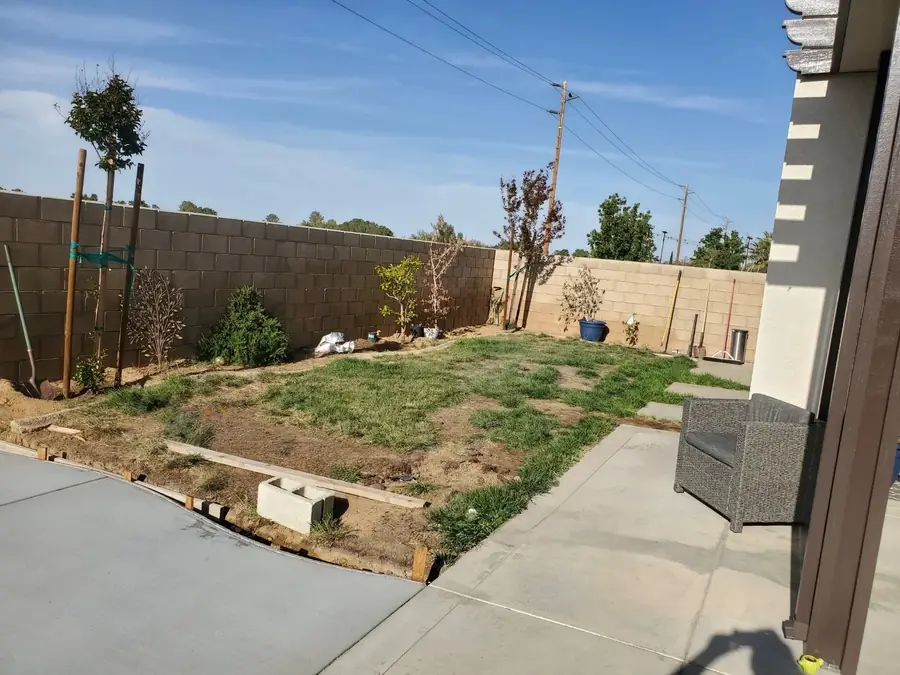
The old lawn and a few inches of soil come out first, then the subgrade is compacted and aggregate base is installed and compacted in lifts. The turf is rolled out and allowed to relax so the wrinkles fall out, then it is cut to the perimeter, seamed where two rolls meet, and fastened down along the edges and through the field. Infill is brushed in, and the blades are power broomed upright. Anything that belongs under the lawn, such as a drain line, goes in before the base is closed up.
Turf is a flexible sheet, so it reveals every flaw in what sits beneath it. A base that was not compacted properly settles into low spots and dips that read clearly across a green surface, and there is no correcting them without pulling the lawn back up. We excavate to a consistent depth, compact the subgrade, then install aggregate in lifts and compact each one. The surface is screeded flat before anything is rolled out. Level ground across Van Nuys makes this stage more predictable than it would be on a sloped property.
Face weight is the amount of yarn per square yard, and it is the closest thing to a density rating. Higher face weight means more fiber, a fuller look, and better recovery after being walked on. Pile height is simply blade length. Longer is not automatically better, because tall blades on a low density backing lay over and look matted. For a lawn that actually gets used, a moderate pile height with a solid face weight outperforms a tall thin product every time. We bring samples so you can feel the difference by hand.
Blade shape is one of the biggest factors in realism. Blade cross section, whether it is a C shape, an S shape, a W, or a diamond, controls how the fiber stands and how light reflects off it. Shapes with a spine resist matting and avoid the plastic sheen that dates older turf. Color helps as well. A quality product blends several green tones over a tan or brown thatch layer, because a real lawn is never one flat color. Under the unfiltered sun here, an overly uniform bright green reads artificial from across the yard.
Infill is the granular material brushed down between the blades, and it is not optional. It weighs the turf down so the sheet lies flat, supports the fibers so they stand upright, and shields the backing from sun. Silica sand is the standard. Coated or antimicrobial options are used where pets are a factor, and there are cooler alternatives for surfaces in constant exposure. Quantity matters as much as type, since a lawn that is underfilled will mat down and start looking worn well before the fiber itself has failed.
The backing is perforated, so water passes straight through the sheet into the aggregate base below, which is open enough to accept it. On level lots like the ones throughout this area, we still build a slight fall into the base so water travels toward a low point instead of collecting under the middle of the lawn. Where a downspout discharges nearby or a yard sits low against a fence line, a drain gets installed beneath the turf before it goes down. Turf sheds water faster than natural lawn once the base is right.
Warmer than natural grass, and that is worth knowing before you commit. Grass cools itself by releasing moisture and synthetic fiber cannot, so on a full sun afternoon in the middle of a Van Nuys summer, turf will be noticeably warm underfoot. A quick rinse drops the temperature right away. Cooling infills, lighter fiber colors, and shade from a tree or a patio cover over part of the lawn all reduce it. Where a yard has no shade at all, we talk that through openly beforehand rather than after the install.
Very well, and it is a common reason for the switch, since dogs wear out real lawn faster than it can recover. Urine drains through the perforated backing the same way rainwater does, and the base beneath is built to let it pass rather than hold it. Odor is managed with the right infill and a periodic rinse, and an enzyme treatment handles anything stubborn. Solids are picked up as usual and the spot rinsed. Dogs do not dig through a properly fastened and seamed lawn, and there are no bare patches or mud to track inside.
Seams are where amateur installations give themselves away. Every roll has a grain direction, so all pieces must run the same way or the seam will catch light differently on each side. We trim the selvage back precisely, join the pieces over seam tape with adhesive or seam nails, and keep blades from being trapped in the joint. Layout is planned in advance to place seams in low traffic and low visibility locations and to minimize how many are needed at all. A correct seam disappears once infill is brushed in.
The perimeter takes the most abuse, so it is fastened most heavily. Nails or staples go in at close spacing all the way around, driven into the compacted base. Where the lawn meets a paver or concrete edge, the turf is trimmed tight and fastened to a bender board or a nailer set at the correct height. Against planting beds we use a hard edge so soil and mulch cannot migrate onto the green. A loose edge is the first thing to lift and the easiest thing to prevent.
Service life depends on traffic, exposure, and the quality of the product. Manufacturers publish their own warranties and those vary by line, so we go over the specific warranty for whatever you select rather than quoting a general number. What we can say is that installation quality decides whether a lawn reaches its potential life. Fiber usually outlasts the base it sits on when that base was rushed. Keeping the infill topped up and brushing the blades occasionally keeps the surface performing instead of matting down early.
One licensed contractor, employed by Daniels Landscaping. Excavation, base, compaction, seaming, nailing, edging, and infill are all performed under one contractor. We do not pass turf installation to an outside company or to a labor broker. Turf is unforgiving work in the sense that every mistake stays visible on a flat green surface, and consistency comes from crews who install it week after week under the same standard. Keeping the work with our own people is how we control that, and it is how we stand behind the finished lawn.
The lawn portion of a yard is usually the single largest water user on a property, and turf takes that to zero apart from occasional rinsing. In a climate like this one, where summers are long, hot, and dry and a lawn needs constant irrigation just to stay alive, that is a meaningful change in monthly usage. We do not quote a figure, because it depends entirely on the square footage being replaced and how it has been watered. Local water agencies sometimes run rebate programs, though eligibility and terms are theirs to determine.
Sprinkler heads in the turf area come out and the lines serving them are capped below grade, which is simple enough but has to be done properly so nothing leaks under a finished lawn. Because so many yards in this area still run their original system, we usually find brittle pipe and worn valves while we are in there, and it is worth addressing then rather than after the turf is down. Zones that still serve planting beds stay live, and that is often a good moment to convert them over to drip.
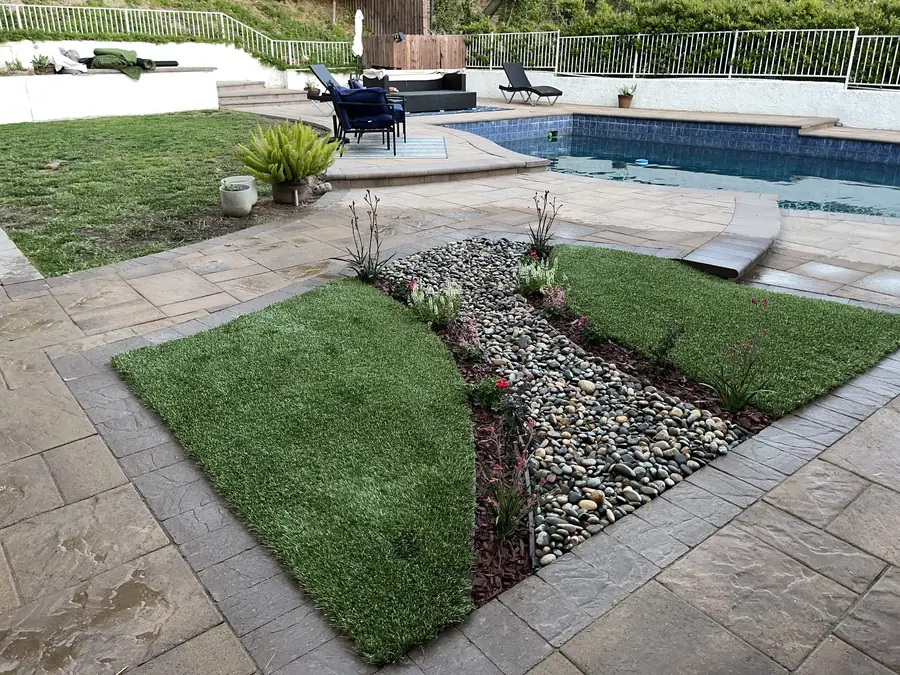
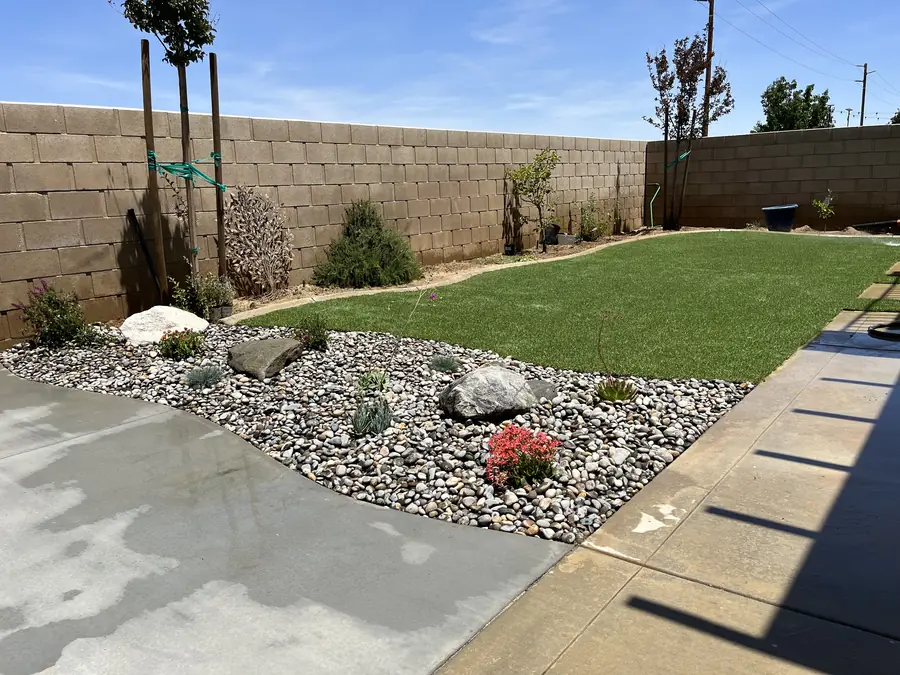
It performs best on open, level areas that get used: play space, dog runs, a green panel framed by planting, side yards where real grass never filled in. It is also a good answer under a dense tree canopy where grass never had enough light. We would not put it directly beneath a fire pit or a grill, since embers melt fiber, and we would think twice about a large expanse with no shade whatsoever unless a cooling approach is part of the plan. Mixing turf with planting almost always looks better than covering a yard wall to wall.
Not at all, and it usually should not. Properties here vary widely in size and condition from one part of Van Nuys to the next, so the right amount of turf on one lot is the wrong amount on another. A small yard may want a single clean green rectangle with beds around it. A larger property often looks better with a defined turf area that serves a purpose, connected by paving, with drought tolerant planting filling the rest. Turf is a material, not a default, and the layout decides how convincing it looks.
Turf is sold in tiers, and the differences are real: fiber quality, face weight, backing construction, and warranty terms all move together. A lower tier product installed over a properly built base will still outperform a premium product laid on rushed groundwork. Since practical budgets are the norm around here, our usual advice is to hold the base specification firm and adjust the turf selection to fit, rather than the other way around. We lay samples side by side so the decision gets made by hand and eye instead of by a spec sheet.
Call (818) 443-9300 and we will come measure the area, look at drainage and shade, and go through turf samples with you on site. You will receive a free written estimate covering square footage, the specific product selected, base depth, infill, and everything included in the installation. Our California contractor license number is 1138709. Nothing is charged for the consultation or for the written estimate, and you are welcome to take it and think it over for as long as you need.