
FAQ
Landscaping in Van Nuys, answered
The questions we hear most from Van Nuys homeowners.
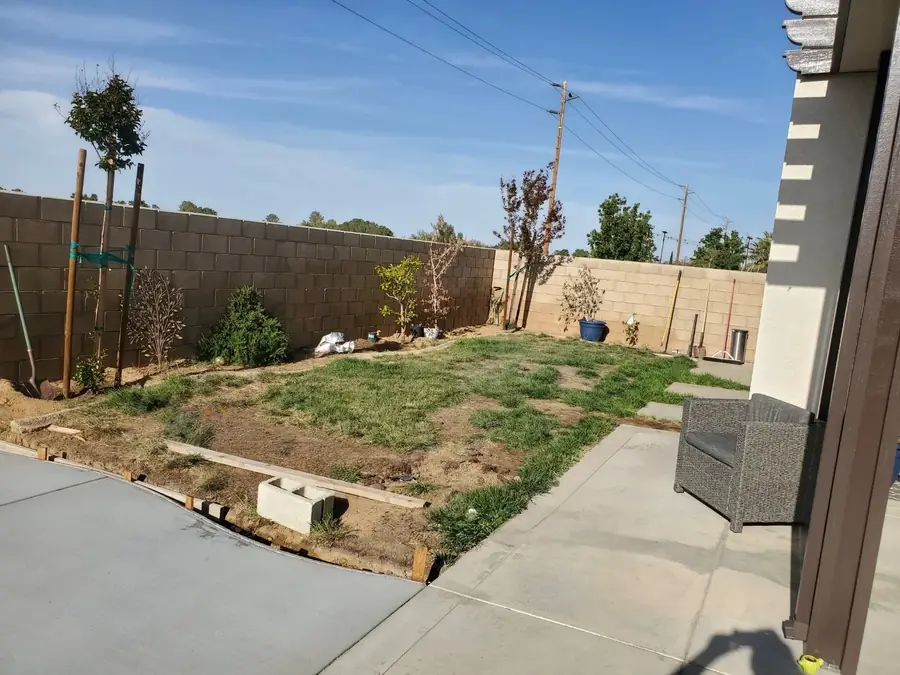
The scope runs from bare ground to finished yard. We clear and haul off what is there, set rough grades, work the soil, trench and install irrigation, place any edging or borders the plan calls for, fine grade, then plant trees first, shrubs next, and ground cover last before mulching and cleaning up. Drainage lines and lighting sleeves go in while the trenches are still open. On most Van Nuys lots the site prep moves quickly because the ground is level, which leaves more of the budget available for planting and irrigation.
Yes, and the order is not flexible. Demolition comes first, then grading, then anything that goes underground such as irrigation lines, drainage, and sleeving. Hardscape edges and surfaces follow. Planting is always last, and mulch after that. Skipping ahead creates rework, because a trench cut across a finished bed means digging up plants that were just set. Following the sequence also keeps heavy equipment off ground that has already been prepared, so the soil in your planting beds stays loose instead of being compacted by machine traffic.
Level ground still needs shaping. Flat is not the same as draining, and water that has nowhere to go will sit against a foundation or pool in the middle of a lawn. We build a gentle fall across the yard, usually shallow enough that nobody notices it by eye, and direct it toward a drain, a swale, or the street. The advantage of the terrain here is that we are creating slope rather than fighting it, so there is no terracing, no retaining, and no erosion control eating into the scope.
We lean on material that expects heat rather than merely tolerates it. Olive, desert willow, and crape myrtle carry the canopy, then rosemary, westringia, salvia, lantana, agave, and ornamental grasses fill in below. These hold color and form through the worst of the summer without daily water. Where a client wants something lusher, we group the thirstier plants into one zone near the house so they can be watered separately instead of forcing the whole yard onto a high water schedule. Exposure gets checked plant by plant before anything is ordered.
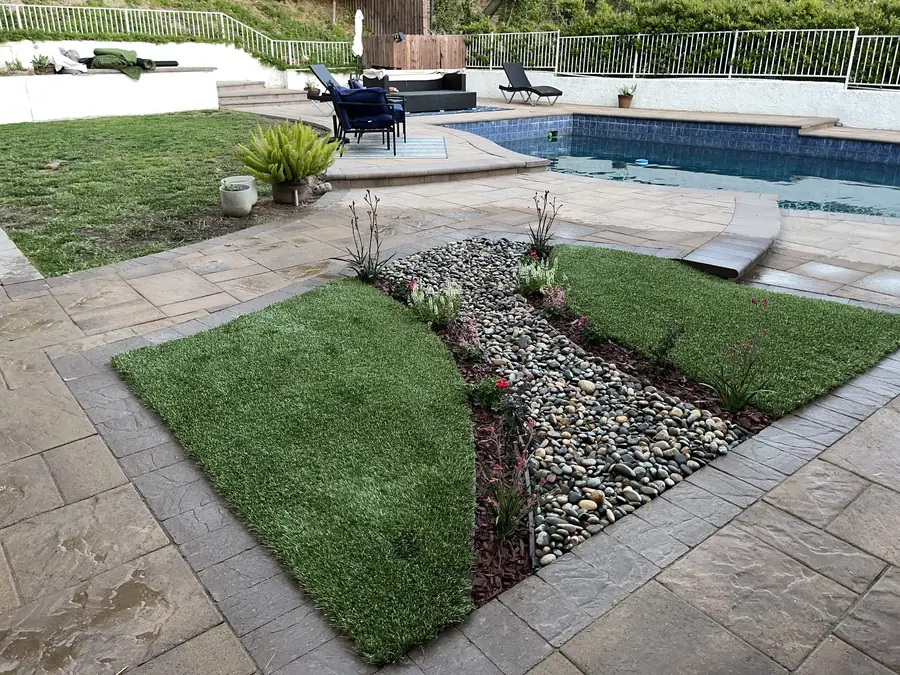
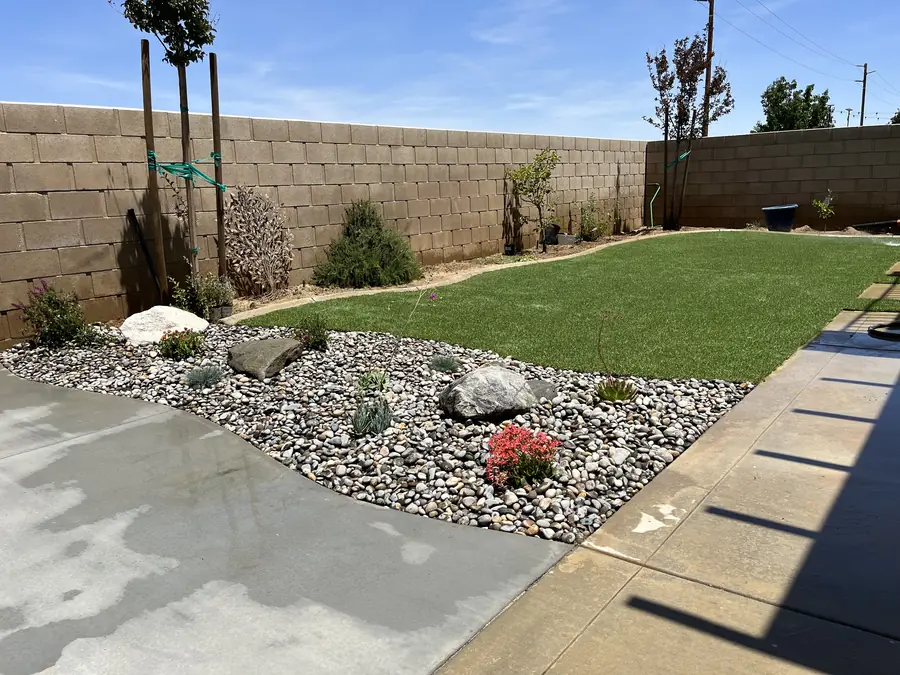
Use matters more than preference. Real lawn earns its water only where children or dogs are on it regularly, and in this climate it will need steady summer irrigation to stay green. Artificial turf gives the same open green surface with no watering, which is why it shows up so often on smaller yards and side yards. Drought tolerant planting covers the largest area for the least water and, laid out properly, reads as a finished garden rather than a sacrifice. Plenty of yards here end up with a modest turf or lawn panel surrounded by low water beds.
No. Daniels Landscaping performs every phase with one licensed contractor. The same company that removes your old yard also grades it, runs the irrigation, sets the plants, and spreads the mulch. Nothing is handed off to an outside company at any stage. We built the business this way on purpose, because it is the only way to keep one standard across the whole project and to know exactly who is working on your property each day. It also means you are talking to the people who actually did the work.
It decides how the yard performs for years afterward. Soil in older Van Nuys yards is usually compacted from decades of foot traffic, old lawn, and equipment, and compacted ground sheds water instead of absorbing it. We rip or till the planting areas, blend in compost, and adjust based on what we find once the surface comes off. Beds are often built up slightly so crowns sit above the surrounding grade. Good plants set into poor soil will limp along, while average plants in well prepared ground will outgrow them.
Trees go in first because they are the largest element and they set the structure of the yard. Shrubs fill the middle layer, giving mass, screening, and seasonal interest. Ground cover knits everything together at the base and shades the soil so it holds moisture longer. Spacing is set for mature size, not for how the plants look on installation day, which is why a new planting looks a little sparse at first. Filling every gap immediately means tearing plants out in two seasons once they begin to crowd each other.
Mulch does more work than most people expect. A layer two to three inches deep slows evaporation, keeps soil temperature down through a hot summer, suppresses weeds, and breaks down over time to feed the soil. On a full sun lot it is one of the cheapest ways to cut irrigation demand. We keep it pulled back from trunks and stems so nothing sits wet against bark, and we top it off as it decomposes. Bare soil in this climate bakes hard, sheds water, and grows weeds.
Sometimes the mainline and valves are worth keeping, but a great many yards around here still run the original system that went in with the house. Brittle pipe, heads that no longer match each other, and valves that weep are all common findings. We pressure test what is there, and if it is sound we tie into it and rebuild the zones above ground. If it is failing, replacing it during the install costs far less than opening a finished yard later. Watering is also regrouped so plants with similar needs share a valve.
Lot size and property condition vary considerably across Van Nuys, and two houses a few blocks apart can present completely different problems. Some properties here are generous and open, others sit tight against neighbors or back onto a commercial corridor. We design to the property in front of us rather than dropping a template onto it. A large rear yard may get divided into separate zones so it does not read as one empty field, while a compact yard gets a single clear use with planting worked around the edges.
Phasing works well as long as the underground work is done in the first phase. Grading, drainage, the irrigation mainline, and any sleeving under future paving all have to happen while the ground is open, and those are the items nobody ever sees. After that, planting, hardscape surfaces, and finishing touches can be added in stages. Most homeowners in this area are working with practical budgets, so we are used to laying out a plan that gets the essential structure right now and leaves clear stopping points for later.
Screening is one of the most common requests we get here, since many lots sit close to neighbors or near a busy corridor. Layered planting works better than a single row of one species, because a mixed screen reads as a garden instead of a wall and does not fail all at once if one plant struggles. Upright evergreens, tall grasses, and vines on a trellis all pull their weight. Where a fast result matters, we plant larger stock in the key spots and smaller material elsewhere so it fills in behind.
Shade has to be built here, because a flat lot with full exposure has nothing blocking the afternoon sun. Trees are the long term answer, placed on the west and southwest side where the heat arrives, and we choose species that will actually reach useful size in this climate. In the meantime a patio cover, a pergola, or a large shade sail covers the space you use most. Shade is not only about comfort either, since anything growing under a canopy uses noticeably less water than the same plant sitting exposed.
The first year matters most. New plants need deeper and more frequent water while roots establish, then the controller gets dialed back as they settle in. Expect to weed while the mulch is fresh, watch for settling in the beds, and prune lightly for shape rather than shearing. We walk clients through the controller and the valve locations before we leave, and we set an initial watering schedule for the season the yard goes in. Adjusting that schedule as the weather turns is the single most useful habit to build.
Yes, removal is part of the job and it is usually the first thing that happens. Old lawn, tired shrubs, cracked walkways, dead irrigation, and whatever else has aged out gets taken apart and hauled off. Many properties here are still carrying the planting and paving that came with the house, and much of it is past saving. We do keep what deserves keeping. A healthy mature tree or a sound stretch of paving can stay, and we design around it rather than removing something that took decades to grow.
Ordinary planting, irrigation, and soil work do not require a permit. Permits come into play with structures, electrical, gas, and certain retaining walls, none of which are part of a standard planting install. Water use rules do apply, and irrigation is designed to meet the restrictions in force rather than around them. If a project grows to include a patio cover, an outdoor kitchen, or anything structural, we tell you up front what will need review. We do not start work that requires a permit without one being pulled.
Call us at (818) 443-9300 and we will set up a time to walk the property. We look at exposure, drainage, soil, existing irrigation, and what you actually want to do with the space, then put together a free written estimate that lays out the scope in plain language so you can see what is included. Daniels Landscaping carries California license 1138709. There is no charge for the visit or for the written estimate, and no obligation to move forward once you have it in hand.