
FAQ
Artificial Turf in Valley Village, answered
The questions we hear most from Valley Village homeowners.
It works better there than almost anywhere else, and shade is the most common reason homeowners here switch. Synthetic turf does not photosynthesize, so it does not care how little light reaches the ground under a mature tree. A natural lawn in the same spot thins, goes patchy, gets reseeded, and thins again. One caution worth knowing: turf in deep shade stays cooler, which is a benefit, but it also dries more slowly after rain, so the base and drainage below have to be built properly rather than assumed.
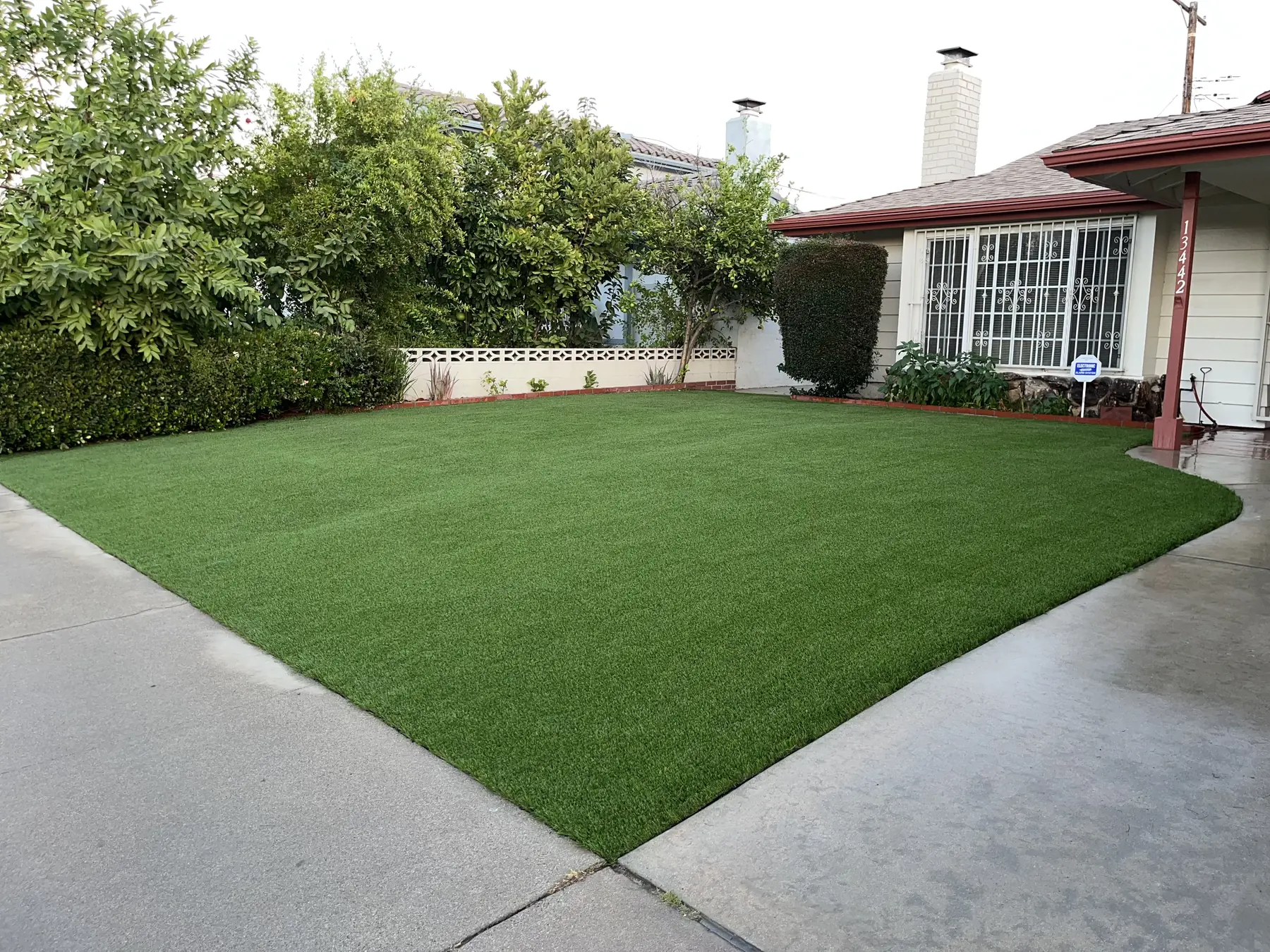
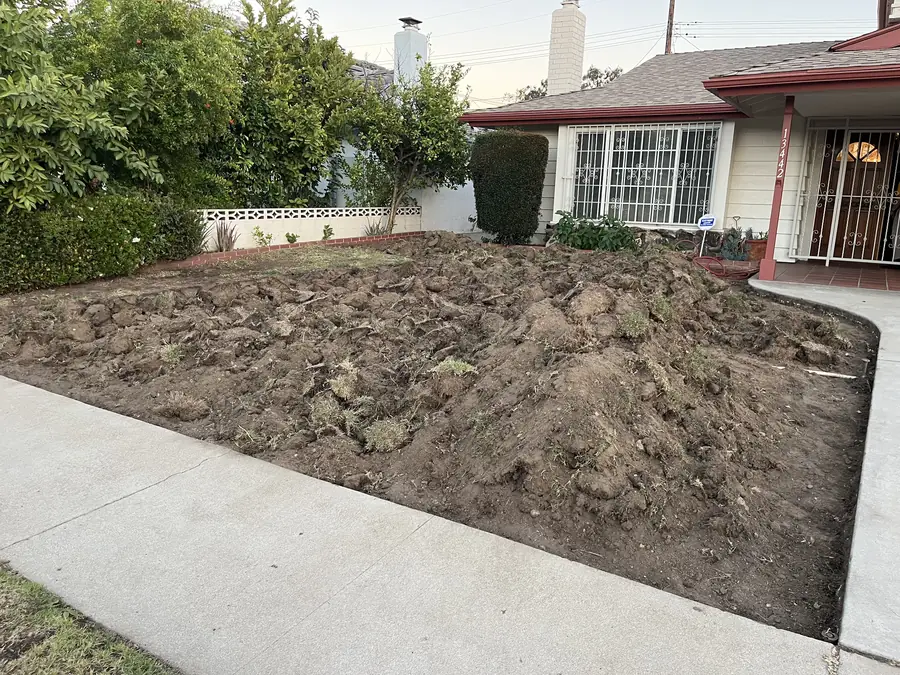
Almost everything that decides whether the lawn holds up sits below the fibers. Existing lawn and soil are excavated to depth, then a crushed aggregate base is placed in layers and compacted so it drains freely and holds a stable, even shape. The surface of that base is graded and screeded smooth, because every dip and hump telegraphs straight through the turf. A weed barrier is used where appropriate. Then the turf is rolled out, allowed to relax, cut in, seamed, nailed and infilled. A soft or uneven base shows up as ripples and low spots within a season.
By reducing the excavation in the root zone rather than digging to a uniform depth across the yard. Cutting through the roots that hold a mature tree up to gain another few inches of base is not a trade worth making. In those areas we build the base shallower and blend the grade, keep machinery off the root plate, and hand work the section. We also leave a proper open mulched ring around the trunk instead of running turf up to the bark, since the tree still needs air and water reaching the ground there.
It sits on top, which is actually easier to deal with than leaves in a real lawn. A blower or a plastic leaf rake clears it without harming the fibers. What you want to avoid is letting a thick layer sit through a wet stretch, because decaying leaves break down into fine organic matter that works into the infill, holds moisture and eventually gives weeds and moss something to grow in. Under a heavy canopy, regular clearing is simply part of owning the yard, and it is far less work than a lawn under the same trees.
Face weight is the amount of yarn per square yard and it is the honest measure of quality, since a denser turf resists matting under traffic. Pile height is blade length. Very long pile looks lush in a showroom but lays over and looks flattened where children and dogs use it daily. For a family yard in an established neighborhood like this, a mid range pile height with a good face weight wears far better and recovers its stand. Very short, dense turf reads more like a putting surface and suits smaller accent areas.
Infill is the granular material brushed down between the blades after the turf is laid. It weighs the turf down against the base, holds the fibers upright so the surface does not mat, and protects the backing from sunlight. Silica sand is the common choice and performs well. Coated or antimicrobial infills are used where dogs are a factor, since they resist odor better. The amount matters as much as the type, because under filled turf lays flat and over filled turf feels gritty underfoot. It gets brushed in and leveled during install.
It will if the base is built for it. Turf backing is perforated, so water goes straight through the surface, and from there it is entirely up to what is underneath. On a flat lot with tight soil we build a free draining aggregate base, set a gentle fall across it, and add a drain line and outlet where the water needs somewhere to go. Shaded ground here dries slowly, so a base that holds water stays saturated long after the sun would have handled it on an open lawn.
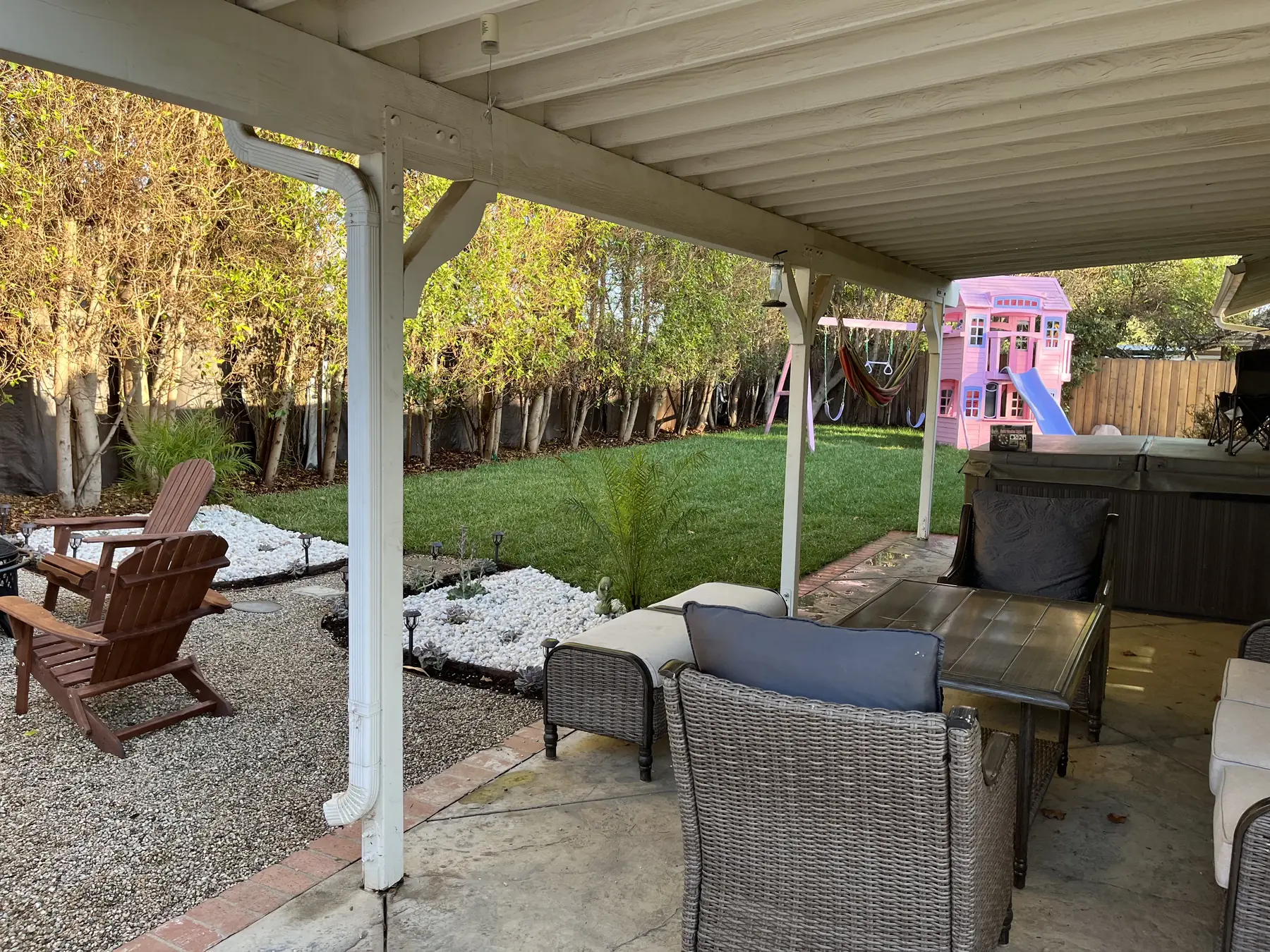
Synthetic turf absorbs more heat than living grass in direct sun, which is a legitimate consideration anywhere in the valley. In this neighborhood the canopy works in your favor, because a turf area under mature trees stays substantially cooler than the same turf in an open, unshaded yard. Where a section does sit in full sun, cooling infills and lighter colored yarns reduce the effect, and a quick pass with a hose brings the surface temperature down immediately. Shade structures and tree placement do more than any product choice.
It is one of the main reasons families install it. There is no mud, no dug up patches and no worn trail along the fence line. Liquid drains through the perforated backing into the base, and solids are picked up as usual. The maintenance is rinsing the area periodically and using an odor controlling infill from the start rather than trying to solve smell later. A properly draining base is the critical piece, because odor problems almost always trace back to liquid sitting in a base that does not drain.
Turf comes in rolls of a fixed width, so any area wider than a roll needs seams. The rolls are laid with the blade direction running the same way, since turf has a nap and reversing a panel makes the two read as different colors. Edges are trimmed precisely, joined on seaming tape with adhesive or stitched depending on the situation, then nailed. A good seam disappears once infill is brushed in. On the modest sized areas typical here, careful layout often reduces the number of seams needed to one or none.
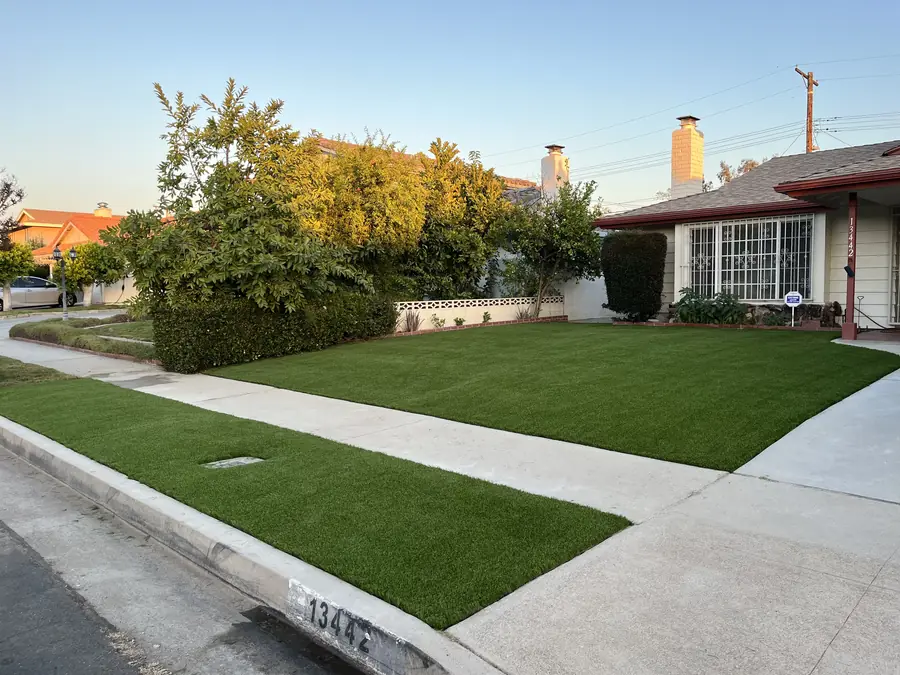
The perimeter is what keeps everything else in place. Turf is anchored with galvanized nails or spikes driven through the backing into the compacted base at a regular spacing around every edge and along seams. Where turf meets paving or a header, it is tucked and secured so no backing shows and nothing can be lifted by a foot or a paw. Against planting beds we set a rigid edge to give the turf something to terminate against. Loose edges are the first thing to fail, and they are entirely preventable.
Good quality turf lasts many years, and what determines the number is traffic, sun exposure and how well it was installed rather than the brand on the roll. The fibers wear from foot traffic and ultraviolet exposure, and here the canopy shelters a good deal of that ultraviolet load, which helps. What ends a turf lawn early is almost never the turf. It is a base that was never compacted properly, edges that were not fastened, or infill that was never topped up, all of which are installation decisions.
Blade shape affects how the turf stands up and how it catches light. Shapes with a spine or a rib resist matting better than a flat blade, which is what you want in an area that gets used. On color, a single flat green looks obviously artificial. Better products blend two or three green tones with a tan thatch layer underneath, which mimics the way a real lawn looks. Under heavy shade, a slightly darker blend reads more naturally than a bright yellow green, which can look lit up in a shaded yard.
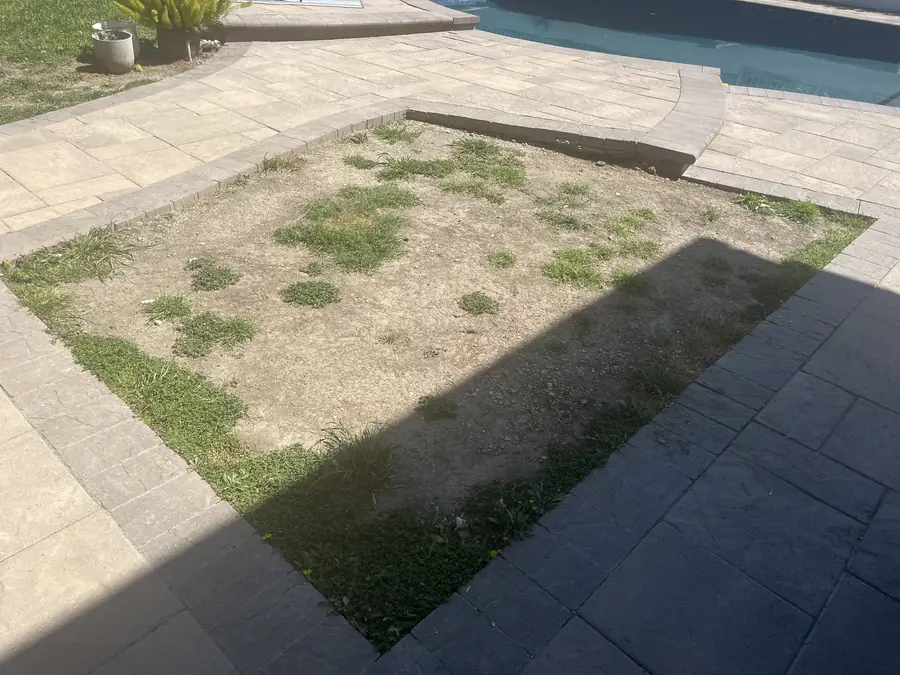
That is the classic case for it. A lawn that has been reseeded repeatedly and still comes back thin is not a maintenance failure, it is a light problem, and no amount of fertilizer fixes it. Removing the struggling grass and installing turf gives you a consistently green surface in the exact spot where nothing would grow. The work also lets us correct the grade and drainage while the ground is open, which is worth doing since those shaded low areas were probably staying wet as well.
One licensed contractor handles the entire installation. Daniels Landscaping stays accountable for the work. The people excavating and compacting the base are the people cutting the panels, setting the seams, nailing the edges and brushing in the infill. Turf is unforgiving of shortcuts taken underneath, and the only way to be sure the base was built right is for the same crew to be accountable for the finished surface. If something needs attention afterward, you call us and we come back.
Routine care is light. Clear leaf drop regularly with a blower or a plastic rake, rinse the surface when it needs it, and brush the fibers against the grain in the areas that get the most traffic so they stand back up. Top up infill in high wear spots as needed. Under a canopy the leaf clearing is the main ongoing task, and staying ahead of it prevents organic buildup in the infill. Compared with mowing, edging, feeding and reseeding a lawn that never thrived, it is a small trade.
The heads serving the old lawn area come out and those lines are capped below grade, since nothing under the turf needs watering. What we do not do is rip out the whole system, because the surrounding beds and trees still need irrigation, and a mature tree that quietly lost its lawn watering can suffer for it. The sensible move is capping the lawn zone, keeping or converting the bed zones to drip, and making sure the trees still receive water at the right depth once the surface above them changes.
Call Daniels Landscaping at (818) 443-9300 and we will schedule a visit to measure the area and look at conditions. We are licensed in California under number 1138709, and the estimate is free and given to you in writing. It states the turf specification, the base depth and material, the infill, seaming and edge detail, and how drainage and any tree roots are being handled, so you are comparing the actual installation and not just a price per square foot. There is no charge for the visit and no obligation.