
FAQ
Valley Village landscaping questions, answered
What homeowners in Valley Village ask us most.
Yes. We cover the entire Valley Village pocket between North Hollywood and Sherman Oaks. It is a compact neighborhood, and our crews work the surrounding communities constantly, so we are in the area regularly rather than making a special trip out. Properties near the boundaries with Studio City, North Hollywood, or Van Nuys are covered as well. The broader service area extends across the San Fernando Valley and into greater Los Angeles. If you are unsure whether your address qualifies, call and ask. The answer is usually yes.
With planning, not with a trench and a hope. Root systems on mature trees extend well beyond the canopy edge, and the roots that matter most for stability and water uptake are often shallow. Before layout, we identify where the major roots run and adjust: irrigation lines get routed around them, hardscape edges shift, footings move or change type, and excavation stays outside the critical zone wherever possible. Damaging the root plate of a tree that took decades to grow is not a fair trade for an easier install.
More than people expect, though the palette differs from a sunny yard. Shade tolerant shrubs, ground covers, ferns, and understory plants fill a space beautifully beneath a canopy, and the result often reads richer than a full sun garden because the light is soft. Traditional lawn is the usual disappointment, since most turf grasses thin out and go patchy in deep shade. We map how light moves across the property through the day, then match plants to each zone instead of applying one plan everywhere.
You cannot eliminate it under a mature canopy, but you can design so it matters far less. Ground cover and mulched beds absorb leaf drop and actually benefit from it, while wide expanses of pale paving show every single leaf. Surface choices, bed layout, and seating placement all affect how much sweeping a yard demands. Gutters, drains, and turf systems need to be specified with leaf load in mind so they do not clog. Planned properly, the canopy stops being a chore and becomes the feature it should be.
Flat lots do not drain themselves. Without deliberate grading and a drainage system, water pools wherever the ground has settled, and on older properties that settling has been happening for decades. Compacted soil, old paving poured without fall, and downspouts dumping straight onto the ground make it worse. Correcting it means establishing real slope across the yard, adding collection points where water naturally gathers, and giving it somewhere to go. This is unglamorous work, and it separates a landscape that lasts from one that rots.
Valley floor soil in this pocket tends toward the heavier side, holding water and compacting under regular traffic. Beneath a long established canopy you also get years of leaf litter breaking down into the top layer, which is genuinely good material to work with. The trouble spots are usually areas compacted by old paving, sheds, or play equipment. We amend and decompact where planting is going in, because dropping healthy plants into dead compacted ground wastes both your money and the plants.
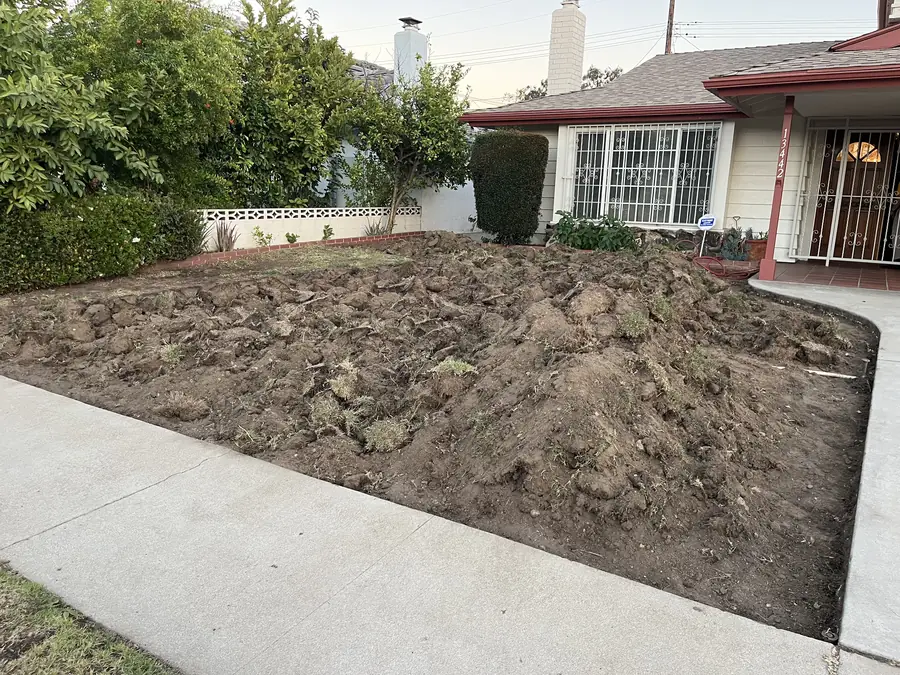
A common scope on these lots is a full back yard reset: removing a tired lawn that never did well in the shade, correcting drainage, new surfacing for a patio, shade appropriate planting, updated irrigation, low voltage lighting, and often a defined outdoor living area near the house. Front yards get attention too, since curb appeal on these tree lined streets clearly matters to owners. Because the homes are older, removing somebody else's previous work is almost always part of the job.
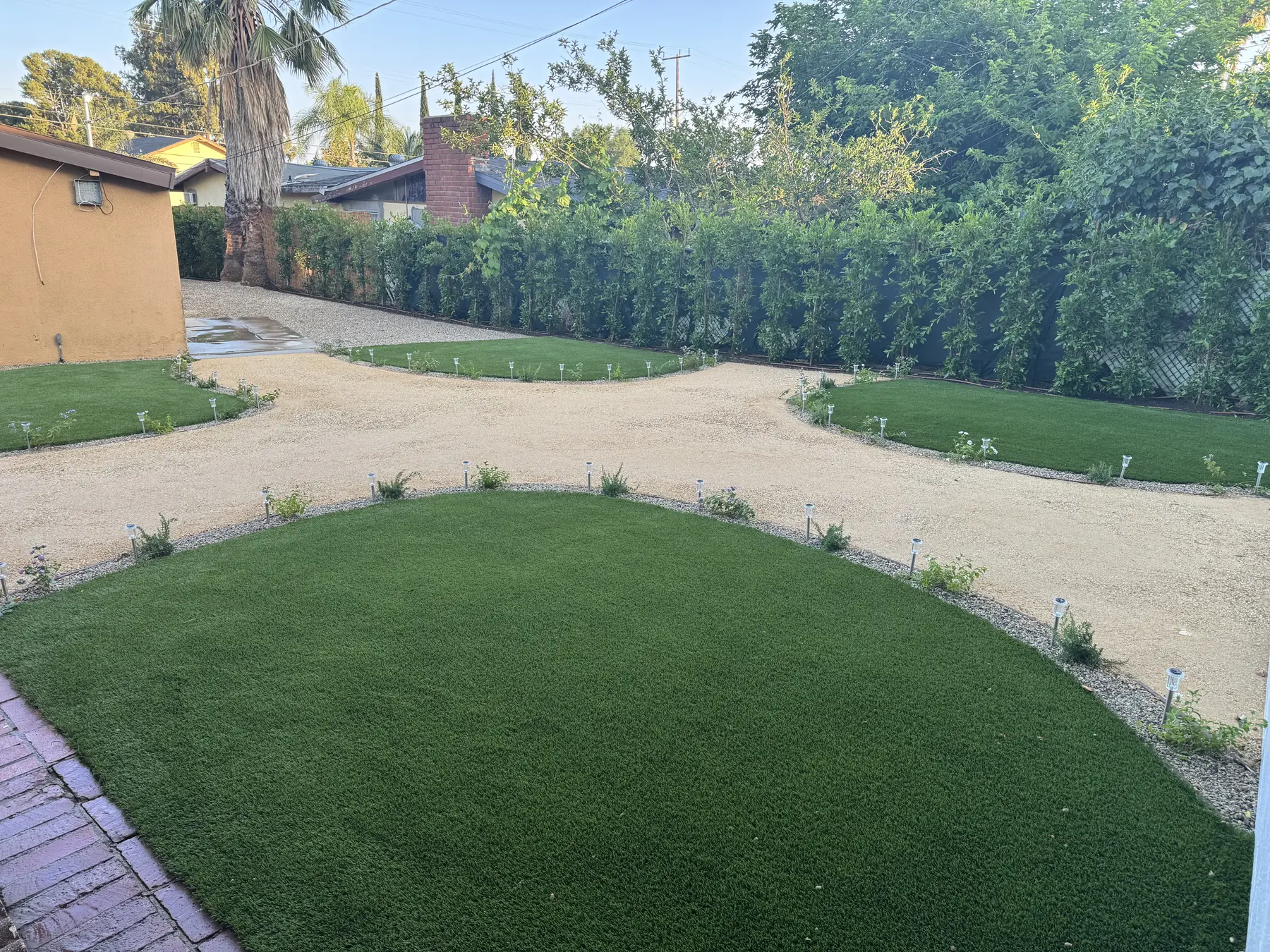
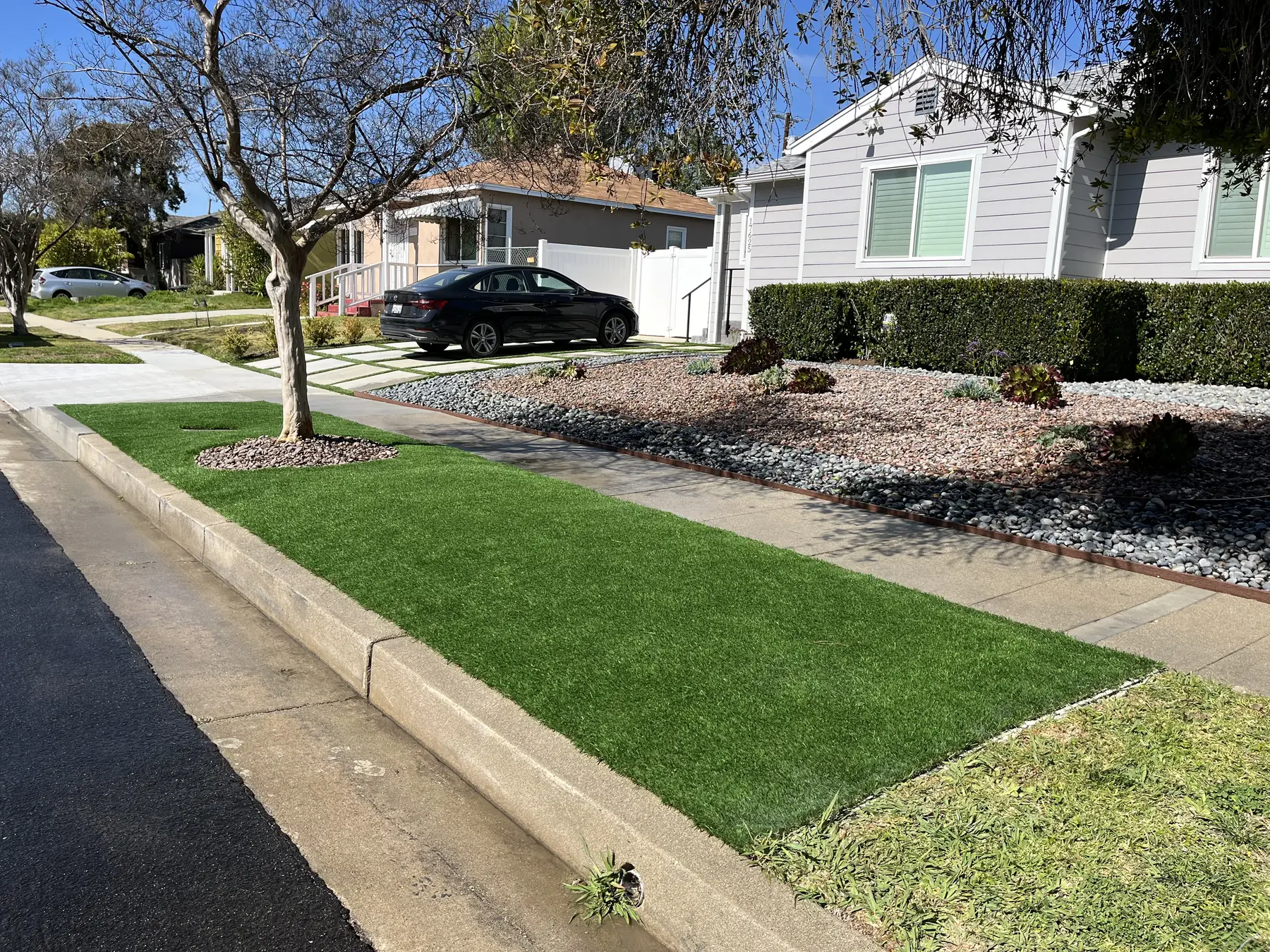
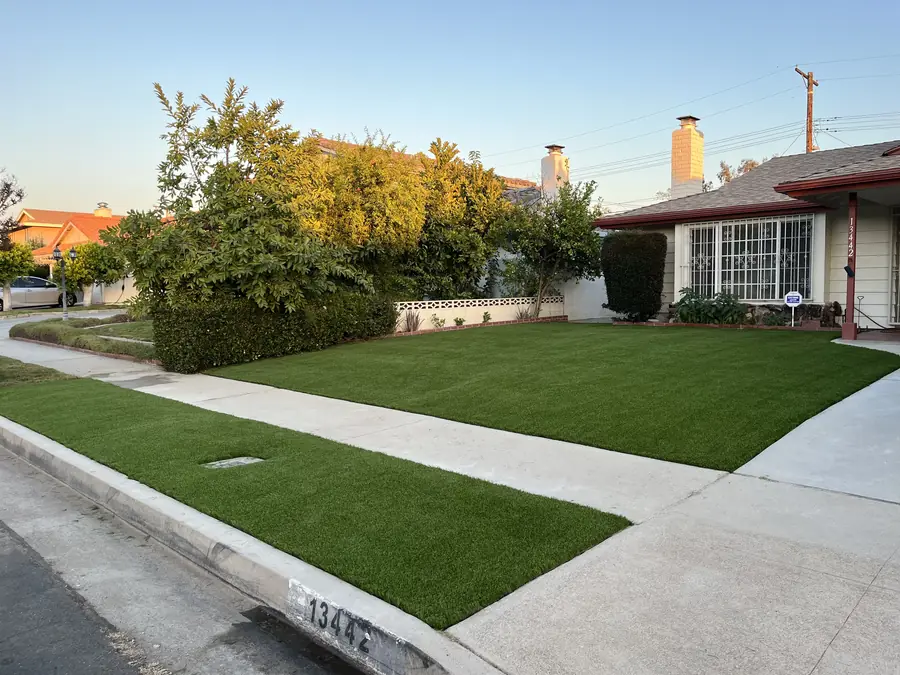
It can be, and shade is one of the most common reasons homeowners here consider it, since natural grass struggles badly under a canopy. Turf provides a consistent green surface where lawn simply will not hold. There are trade offs worth talking through: leaf litter still has to be cleared off it, and the base has to be built without disturbing the root zone underneath. We will tell you honestly whether your particular yard is a good candidate or whether ground cover and planting would serve you better.
Many do not. Planting, irrigation, and typical surface work on a flat residential lot usually proceed without permitting. Where it changes is with electrical, certain structures, significant grading, or work that alters drainage in ways the City of Los Angeles regulates. We identify the portions of your scope we expect to require permits during the estimate, so there are no interruptions once the crew is on site. Requirements depend on the specific property and the specific work, so we confirm instead of relying on precedent.
Flat lot work in Valley Village generally moves faster than hillside projects elsewhere in the valley, because access is easier and less structural work is involved. Even so, the honest answer depends on scope. Demolition, drainage, and underground work come first and are largely invisible, which can make the early stage feel slow. Concrete and masonry need curing time. Planting goes in near the end. We walk you through the sequence at the estimate so you know what to expect at each stage.
Family use is one of the most common briefs on these blocks, and it fits comfortably with a good design. It mainly influences material selection: durable surfaces instead of delicate ones, planting that tolerates traffic where traffic will actually happen, nothing thorny or brittle along play routes, and a layout that keeps sight lines open from the house. Pets are hard on irrigation and on soft planting beds, so those get placed and protected accordingly. Designing for real use beats designing for a photograph.
These are quiet residential streets and we treat them that way. Loud equipment stays inside reasonable daytime hours, the street gets swept at the end of each day, deliveries are scheduled instead of arriving whenever, and driveways stay clear. Because houses here sit fairly close together, we let the adjacent neighbors know before anything unusually noisy or large is scheduled. Most complaints on residential jobs come from surprise rather than from noise itself, so we remove the surprise and the rest tends to stay calm.
Favorably, in most cases. Yards under a canopy lose less water to evaporation and generally need less irrigation than exposed sun baked lots, so meeting efficiency expectations is easier here than in many neighborhoods. What matters is designing the system correctly: drip in the beds, separate valves for shade and sun zones, a controller that adjusts through the year, and no spray heads throwing water across paving. Overwatering shaded planting is the more common error we find on older systems, and it kills plants.
Every job is built by one licensed contractor. Daniels Landscaping stays accountable for the work. The people who arrive at your house work under one licensed contractor, trained by us and accountable to us, and they are the same faces from demolition through the final walkthrough. It sounds like a small thing, and it is the main reason quality stays consistent between projects. When work passes through many hands, the homeowner ends up managing a chain of businesses that have never worked together before.
Call (818) 443-9300 to arrange a visit. We come out, walk the property, study the trees and the light and the drainage, and listen to what you want the yard to do for your family. You get a free written estimate with the scope described clearly, so you can compare it honestly against anything else you are considering. Daniels Landscaping is licensed in California under number 1138709, and the work is performed under one licensed contractor. No pressure comes attached to the conversation.