
FAQ
Landscaping in San Fernando, answered
The questions we hear most from San Fernando homeowners.
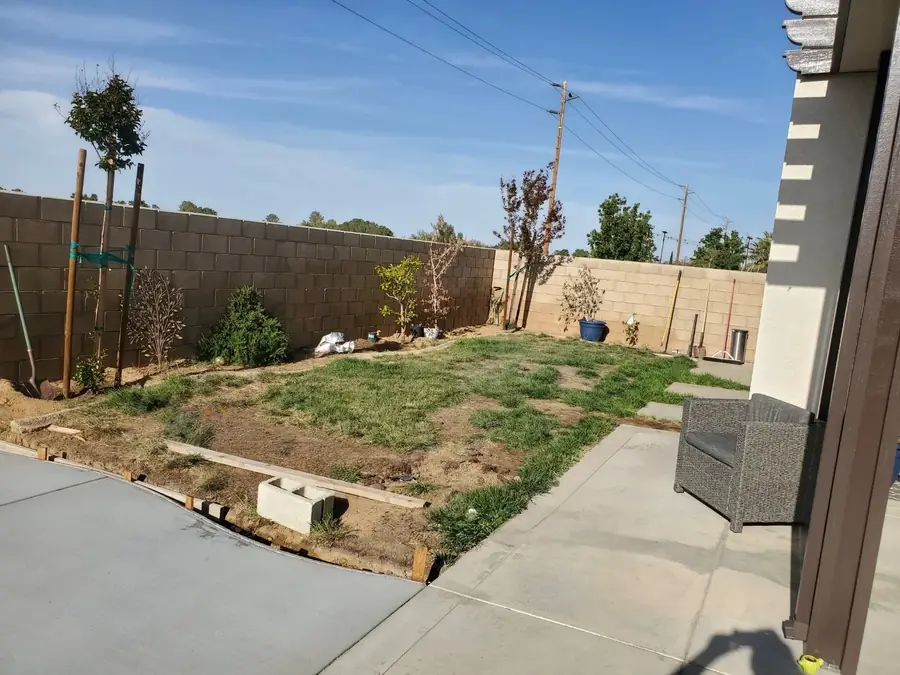
A full install starts with clearing and site prep, then grading so water runs where we want it. From there we amend the soil, set irrigation lines, and lay out planting beds before anything goes in the ground. Trees and larger shrubs are placed first, then mid layer plants, then ground cover. Mulch goes down last to hold moisture and keep weeds out. On a typical San Fernando lot the whole yard is visible from the street, so we plan the front for curb appeal and the back for how you actually use it.
The order never changes, because each stage buries the one before it. Demolition and haul away come first, then grading and drainage while the ground is open. Utilities and irrigation go in next, since trenching after a patio is built means cutting it apart. Hardscape follows, then planting, then mulch. Skipping ahead is what causes torn up work later. We hold to this sequence on every San Fernando yard, whether we are touching a small side strip or rebuilding the front and back at the same time.
San Fernando is an independent incorporated city, not a neighborhood of Los Angeles, so your project follows the San Fernando municipal code and the application goes to the City of San Fernando rather than Los Angeles Building and Safety. That surprises a lot of homeowners, because the streets on the other side of the city line are Los Angeles. Straight planting, soil work, and irrigation generally do not require a permit. Anything structural, such as a retaining wall or a driveway, does, and we confirm the requirement with the city before work begins.
San Fernando sits on flat, compact ground at the north end of the Valley, so a yard here rarely drains itself. On a sloped lot gravity does part of the work for you. Here we have to build the fall in during grading, set positive slope away from the house, and give the water somewhere to go, whether that is a drain line, a swale, or a permeable area. We look at where water sits after a storm before we design anything. Getting this right at the grading stage is far cheaper than correcting it after planting.
San Fernando has some of the older housing stock in the region, and the soil in those yards has usually been compacted for decades under lawn, concrete, or nothing at all. We break it up, check how it drains, and amend with compost so roots have somewhere to go. In beds that carried an old lawn, we often find a shallow layer of decent topsoil sitting on hardpan. Skipping this step is the most common reason new planting struggles even when the irrigation is set correctly.
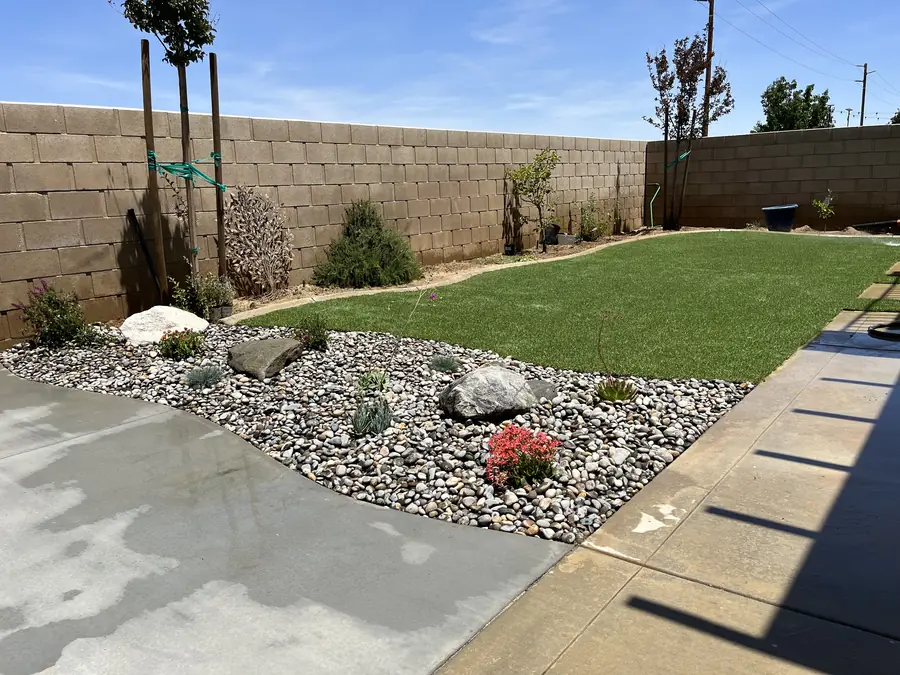
It depends on how you use the yard. Real lawn looks and feels right but drinks water through a hot San Fernando summer and needs steady attention. Artificial turf stays green with no watering, which suits small flat lots and households with dogs and kids. Drought tolerant planting uses the least water of the three and gives you far more visual interest than a flat green rectangle. Many of the yards we build here mix them, with a modest lawn or turf area for real use and drought tolerant beds around the edges.
Hot, dry, full sun summers are the constant here, so we lean on plants that expect it. Salvias, rosemary, lavender, westringia, agave, and native grasses handle the exposure without constant babying. Citrus does well in this part of the Valley, and olive and desert willow take the heat once established. We group plants by water need so one zone is not overwatering another. West and south facing beds get the toughest material, and the shadier side of the house is where we can put something with softer leaves.
Sometimes, and it is worth checking rather than assuming. Older San Fernando homes often still run their original irrigation, which usually means aging mains, spray heads placed for a lawn that is no longer there, and valves that weep. We pressure test what is in the ground and reuse the mains where they are sound. Heads and lateral lines almost always get reworked, because planting beds want drip rather than spray. Converting those old spray zones to drip is one of the biggest water savings available on a property like this.
Lots in this city are regular in size and generally flat, which means a tree has to be chosen for its mature spread and not just how it looks in the container. We stay off the sewer lateral and away from the foundation with anything aggressive. Crape myrtle, Chinese pistache, and fruit trees fit smaller yards comfortably. Larger properties can carry an oak or a sycamore. Shade trees go on the west and south sides, where they cut the afternoon heat coming into the house.
Mulch is not decoration, it is what keeps your water in the soil. We lay it a few inches deep across planting beds, pulled back from trunks and stems so nothing rots at the base. In a climate this hot and dry, bare soil loses moisture quickly and bakes hard on the surface, which then sheds water instead of absorbing it. Mulch also blocks most weed germination and breaks down slowly into the soil below. It needs topping up over time, which is simple work you can do yourself.
Yes, and those narrow strips are usually the best place for it. A parkway or a side yard is a poor fit for lawn, because it is hard to water evenly and gets walked across constantly. Low growing ground cover, gravel, or spreading shrubs handle those areas with far less water and no mowing. On San Fernando streets the parkway is the first thing anyone sees, so we treat it as part of the front design rather than as leftover space nobody planned.
One licensed contractor, start to finish. Daniels Landscaping stays accountable for the work. The people who grade your San Fernando yard, run the irrigation, and set the planting are the same crew you meet at the estimate and the same crew that answers for the finished result. That is the reason our sequencing holds together, because nobody is waiting on an outside trade to show up before the next stage can start. If something needs correcting after the install, you call us and we come back.
Yes. San Fernando is a city of practical budgets and established neighborhoods, and a lot of the front yards we build here are done sensibly rather than extravagantly. Removing a dead lawn, correcting the grade, converting the irrigation to drip, and putting in drought tolerant planting with good mulch transforms a frontage without a large hardscape bill. Phasing also works well, front yard now and back yard later, as long as the irrigation and drainage are planned for the whole property from the start.
Carefully, and usually by working around them rather than through them. Yards in this city often carry trees that have been in the ground longer than the current owner has been in the house. We hand dig near the root zone, avoid trenching straight through major roots, and keep new irrigation off the trunk. Planting beneath a mature tree means choosing shade tolerant material with modest water needs, because flooding the root zone is a reliable way to kill a tree that survived decades without any help.
We haul it out. Old concrete, dead sod, failed irrigation, and construction debris leave the property as part of the job, and we do not leave piles behind for you to deal with. Where material can be reused, we will tell you. Broken concrete sometimes works as base material or as urbanite for a low wall, and clean soil from a grading cut often gets redistributed on site instead of being trucked away. Anything that cannot be reused goes to the appropriate disposal or recycling facility.
Planting fills in on the plant's schedule, not ours, so we set expectations honestly at the design stage. Ground cover closes gaps first, shrubs take a full growing season or more to look settled, and trees are the slowest of all. We plant at proper spacing for mature size, which means a new bed looks slightly open at first. Crowding plants to make the yard look full immediately leads to overgrown beds and thinning later. Mulch and clean edges make a young landscape look intentional while it grows in.
The first season is the one that matters. New planting needs deeper, less frequent watering to push roots down, and we set the controller for that rather than leaving it on an old lawn schedule. Watch for dry spots and settling in the first weeks after install, especially where soil was disturbed during grading. Keep mulch topped up as it breaks down. Once plants are established we dial the irrigation back, which is where the water savings actually show up on a San Fernando summer bill.
Call Daniels Landscaping at (818) 443-9300 and we will come walk your San Fernando property, look at the grade, the existing irrigation, and what is worth keeping, then put together a free written estimate covering scope and materials. We are licensed in California under number 1138709 and we build every project with one licensed contractor. Bring us your ideas or bring us nothing at all and we will lay out options for the yard. There is no charge for the visit and no obligation after you read the estimate.