
FAQ
Hardscaping in San Fernando, answered
The questions we hear most from San Fernando homeowners.
Hardscaping covers the built, non living surfaces of a yard. On our jobs that means paver patios and walkways, natural stone, gravel and decomposed granite areas, steps, seat walls, borders, and edging. All of it is dry laid, which means it sits on a compacted aggregate base and is held in place by edge restraint and joint sand rather than mortar. Poured slabs and mortared block are a separate category of work. Hardscape carries the traffic and defines the shape of the yard, and planting works around it once the surfaces are set.
Poured concrete is one monolithic slab. Once it cracks, and plenty of the original driveways and walks in this city already have, the crack is permanent and the repair is a patch. Dry laid paving is thousands of individual units on a flexible base. It moves with the ground instead of fighting it, and a settled area can be lifted, re leveled, and reset using the same pavers. If a utility line ever has to be reached, we pull pavers up and put them back rather than sawcutting and patching a slab.
Ground level paving generally does not require a permit, but this is exactly where being in San Fernando matters. The city is independently incorporated even though Los Angeles surrounds it on every side, so the rules come from the San Fernando municipal code and any application goes to the City of San Fernando. Walls above a certain height, anything retaining soil, and work in the driveway approach are the items that get reviewed. We check the current requirement with the city for your specific scope before we start, not after.
The base is the project. We excavate to depth, compact the subgrade, then lay crushed aggregate in lifts and compact each lift rather than dumping it all at once and running a plate over the top. Bedding sand is screeded to a consistent thickness and never used to fill low spots left in a sloppy base. Pavers are set on that, then compacted again with sand swept into the joints. A patio that sinks or waves within a few years almost always failed at the base, not at the surface.
That is the central question on a lot in this city, because the ground is flat and water will not run off on its own. Every surface we build gets a deliberate fall, small enough that you never feel it underfoot but enough to move water toward a planted area, a drain, or the street. On tight sites we run drainage under the paving before the base goes in, with catch basins where water would otherwise collect against the house. Permeable joints and gravel areas absorb rather than shed.
Yes, and that is a large share of what we do here. San Fernando carries some of the oldest housing stock in the region, and the original walkways, porch steps, and driveway ribbons have had decades of root pressure and heat working on them. We break out the failed concrete, haul it off, correct the grade that caused the problem in the first place, then rebuild in pavers or stone on a proper compacted base. Replacing the surface without fixing what moved underneath just buys you the same crack again.
Edge restraint is what keeps a dry laid surface from creeping outward. Without it the perimeter pavers migrate, joints open, and the field loosens from the outside in. We set rigid or spiked edging along every free edge, staked into the compacted base rather than into loose soil. Where a patio meets a planting bed or a lawn, the restraint sits below finished paver height so it disappears from view. Along a driveway or a heavily used path we upgrade the restraint, because the loads there are considerably higher.
Joint sand fills the gaps between pavers and locks the field together so the units share load instead of working independently. We sweep it in, compact, then top off. Polymeric sand binds when wetted and resists washout and weed seed, which is worth the upgrade on patios and walks that get hosed down often. Sand does deplete over the years from washing and sweeping, so joints need topping up occasionally. Empty joints are the beginning of most paver problems we get called out to look at.
Decomposed granite works well here, and it fits the practical budgets we see across this city. It gives you a usable, walkable surface with a natural look for far less than stone, and it absorbs water rather than shedding it across an already flat lot. Stabilized DG holds together better under foot traffic and resists tracking into the house. It does need a compacted base and firm edging, or it spreads. Under full summer sun a light colored DG stays cooler underfoot than dark pavers, which matters on a west facing yard.
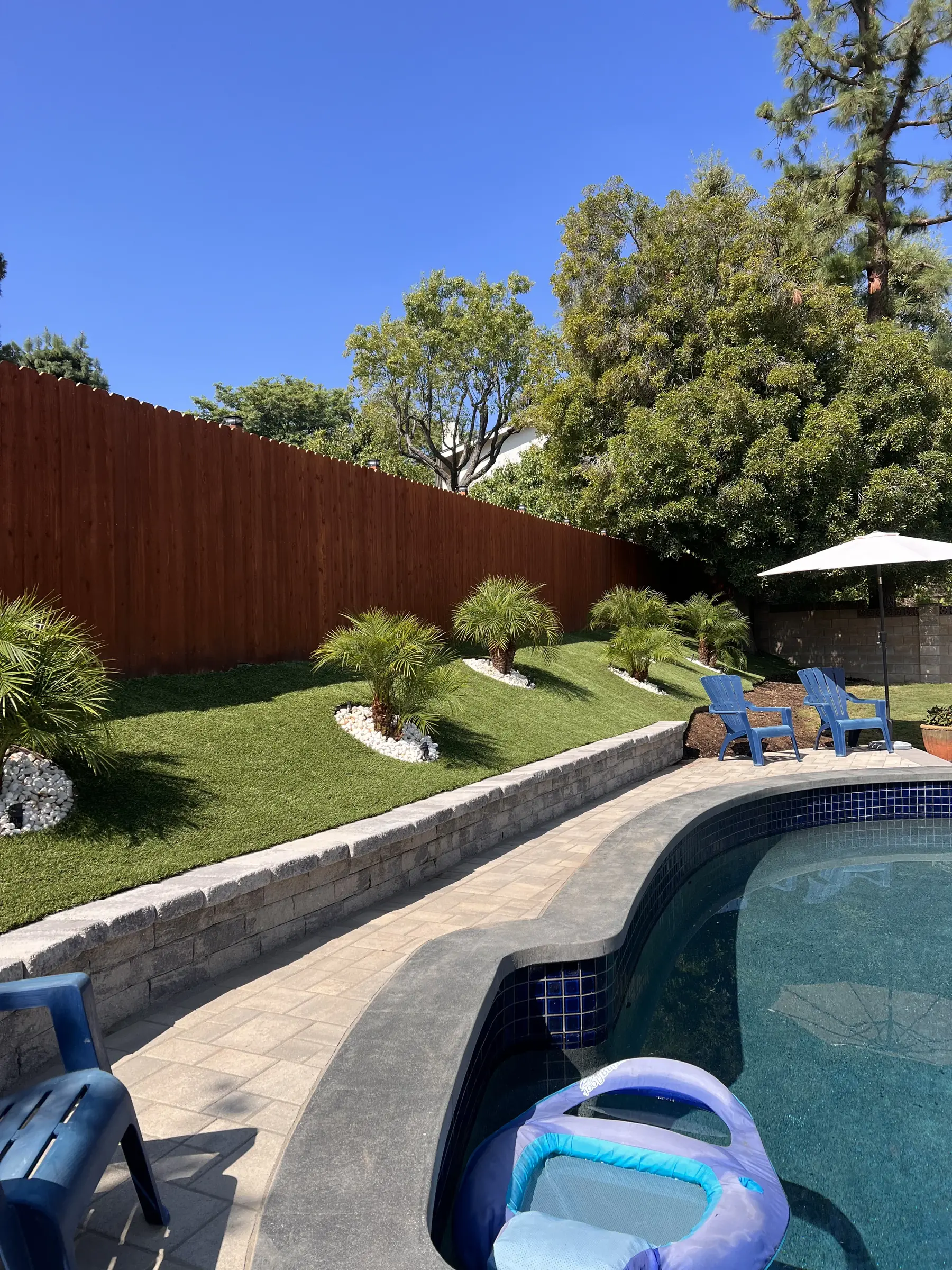
Yes. Seat walls are one of the better values in a back yard because they add usable seating without furniture and give a patio an edge that feels intentional. Dry laid wall block systems interlock and pin together, and we build them on a compacted base with proper backfill and drainage behind. Low borders do similar work at a smaller scale, separating a gravel area from planting or holding a raised bed. Anything above modest height moves into engineered wall territory, which we handle as a different scope.
Even on flat ground you get grade changes, usually at a porch, a door threshold, or where an older house sits higher than the yard around it. Steps here are typically one or two risers rather than a full flight, and consistency is what makes them safe. Every riser in a run gets the same height, and treads get a slight pitch so water sheds off them. We build on a compacted base with a solid first course, because a step that settles becomes a trip hazard rather than a cosmetic annoyance.
Sun exposure drives material choice more than anything else in this city. Summers are hot, dry, and bright, and dark pavers absorb heat you will feel through bare feet well into the evening. Lighter tones, warm buff, tan, and gray stay noticeably cooler. Concrete pavers hold their color reasonably well under this much UV, and natural stone such as flagstone or travertine stays cooler still. Whatever the material, texture matters near a pool or a hose bib, because smooth surfaces turn slick when wet.
We do. Daniels Landscaping works under one licensed contractor. The same people who excavate and compact the base at your San Fernando property are the ones setting the pavers and finishing the edges. Hardscape quality lives almost entirely in the parts you never see, so we are not willing to put that stage in someone else's hands. It also means one point of contact from the estimate through the final sweep, and one company standing behind the finished surface.
Yes, and phasing suits a lot of properties here. The order still has to be respected, so anything requiring trenching, whether gas, water, or irrigation lines, goes in before a surface is laid over the top of it, even if the feature above arrives later. We commonly build the main patio first, then add a walkway, a gravel seating area, or a seat wall in a later stage. What we avoid is building a surface now that has to be torn up later to reach something underneath.
Full, compacted joints are the first defense, because weed seed germinates in gaps and ants move sand out of loose ones. Polymeric sand helps considerably. We also lay a proper aggregate base instead of setting pavers on native soil, which removes the growing medium underneath entirely. Anything that does sprout in a joint arrived as seed blown in on top, not from below, and it pulls out easily. Keeping joints topped up over the years is the single best maintenance habit for a paver surface.
Demolition and haul away are part of the job. Old concrete, failed brick, tired timber borders, and whatever is buried under them all leave the property, and we do not park a debris pile in your driveway for weeks. Access on a compact lot takes planning, so we talk through where equipment and material will stage before the first day of work. Where broken concrete can be reused on site as base or as low wall material, we will raise that option with you rather than trucking it off.
Settlement comes from a base that was never properly compacted, from water running under the surface, or from soil that was not brought to the right moisture before compaction. We address all three during construction, compacting in lifts, building drainage in, and setting the fall correctly so water leaves rather than soaking in at the edges. Vehicle areas get a deeper base than a patio does, because the loads are different. Built that way, a dry laid surface stays flat, and any section that does move can be reset.
Reach Daniels Landscaping at (818) 443-9300 and we will visit your San Fernando property, measure the area, look at where water goes today, and give you a free written estimate covering base depth, materials, and scope. We hold California license 1138709 and every stage of the work is done under one licensed contractor. If you are comparing bids, ask each contractor what base depth they priced, because that is where the difference usually hides. The estimate visit costs you nothing and commits you to nothing.