
FAQ
Artificial Turf in San Fernando, answered
The questions we hear most from San Fernando homeowners.
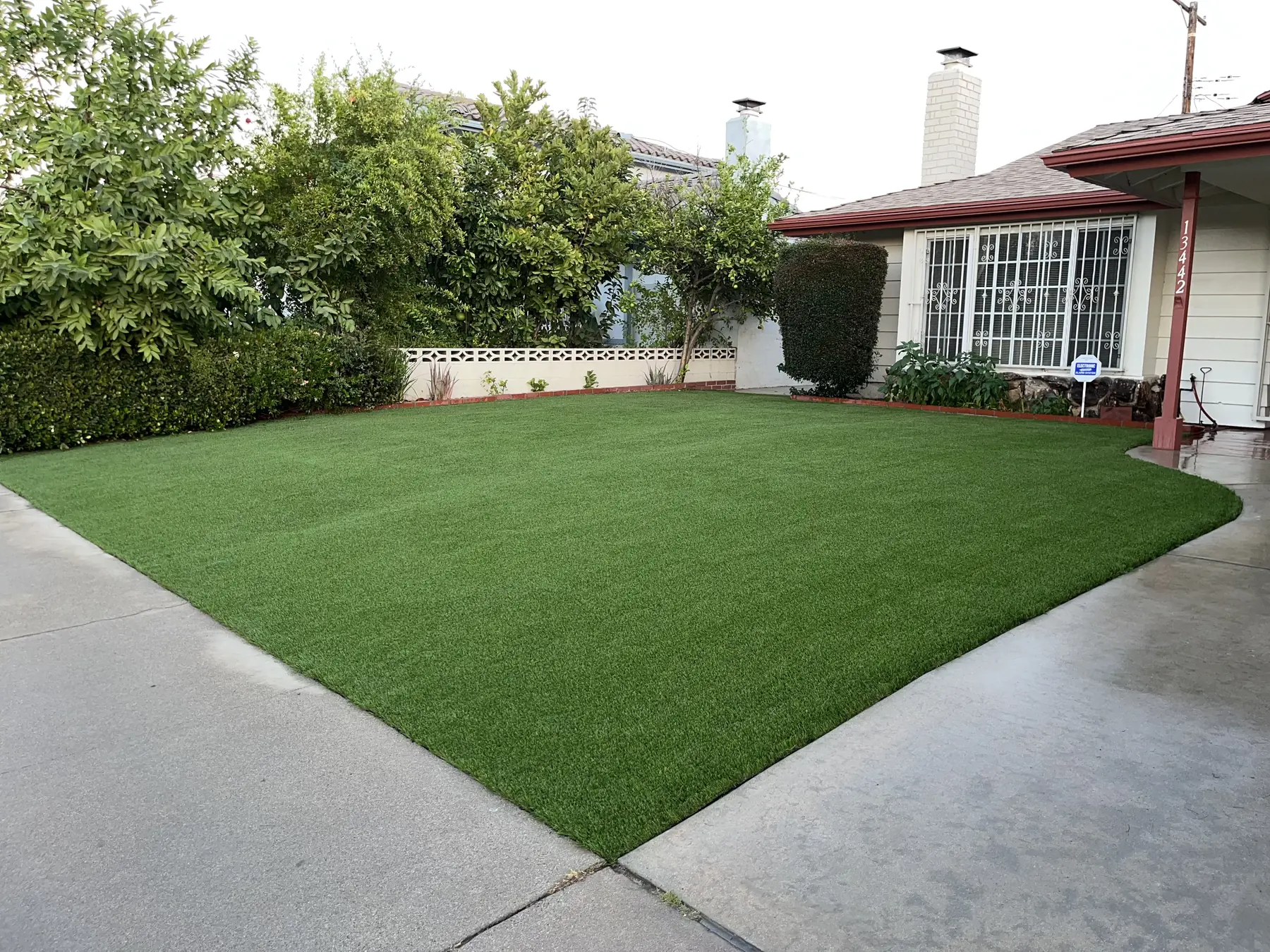
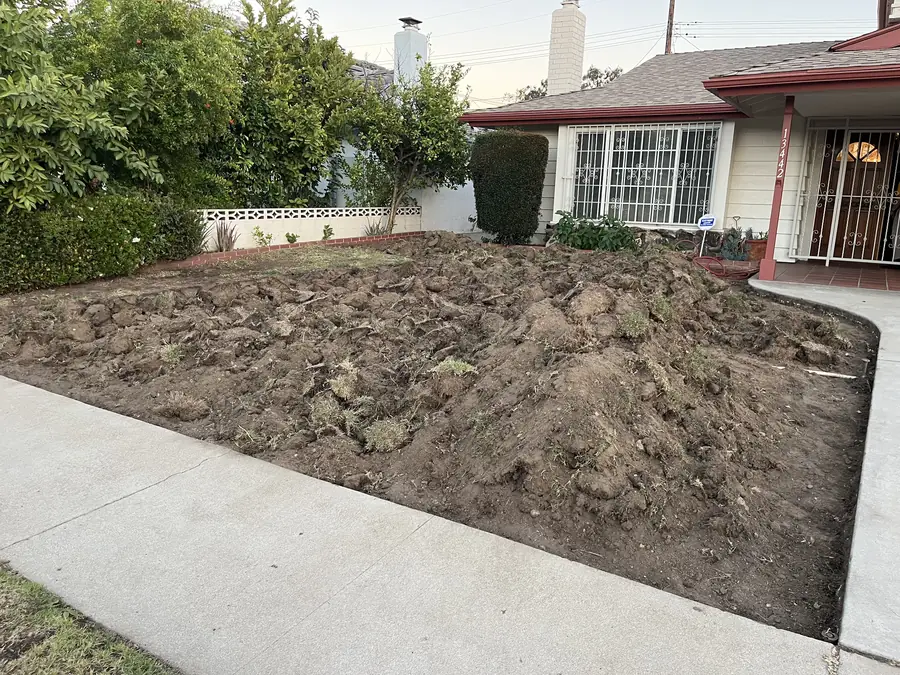
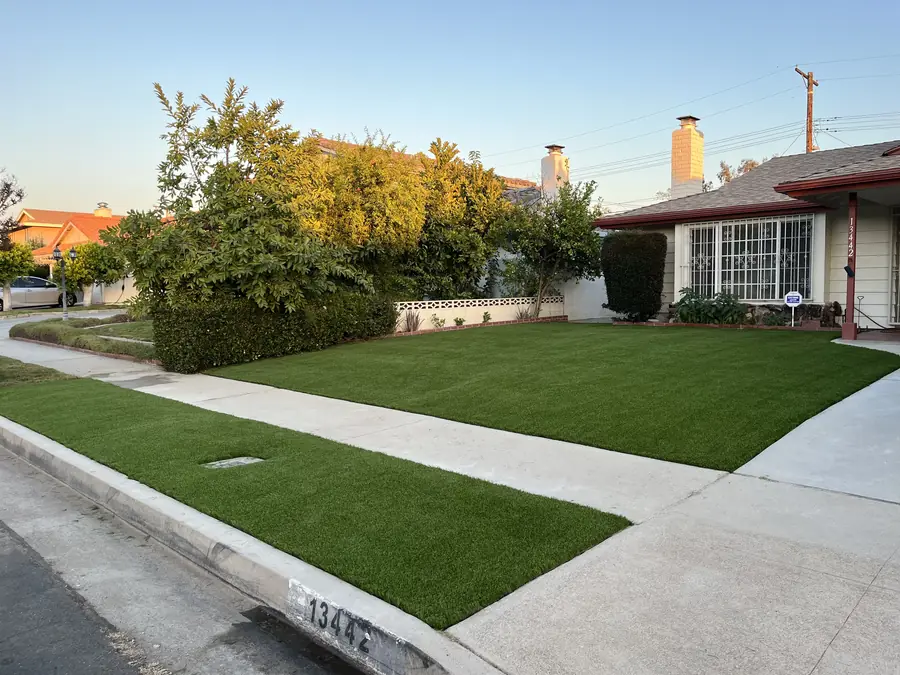
The base is most of the job. We strip the existing lawn or soil to depth, compact the subgrade, then build up crushed aggregate in lifts, compacting each one and grading it to a deliberate fall. A weed barrier goes over the base. Turf is rolled out and allowed to relax so it lays flat, then cut to the perimeter, seamed, fastened at the edges, and brushed full of infill. A synthetic lawn that dips, holds water, or wrinkles is telling you the base underneath was rushed.
It drains, but only if we build the fall in, and that takes deliberate work on ground this flat. Turf backing is perforated and the aggregate base beneath is free draining, so water passes through instead of pooling on the surface. The real question is where it goes after that. On a flat San Fernando lot we grade the base toward a planted area, a drain inlet, or a permeable edge, and on tighter sites we run a drain line under the base before turf is laid.
Synthetic turf gets hot under direct sun, and summers in this city deliver plenty of it. In full afternoon exposure the surface will be warmer than natural grass, which is worth knowing before you cover an entire west facing yard in it. Lighter colored infill helps, and rinsing with a hose cools the surface quickly. Shade is the real answer, whether from an existing tree, a patio cover, or placing turf where the house throws afternoon shadow. On the north side or under a tree, heat is rarely an issue.
It removes lawn irrigation from your bill entirely, and in this climate that is the largest single outdoor water use. Hot, dry, full sun summers mean a real lawn here needs frequent watering just to stay presentable, and it still browns during the worst stretch of the season. Turf needs an occasional rinse and nothing more. We will not promise a figure, since every property and household differs, but the lawn zones simply stop running. Planting beds keep their drip, which uses a fraction of what spray zones did.
For a front yard that gets looked at more than it gets used, a moderate pile height looks natural and stays upright. Face weight is the more meaningful number, because it describes how much yarn is actually in the product. Heavier face weights resist matting, feel denser underfoot, and hold up far better in a walkway or a gate path. Very long pile looks lush in a showroom and lies down flat in real use, so we steer people away from it for anything facing the street.
Blade shape controls how the turf stands up and how it reflects light. Flat blades look shiny and mat down quickly. Shapes with a spine, such as S, W, or diamond profiles, resist bending and stay vertical longer, which keeps the lawn reading like a lawn rather than a carpet. Multi tone yarn with a brown thatch layer underneath breaks up the color so it does not look like a solid green sheet. We bring samples to the property so you can judge them in your own light.
Infill weighs the turf down, holds blades vertical, and shields the backing from UV. Rounded silica sand is the standard and works well for most yards. For households with dogs we use an antimicrobial coated infill or a zeolite product, which captures ammonia from urine and releases it on rinsing, and that is what keeps odor down through hot weather. Infill needs topping up occasionally in high traffic paths. Skimping on infill is a common shortcut and it shows within the first year as flattening.
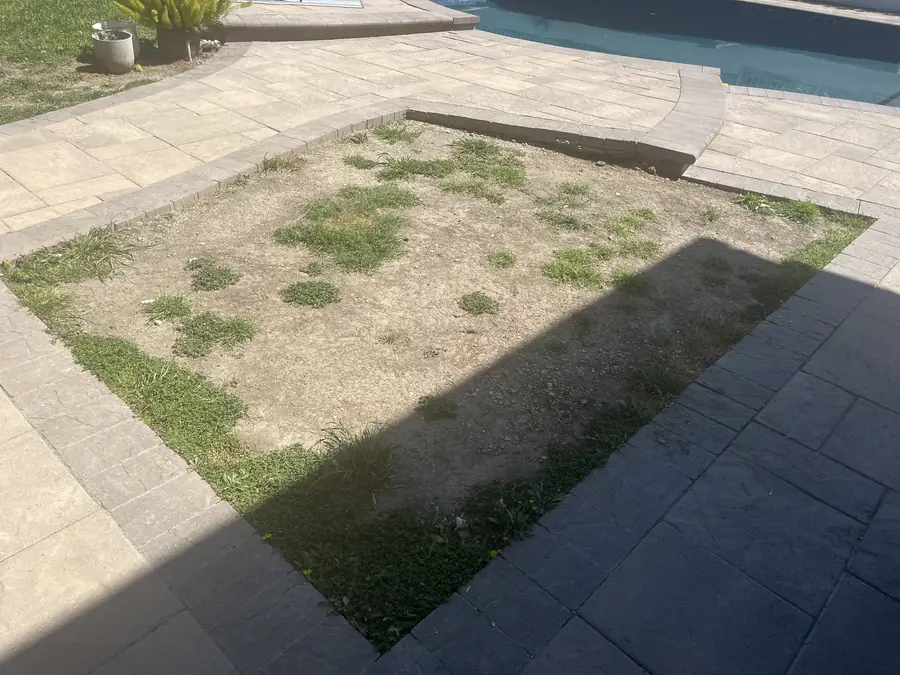
Yes, and on older San Fernando properties that is often the whole point. Many of these homes still run their original sprinklers, with heads set for a lawn shape that no longer matches the yard and valves quietly leaking underground. We cap the lawn zones properly at the valve rather than cutting a line and burying it, remove the old sod and root layer, and build the turf base from there. Any beds that remain get converted to drip off the existing valves, so the controller still has something useful to run.
Turf itself is a surface treatment and generally does not require a permit. What matters is remembering which city you are actually in. San Fernando is independently incorporated and entirely surrounded by Los Angeles, so if your project also includes a wall, a raised border above a certain height, or work in the driveway approach, that review happens under the San Fernando municipal code through the City of San Fernando, not Los Angeles Building and Safety. We confirm the current requirement for your specific scope with the city directly.
Seams are where a poor install announces itself. We run every roll in the same direction so the blades lean the same way, because reversing a roll makes the two halves read as different colors in sunlight. Edges are trimmed cleanly along the stitch row, joined with seaming tape and adhesive or fastened depending on the situation, and blades are teased free of the seam so it disappears. On a wider yard we plan roll layout before cutting anything, keeping seams out of traffic and keeping the count down.
Perimeters are secured with galvanized nails or spikes driven through the backing into the compacted base at close spacing, tighter than most people expect. Against a paver edge, a concrete walk, or a bender board border, turf is tucked and fastened so nothing lifts. Where turf meets a planting bed we set a firm edge that holds both the base material and the turf line. An edge that pulls up is the most common turf complaint we hear, and it comes from too few fasteners and a soft perimeter base.
Routine care is light. Rinse it down with a hose to clear dust and cool the surface, and brush the blades against the grain in traffic paths to bring them back upright. Solid pet waste is picked up exactly as it would be on grass, and urine rinses through the perforated backing into the base below. For odor, an enzyme cleaner and a rinse handles it, and the right infill does most of that work already. Blow or rake leaves off rather than letting them break down into the infill.
Quality turf holds up for many years, and UV exposure limits it more than foot traffic does. This city delivers intense, sustained summer sun, so the UV stabilization of the yarn matters and cheap product fades noticeably faster. What really determines lifespan is the base and the maintenance. A properly compacted, well drained base does not settle, and infill kept topped up keeps blades standing. Turf that fails early usually failed underneath rather than on top, and no amount of good yarn rescues a bad base.
One licensed contractor handles it from excavation through the final brushing. Daniels Landscaping stays accountable for the work. The people grading and compacting your base are the same people cutting, seaming, and fastening the turf, which matters because the invisible stages decide how the finished lawn looks in year three. You deal with one company from the estimate through the walkthrough, and if anything needs attention afterward, you call us and we take care of it ourselves.
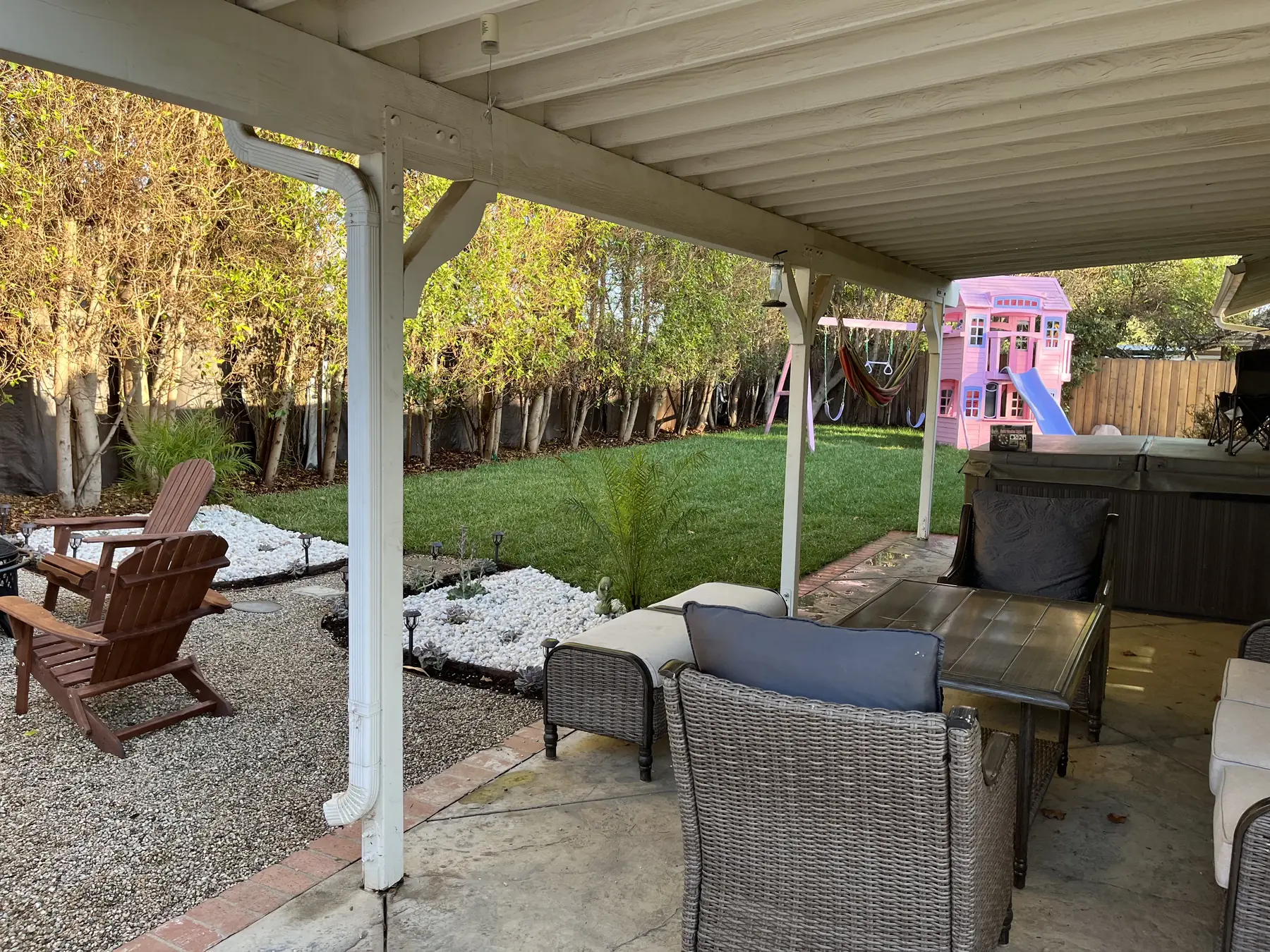
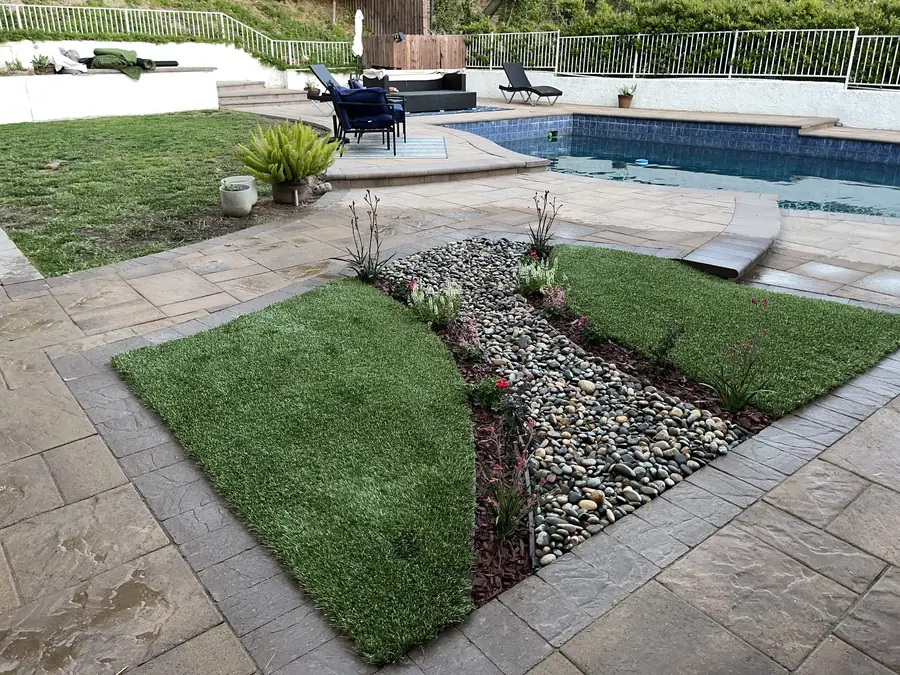
That is usually the smarter layout on a compact lot. Homes in this city tend to sit on regular, modest sized parcels, and covering every square foot in green reads flat and gets hot. We often set a turf area sized to how the space is genuinely used, a play area or a dog run, then surround it with drought tolerant planting, a gravel or paver seating area, and a tree for shade. The turf stays useful, the planting gives the yard depth, and water use stays low.
Lawn zones get shut down at the source. We cap lines at the valve rather than leaving pressurized pipe with cut ends buried under a new base, because a leak beneath finished turf is a miserable repair. If planting beds are staying, we convert those valves to drip and adjust the controller so it runs a schedule appropriate for beds instead of an old lawn program. If the entire yard is going to turf, the system is properly decommissioned and the controller retired.
Wrinkles and flattening trace back to installation, not to the product. Turf that was not allowed to relax before being cut and fastened will move as it warms and shows waves. A base that was not compacted in lifts settles unevenly and telegraphs through the surface. Too little infill lets blades lie down permanently. Too few perimeter fasteners lets edges creep. All four are avoidable, and all four cost more to correct afterward, since the fix usually means pulling the turf back up.
Call Daniels Landscaping at (818) 443-9300 to set up a visit at your San Fernando home. We will measure the area, check how the ground drains, talk through pile height, face weight, and infill with samples in hand, then leave you a free written estimate that spells out base depth and materials. We are licensed in California under number 1138709 and install everything with one licensed contractor. Compare estimates on base preparation, not just turf price, because that decides how the lawn looks years from now.