
FAQ
Landscape Lighting in Encino, answered
The questions we hear most from Encino homeowners.
Low-voltage landscape lighting runs on twelve volts rather than household current, so a transformer steps the power down before it reaches the fixtures. This approach is safer to work around, gentler on your plantings, and flexible enough to place small LED lights exactly where they belong. For Encino properties with mature trees and wide yards, low-voltage LED systems let you light specific features without heavy wiring. You gain warm, controlled light, lower energy use, and fixtures that are simple to adjust as your garden grows.
Uplighting a mature oak starts with respect for the root zone, which spreads well beyond the trunk and sits close to the surface. Rather than trenching through that area, we set fixtures on the ground or on low stakes and route low-voltage cable along the surface under mulch or existing beds. Aiming matters too, since a few well-placed lights can graze the trunk and reveal the canopy without crowding the base. The result shows off the tree at night while leaving its roots undisturbed.
Yes. On the larger lots common in Encino, we plan cable runs before any digging so the routes avoid the sensitive soil above oak roots. Where a line must cross a root zone, we lay it shallow by hand and tuck it under mulch instead of cutting a trench. Longer runs also call for the right wire gauge and transformer taps, which keep the far fixtures bright. Careful layout means you can light a wide property fully while protecting the trees that make it special.
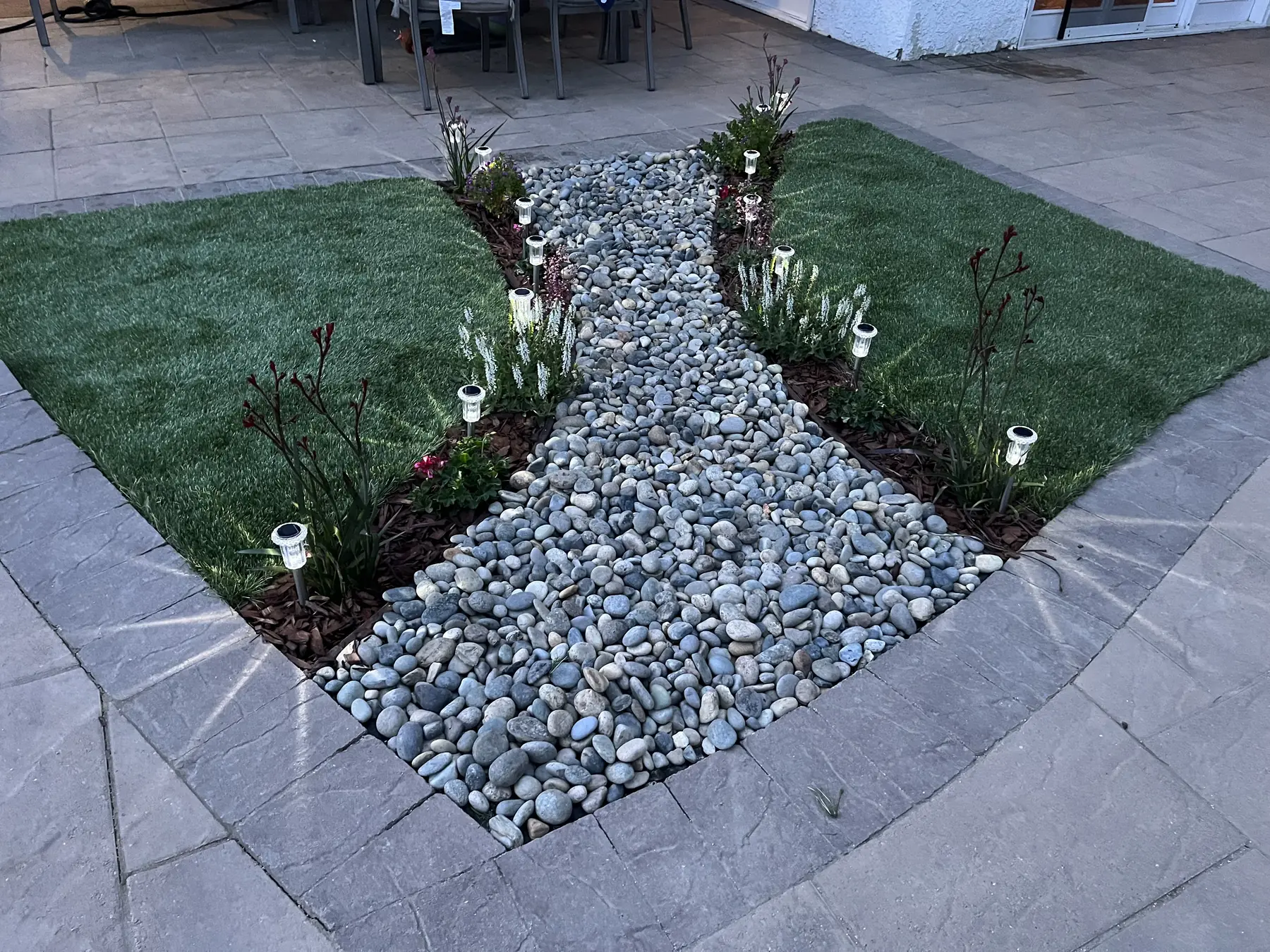
Path and walkway lights guide people safely along your steps, driveways, and garden routes while adding a soft glow at ground level. The best choice depends on the width of the path, the surrounding plants, and how much light you want spilling onto nearby beds. We usually space shielded fixtures so the pools of light overlap gently rather than creating bright dots with dark gaps. Shielding also points the light down onto the path, which reduces glare toward your eyes and keeps the effect calm and even.
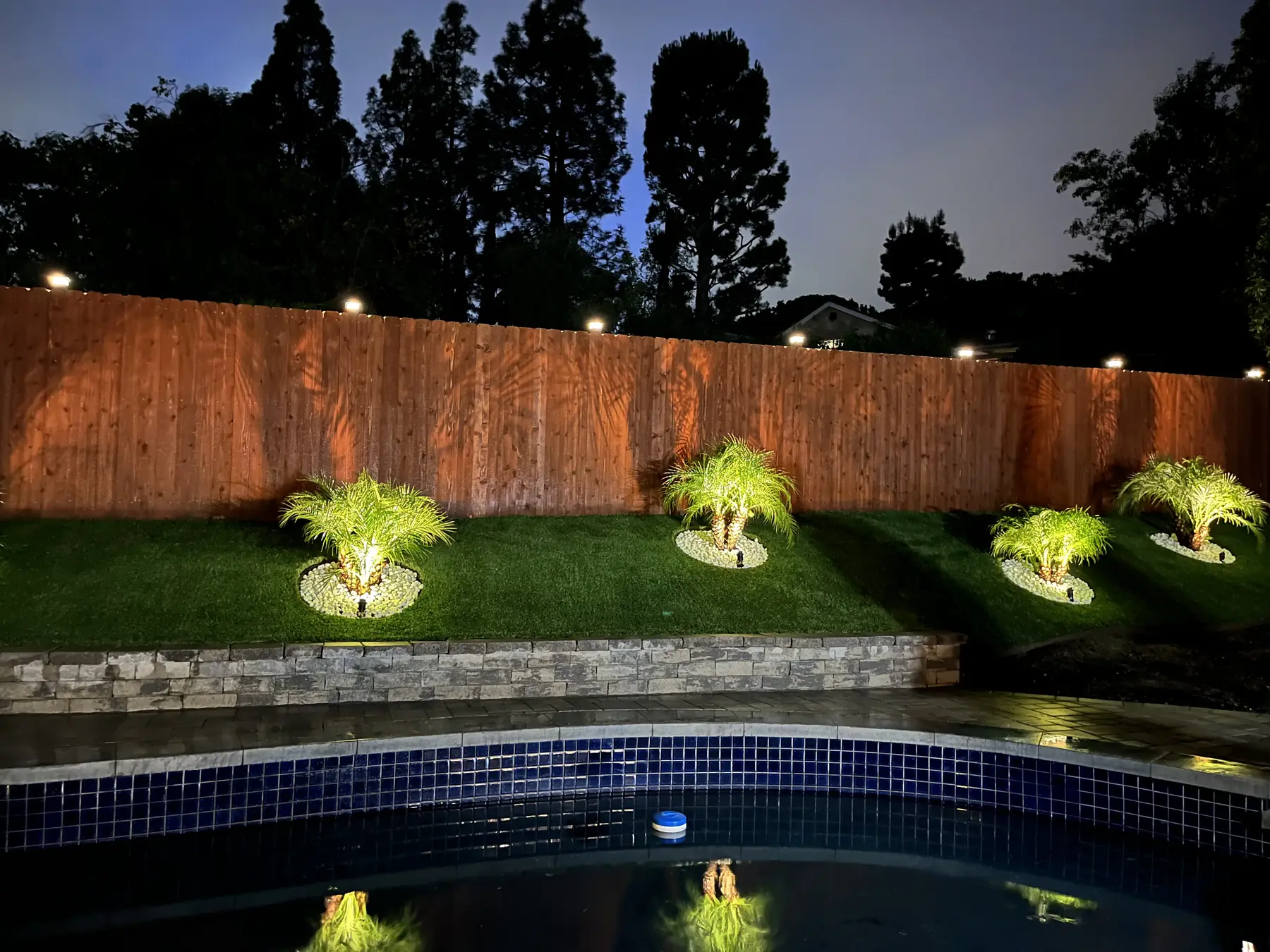
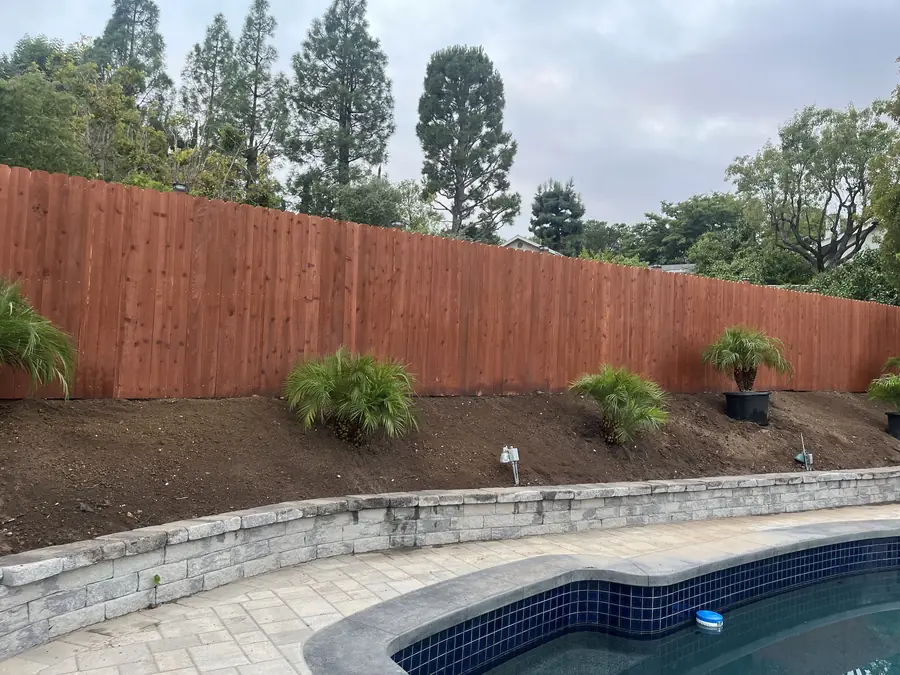
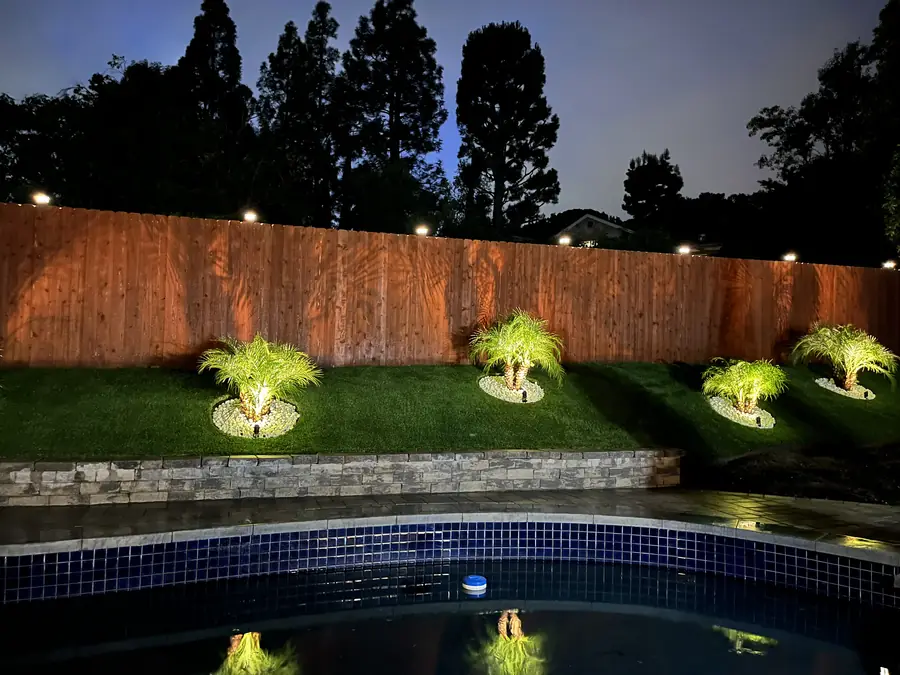
Lighting around a pool works best when it makes the deck, steps, and edges easy to see without throwing harsh light across the water. We often light the surrounding plantings, walls, and walkways so the whole space feels usable in the evening, then keep fixtures low and shielded near the water itself. Warm light on nearby trees and a soft wash on a back wall give a pool area depth after dark. The goal is a setting that is both inviting for evenings and safer to move around.
Safety near water is a serious matter, so any lighting close to a pool follows the electrical code that governs those areas. Low-voltage LED fixtures help, since they carry far less current than line-voltage lights, yet placement, bonding, and proper fittings still require a careful hand. We keep transformers and connections well away from the water and use fixtures rated for wet or damp locations. When the work is done correctly, you get lighting that looks great at the water and holds up safely for years.
House uplighting places fixtures at the base of walls, columns, and architectural features so light rises to highlight texture, rooflines, and entryways. Tree lighting, by contrast, aims up through branches to reveal the canopy and cast shadows across the yard. The two work together, since a lit facade gives your home presence from the street while lit oaks add height and drama around it. Balancing brightness between the house and the trees keeps the scene from looking flat or letting one element overpower the rest.
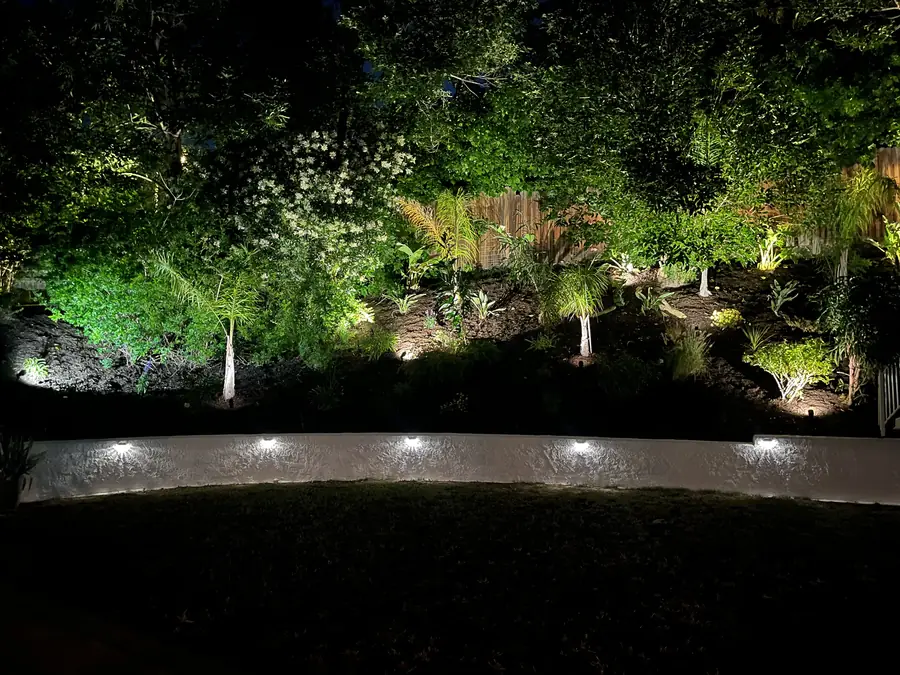
Wall washing and grazing are two ways to light a vertical surface. A wash sets fixtures back from the wall and spreads a smooth, even layer of light, which suits a clean stucco face or a garden wall. Grazing places the light close to the surface and aims it sharply upward or downward, so every ridge in stone, brick, or wood casts a shadow and the texture stands out. On an Encino property with long boundary walls, both techniques add depth and turn plain surfaces into features.
Step and deck lights earn their place anywhere a change in level could catch someone off guard. Small fixtures set into risers, railings, or the edge of a deck light the surface just enough to show where to place a foot, which matters most near pools, patios, and garden stairs. Beyond safety, they add a quiet, layered glow that makes an outdoor space feel finished. We tuck these lights into the structure so you notice the effect on the steps rather than the fixtures themselves.
Good lighting removes the dark corners where someone could hide and makes your property look occupied and cared for. Rather than one harsh floodlight, a layered design spreads gentle light across entries, paths, and side yards, so the whole lot reads as visible without feeling like a stadium. Walkways and steps become easier to navigate, which lowers the chance of a trip or fall. On the larger Encino lots with long driveways and deep yards, thoughtful placement covers the ground that a single fixture would leave in shadow.
Every low-voltage system relies on a transformer, which steps household power down to the level the fixtures use. From there, you choose how the lights turn on and off. A timer or photocell can bring the system up at dusk and shut it down late at night, while a smart controller lets you set schedules, zones, and scenes from your phone. We size the transformer for your fixture load with room to spare, so you can add lights later without straining the system.
Dim fixtures at the far end of a long run usually point to voltage drop, which is the gradual loss of power as electricity travels down a wire. The longer the cable and the smaller its gauge, the more the voltage falls before it reaches the last light. On the deep lots found around Encino and neighboring Tarzana, this shows up as bright fixtures near the transformer and weak ones at the back. We solve it with heavier cable, smart wiring layouts, and correct transformer taps so every fixture receives steady voltage.
A boxed kit from a hardware store looks affordable, yet those fixtures are often thin plastic, the wire is undersized, and the layout is left to guesswork. The lights tend to fade, corrode, or fail after a season or two, and voltage drop leaves the far ones dim. A professional install uses solid-metal fixtures, correctly sized cable, and a properly matched transformer, all placed to a plan. Around Encino oaks and pools especially, careful design and safe wiring are worth far more than the low sticker price of a kit.
Quality LED systems ask little of you, though a small amount of care keeps them looking their best. Lenses gather dust and spider webs, plants grow and block beams, and soil shifts after rain, so an occasional cleaning and re-aiming goes a long way. Good LED lamps run for many years before they dim, and solid brass or copper fixtures often outlast cheaper metals by a wide margin. We are happy to check the system periodically, adjust fixtures around growing oaks, and replace any part that wears.
Color temperature sets the mood of the whole scene. Warm light, in the lower Kelvin range, casts a soft amber glow that flatters wood, stone, stucco, and green foliage, which is why most homes prefer it for gardens and facades. Cooler light looks bluer and can suit modern architecture or a crisp accent, yet too much of it tends to feel stark outdoors. We generally lean warm for Encino landscapes, then keep every fixture at a consistent temperature so the yard reads as one calm, unified picture.
Courtesy toward neighbors comes down to aim and shielding. We angle fixtures so the light lands on your trees, walls, and paths rather than spilling across a property line or into a bedroom window. Shielded and well-placed lights hide the bright source from view, so people see the glow on the feature instead of a harsh point of light. Keeping brightness moderate and color warm also helps the scene feel gentle. On close Encino lots, this care lets your lighting look its best without troubling anyone next door.
Many of the grand oaks in Encino are mature and often protected, so lighting them calls for extra caution around the trunk and roots. We avoid trenching, fastening fixtures to the bark, or piling soil against the base, since each can harm a tree that has stood for generations. Instead, freestanding fixtures and surface-run low-voltage cable let us light the canopy while leaving the tree untouched. If your property falls under local tree rules, we work within them and keep the design gentle, so the oak stays healthy and looks magnificent at night.
Getting started is simple. Call Daniels Landscaping at (818) 443-9300 to set up a visit, and we will walk your Encino property to see the oaks, the walls, the pool area, and the routes that matter most to you. From there, you receive a free written estimate that lays out the design, the fixtures, and the scope in plain terms. One licensed contractor handles the install, and we are licensed in California under number 1138709. When you are ready, we will bring your landscape to life after dark.