
FAQ
Landscaping in Canoga Park, answered
The questions we hear most from Canoga Park homeowners.
Cost depends on what your yard needs rather than a flat rate, so an old lawn removal with fresh irrigation and planting lands very differently than a full hardscape build. Around Canoga Park, two things move the number most, the heavy clay soil that has to be properly prepped, and tight side-yard access that can force material in by hand. The honest way to price it is a walkthrough of your actual space. Daniels Landscaping gives a free written estimate, so you see real figures before you commit to anything.
Most likely you have a cool-season lawn fighting a losing battle with Valley heat. Grasses like fescue green up nicely in spring, then scorch and thin once the long, dry heat settles in, no matter how much you water. The clay soil makes it worse because it bakes hard and sheds water instead of soaking it in. You have a few honest paths forward, a tougher warm-season grass, a low-water planting scheme, or artificial turf, and the right pick depends on how you actually use the yard.
Clay is dense and slow to drain, so the winners are plants that tolerate heavy soil and long dry spells once established. Think Mediterranean and California-friendly choices such as rosemary, salvia, lavender, westringia, and ornamental grasses, along with agave and other succulents for structure. Trees like crape myrtle and various oaks handle the conditions well too. The real trick is not just the plant list but improving the soil first with compost and correct grading, because even tough plants sulk when their roots sit in wet, compacted clay.
If your lawn is patchy, thirsty, and sitting on irrigation that has seen better decades, replacement usually pays off faster than another round of repairs. A lot of Canoga Park homes still run their original turf and sprinkler lines, and pouring water into failing pipes and dead spots gets expensive with little to show for it. Replacing gives you a clean slate to fix the soil, correct drainage, and choose something suited to the heat. Whether you go low-water planting or turf, the water savings alone often make the case.
Narrow access is common on the older tracts here, and it shapes how a job runs. When a gate or side yard is too tight for machinery, soil, rock, pavers, and green waste all move by wheelbarrow and by hand, which takes more labor and careful planning. We look at your access before quoting so nothing surprises you halfway through. In some cases we stage materials in the driveway and protect your surfaces as we go. Tight access does not stop a great result, it just means the crew plans the route first.
Straightforward planting, irrigation, and lawn replacement generally do not require a permit. Certain work does, and it is smart to confirm rather than guess, since Canoga Park falls under the City of Los Angeles for building rules. Things like retaining walls above a set height, major grading, electrical for lighting, or structures such as pergolas can trigger a permit. When your project includes that kind of work, we walk you through what is needed and handle the process so it is done correctly and to code.
The best approach pairs drought-tolerant plants with smart irrigation and materials that handle heat without constant fuss. Given the intense Valley summers, a design might combine California natives and Mediterranean plants, permeable gravel or decomposed granite, boulders, and defined mulch beds, with drip lines delivering water right to the roots. This look reads as intentional rather than bare, and it thrives in exactly the dry, hot stretch that punishes a traditional lawn. Since local clay drains poorly, proper soil prep and grading still matter so water soaks in rather than running off.
Fresh plantings need steady moisture while roots establish, but clay soil changes the rhythm. Because it drains slowly, you water less often and for longer, letting moisture move down deep instead of drowning the surface. A good pattern is deep, spaced-out soakings at first, tapering off as plants settle in, and always early in the morning to beat evaporation. Your drip system should run on a controller you can adjust by season. Once established, the whole point of a low-water design is that watering drops off sharply.
In many local homes, replacing the sprinkler system is one of the most worthwhile upgrades you can make. Decades-old irrigation tends to leak underground, spray the sidewalk, and water unevenly, quietly running up your bill while plants still go thirsty. We can repair what is salvageable or replace tired lines entirely, and often the smarter move is converting spray heads to drip for beds and adding a modern controller. Updated irrigation matched to Canoga Park heat means water reaches roots instead of evaporating or pooling on that slow-draining clay.
Timeline comes down to scope. A focused lawn-to-drought conversion moves quickly, while a full redesign with hardscape, drainage, and planting runs longer. Local factors can stretch things too, since tight side-yard access slows material handling and heavy clay sometimes needs extra grading and drainage work before anything gets planted. Rather than quote a number blind, we give you a realistic schedule with your written estimate, once we have seen the space and know what the yard actually needs. You will know the plan before the crew starts.
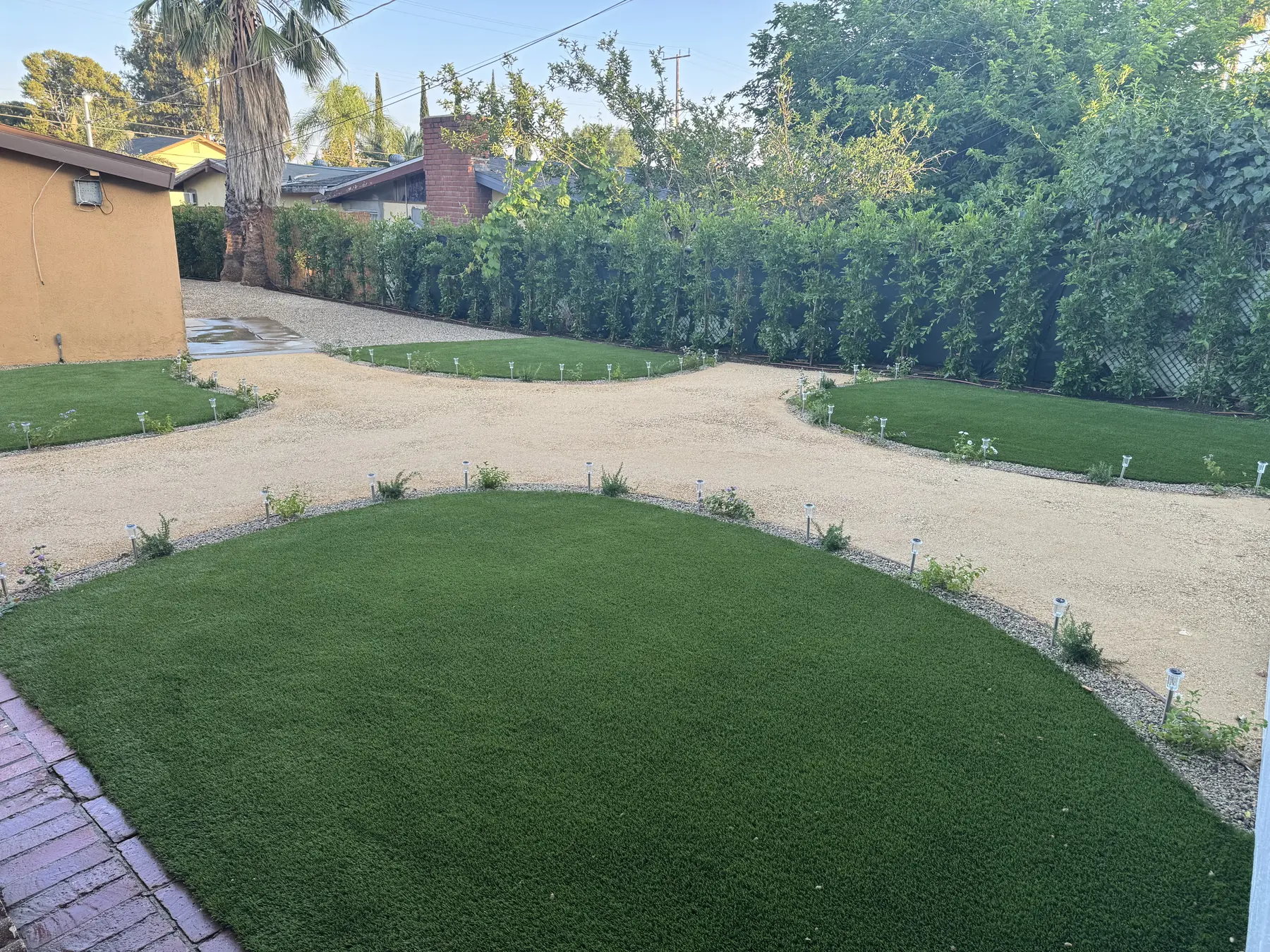
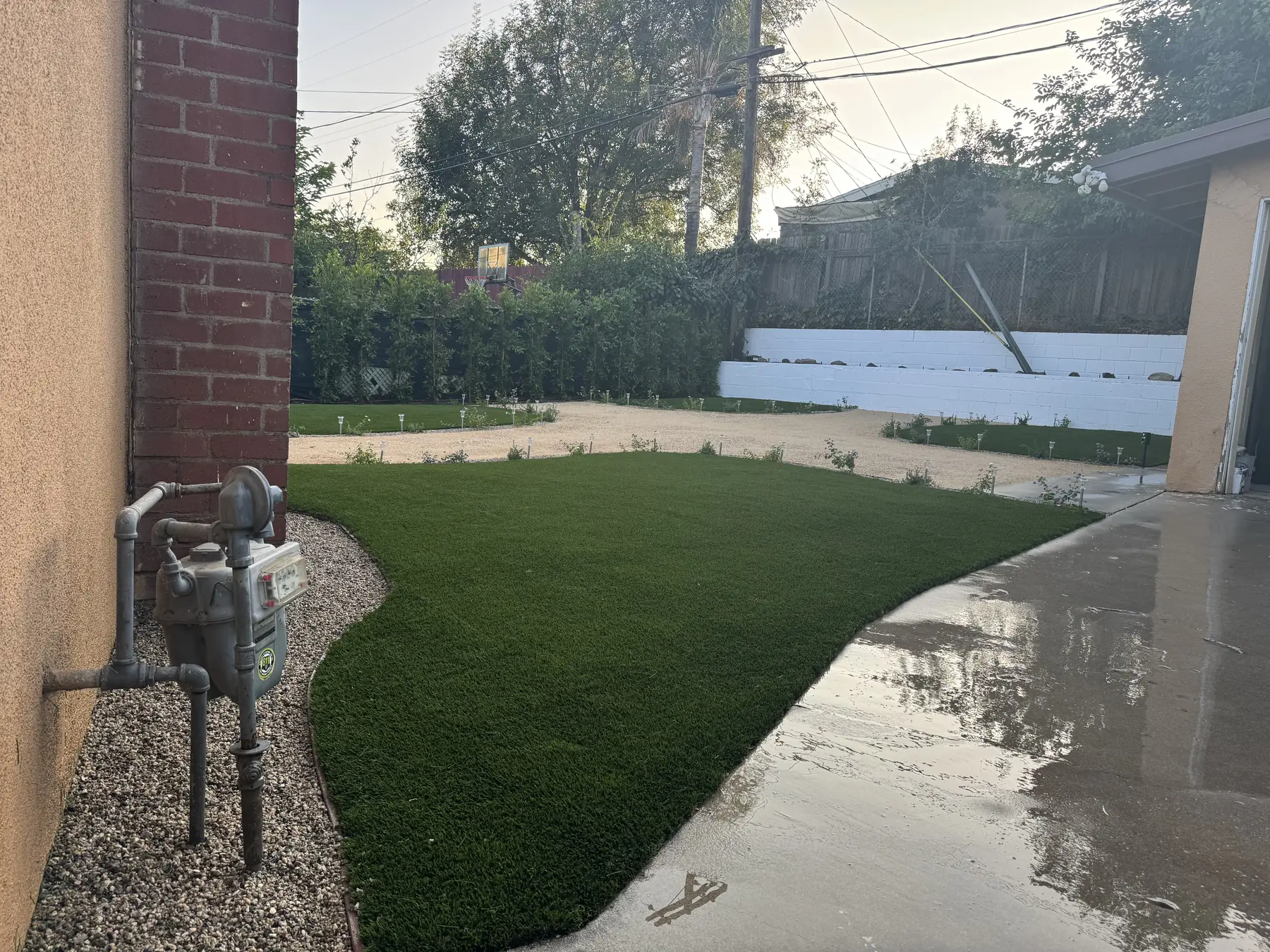
For the right yard, it makes real sense. Artificial turf stays green through brutal Valley summers, needs no watering, and suits homes where kids and pets want a durable surface. The key is the base. On heavy clay that drains poorly, proper excavation, a compacted aggregate base, and drainage underneath keep the turf from holding water or shifting. Done right, it looks clean for years with little upkeep. It is not the answer for everyone, so we talk through sun, use, and budget before recommending it over living low-water planting.
Design-build means one team handles both the plan and the construction, so you are not juggling a separate designer and contractor who blame each other when something slips. You walk the yard with us, we design around your goals, your budget, and the realities of your lot, then the same crew builds it. That continuity matters on Canoga Park properties where clay soil, drainage, and narrow access all need to be solved together rather than in isolation. One accountable team from first sketch to final plant keeps the vision and the workmanship consistent.
Pooling almost always traces back to two things here, flat lots and heavy clay. With little natural slope and soil that resists soaking up water, rain and overspray sit on the surface instead of draining away. Old, uneven irrigation and settled low spots make it worse. The fix is grading the yard to move water where you want it, and sometimes adding drains, dry creek beds, or permeable surfaces. Solving drainage first protects everything you plant afterward, because few things kill roots faster than standing water on compacted clay.
Absolutely, and front yards are where a smart redesign earns its keep. Curb appeal on these flat postwar lots comes from clean lines, a welcoming entry, and planting that looks sharp without begging for water. Many owners here swap a struggling front lawn for low-water beds, a stone or paver path, and a small feature tree, which lifts the whole street presence. Because the front yard is the face of the home, we pay attention to how it reads from the sidewalk and from the curb as you pull up.
Pavers, concrete, flagstone, and gravel all work well, and the choice comes down to look, budget, and how you plan to use the space. What truly determines longevity is the groundwork underneath. Clay soil expands and shifts with moisture, so a patio needs proper excavation, a solid compacted base, and drainage, or it will crack and heave over time. We build the base for local soil, not against it. Get that foundation right and your hardscape stays flat and true through years of Valley heat and the occasional heavy rain.
We are, on both counts. Daniels Landscaping is a licensed California contractor, license number 1138709, and carries insurance for the work we perform. Hiring a licensed contractor protects you, since it means the crew answers to state standards and the job is done to code rather than cut corners you discover later. If you ever want to verify the license, you can look it up through the California state board using that number. When you invite a contractor onto your property, that paperwork is not a formality, it is your protection.
Yes, Canoga Park sits in the heart of our service area, and we regularly work the surrounding West Valley as well. Neighboring communities like Winnetka and West Hills share the same postwar housing stock, clay soil, and summer heat, so the approach carries over cleanly. We also handle projects up around the Warner Center side of town. If you are close to Canoga Park and dealing with a tired lawn, poor drainage, or aging irrigation, it is worth a call to check that your street falls within range.
Getting started is simple. Call Daniels Landscaping at (818) 443-9300 to talk through what you have in mind, whether that is replacing a dead lawn, fixing drainage, or reimagining the whole yard. We set a time to walk your property, look at access, soil, and how you want to use the space, then put together a free written estimate with a clear plan and honest pricing. There is no pressure to decide on the spot. Once the plan feels right, our crew gets to work turning your Canoga Park yard into something built to last.