

Canoga Park hardscaping
Hardscaping questions, answered
What Canoga Park homeowners ask before building.
Price per square foot moves with the paver you pick, how much excavation the area needs, and how cut-up the shape is. A clean rectangle off the back door is the cheapest thing we build; curves, steps, and levels add labor. The smaller lots here keep most patios affordable. We measure and quote the finished job, base and edge restraint included.
Expansive clay. Canoga Park sits on soil that swells with winter moisture and shrinks through summer, and that movement works on a rigid slab all year. Add sixty-year-old concrete poured thin with no steel, which describes a lot of the original flatwork in these tracts, and cracking is inevitable. Proper depth, steel placement, and control joints cut at the right spacing manage it.
Pavers cost more up front and usually win on clay, because they flex with ground movement instead of cracking and a damaged one lifts out. Poured concrete is cheaper for driveways and long straight runs. We price both on the same layout so you can compare real numbers.
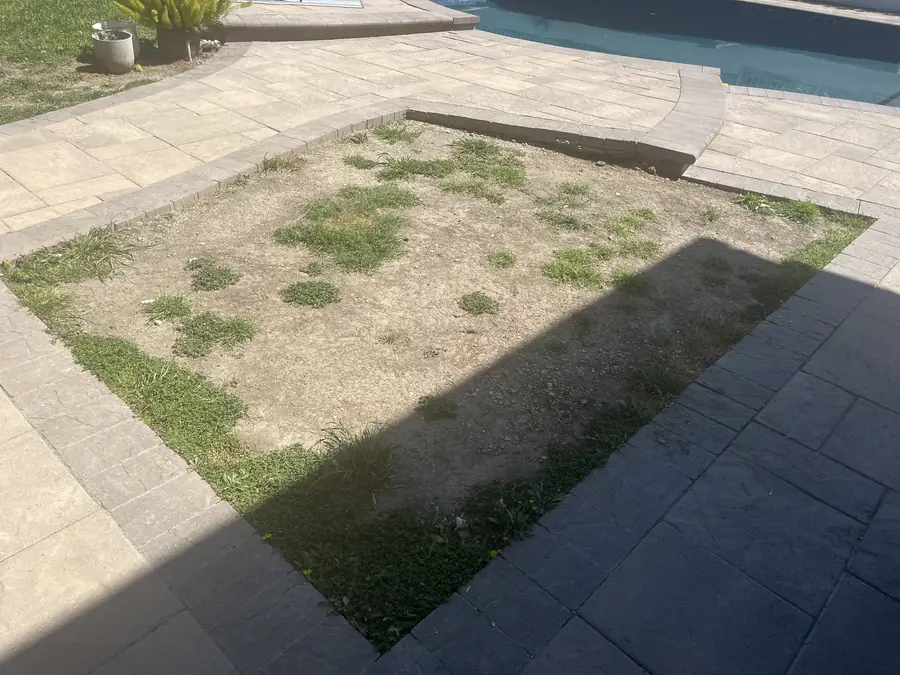
Yes, and in these tracts it is one of the best-value jobs there is. Canoga Park side yards are narrow strips of dirt or failing grass, and they turn into something clean and useful with pavers or decomposed granite, a proper edge, and a stepping-stone path. Small project, outsized effect on how the property feels.
Almost always a thin base, poor compaction, or missing edge restraint. Water gets under a weak base, the clay moves, and the field settles unevenly. Without edge restraint the perimeter creeps and the joints open. Both are cheap to do right at install and expensive to fix afterward, since fixing them means lifting the pavers.
It depends on the load, and on clay we do not cut it thin. A walkway needs less than a driveway holding a vehicle. What matters as much as depth is compacting in layers rather than dumping the full depth and rolling over the top, which leaves the bottom loose and guarantees settlement on this soil.
Some seeds blow into the joints and sprout, the same as any outdoor surface. Polymeric joint sand hardens between the pavers and cuts it down a lot, and the occasional pull handles the rest. A proper base with a barrier stops anything pushing up from underneath.
Yes. A driveway takes vehicle loads daily, so it gets a deeper compacted base and thicker driveway-rated pavers rather than patio pavers. On the flat Canoga Park lots the main extra consideration is drainage, making sure the drive sheds water away from the garage rather than toward it.
Yes, usually in the same phase as the patio. Seating walls are one of the best-value items in a back yard, giving permanent seating with nothing to store. Fire features fall under our outdoor living work and are often built into the hardscape.
It will if nobody plans for it, because you are replacing ground that absorbed water with a surface that sheds it. We grade every hard surface to fall away from the house and add channel drains where the volume needs them. On a flat Canoga Park lot that grades slowly, this matters more than people expect.
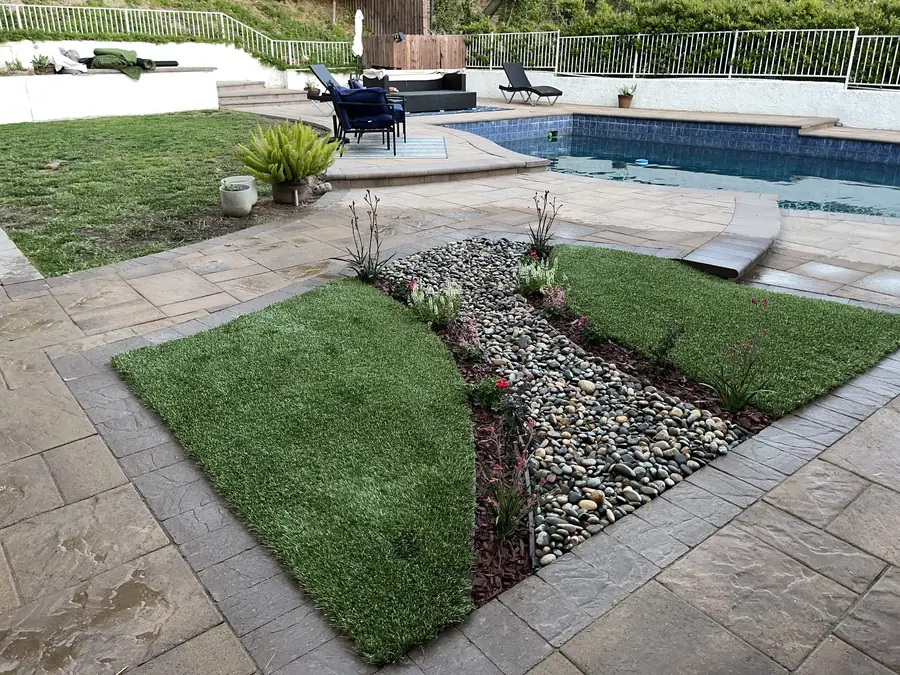
Yes. The priorities are a surface that is not slick when wet, not painfully hot barefoot in summer, and drainage that pushes water away from the pool. Pavers around a pool also make future plumbing repairs simple, since you lift pavers instead of breaking concrete.
Yes, all of it. Old concrete, broken pavers, dead sod, and debris leave with us, written into the estimate up front so it is never a surprise line at the end.
Not required, but worth it on patios and driveways. Sealer deepens the color, makes stains easier to clean, and helps hold the joint sand. It needs redoing every few years. On a back patio that only sees foot traffic, plenty of homeowners skip it and are happy.
Sometimes. If the product is still made we can order it; if it is discontinued we find a close match or design the new area as a deliberate border or band so it reads as intentional rather than a failed match. We show samples against what is there before ordering.
A modest patio or walkway is several days to about a week. A larger project with walls and drainage takes longer, and driveways add cure time. Excavation and base take longer than laying the surface, which surprises people, but that is the part doing the work for the next twenty years.
Yes. We plan the whole layout once so grades, drainage, and materials still work together, then build in stages to fit a budget. Planning it as one design is what stops phase two fighting phase one.
All of it, from the older streets near Sherman Way up toward Warner Center. See our Canoga Park page for everything we do here, and we cover the neighboring cities too.
We walk the yard, look at the soil and the drainage, and give you a written number. Request a free quote and we will set a time.