
FAQ
Landscape Lighting in Canoga Park, answered
The questions we hear most from Canoga Park homeowners.
A low-voltage system runs on twelve volts instead of household current, which makes it safer to work around and gentler on your landscape. The core parts are a transformer that steps the power down, direct-burial cable, and LED fixtures for paths, trees, walls, and the entry. We size the transformer to your fixture count with room to grow, then lay the cable on planned runs. Everything is designed as one system, so the lighting looks intentional rather than a handful of random stakes pushed into the soil.
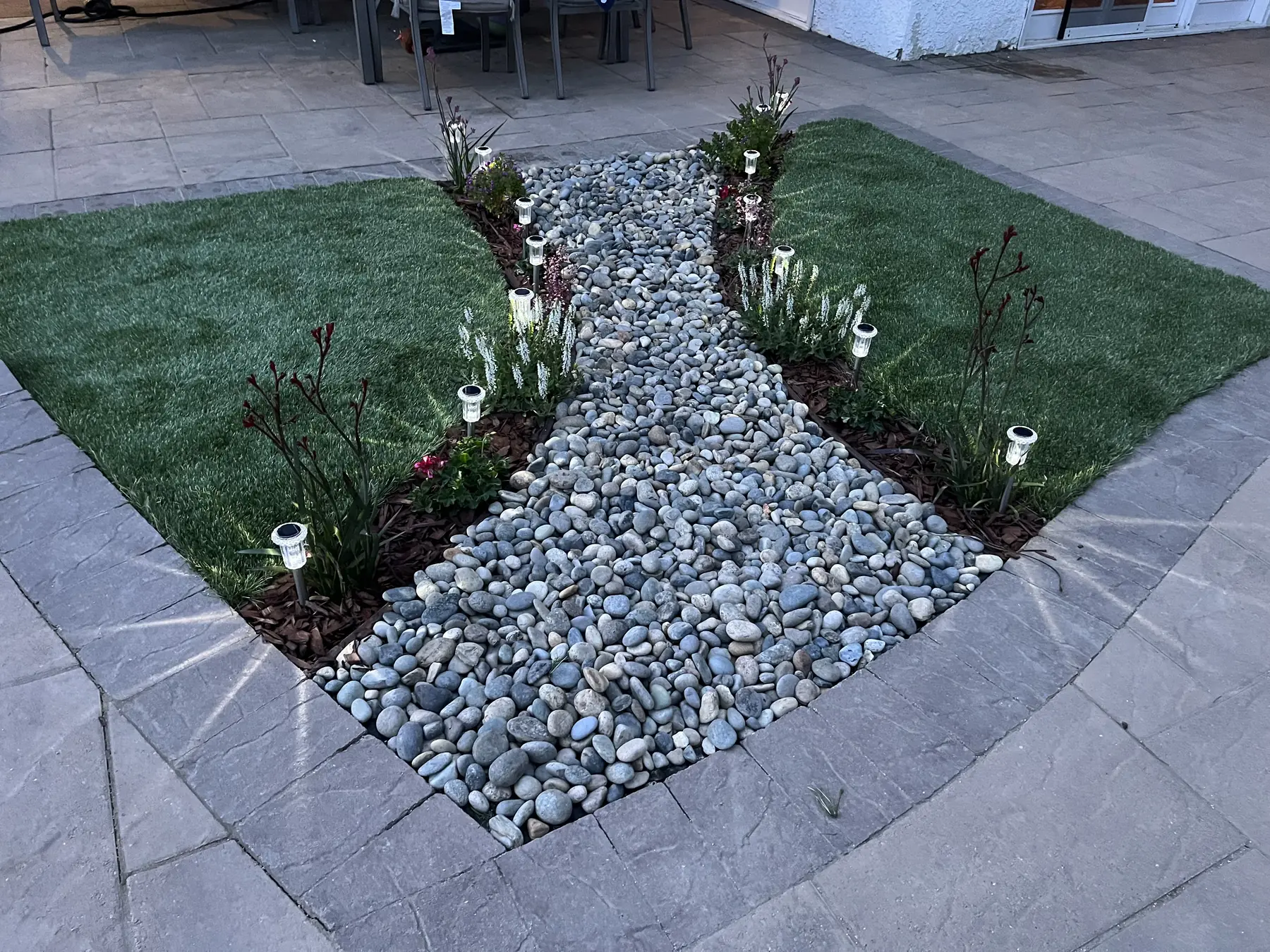
Good path lighting guides the eye and the foot without turning your walkway into a runway. Rather than spacing fixtures evenly in a straight military line, we stagger them along curves, near steps, and at transitions where the ground changes height. On the flat lots common around Canoga Park, a gentle rhythm of light pools reads as warm and finished. We aim the light down and shield the source, so you see the path and the plants, not a row of bright bulbs shining back at you.
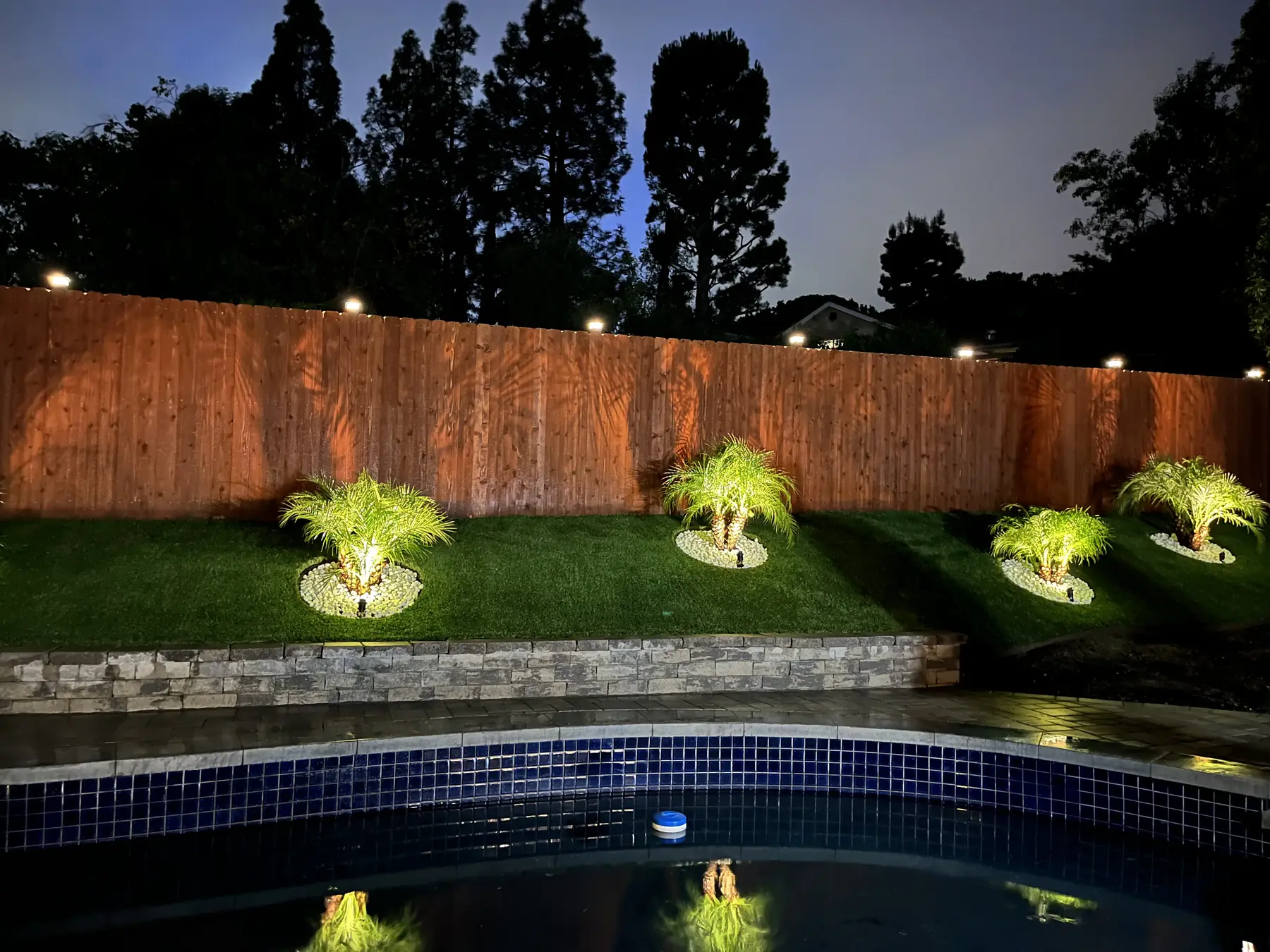
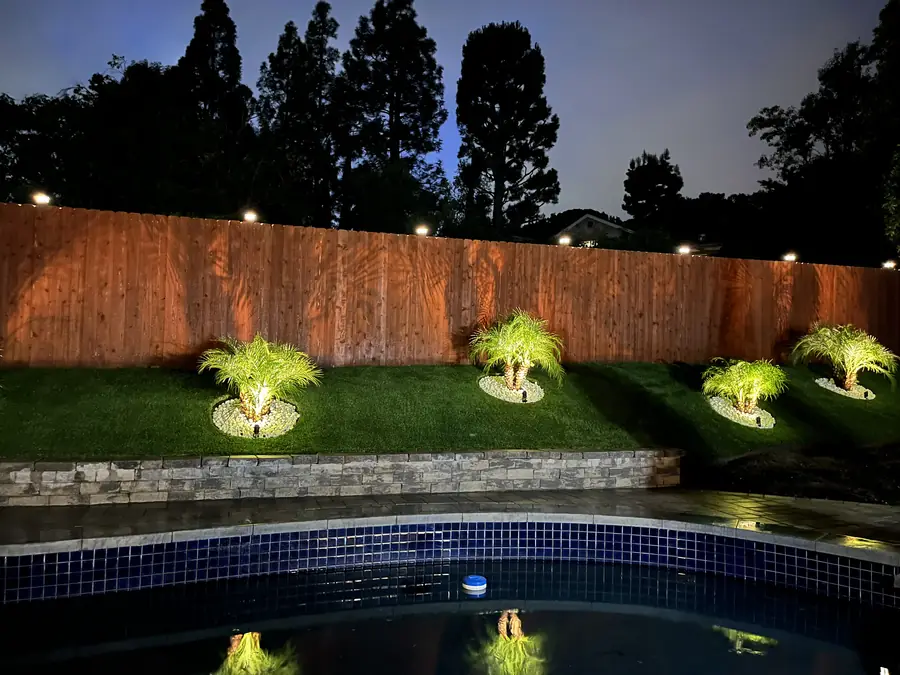
Yes, and uplighting is often what gives a yard that professional look at night. For trees, we place a fixture at the base and aim the beam up through the canopy, so the branches and leaves catch the light and cast soft shadows. On the house, we can graze the beam up a stucco or stone face to bring out texture, or highlight an entry, a chimney, or an architectural corner. Beam spread and brightness are matched to each target, because a mature oak and a young crape myrtle do not want the same fixture.
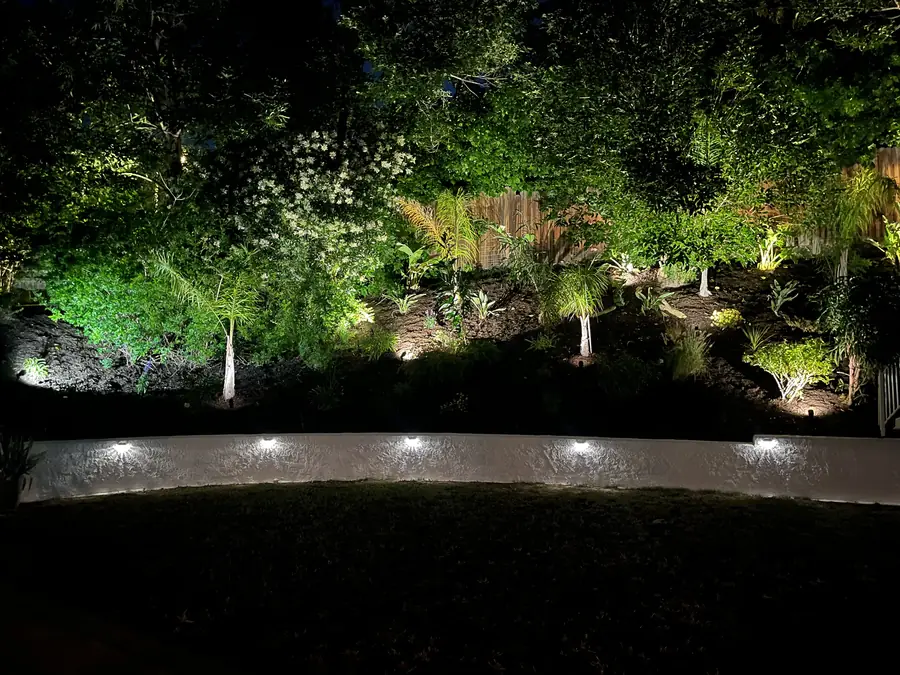
Both techniques light a wall, but they create very different moods. Washing places the fixture back from the surface and floods it with soft, even light, which is great for a smooth stucco wall or a fence you want to feel larger and calmer. Grazing sets the fixture close to the base and throws the beam nearly parallel to the surface, so every ridge, joint, and stone edge casts a shadow. On a slump-block or stacked-stone wall, grazing brings the texture to life. We pick the method to suit the material and the feeling you want.
We do, and step lighting is one of the most useful upgrades for safety. On stairs, we tuck small fixtures into the riser or under the tread nosing, so each step is clearly defined without a harsh glare in your eyes as you climb. For decks and patios, we can recess lights into posts, rails, or seat walls to mark edges and gathering spots. The goal is quiet, low-level light that makes footing obvious. You should be able to move around the yard at night and always see where the ground drops or rises.
Well-placed lighting removes the dark corners where someone could hide and makes an occupied home obvious from the street. On the close-set lots common in Canoga Park, we light the entry, the side yards, and the walk to the door, so visitors are seen and shadows have nowhere to gather. Even, layered light works better than one blinding floodlight, because a single bright source actually creates deep shadow just beyond its reach. Put the system on a timer or smart control, and the property looks lived in and cared for whether you are home or away.
The transformer is the heart of the system. It takes standard household power and steps it down to twelve volts, then feeds the fixtures through buried cable. A timer or photocell can switch the lights on at dusk and off at a set hour, so you never think about it. If you prefer, we can wire in smart control that you run from your phone, adjust for the season, or tie to a schedule. Sizing matters here, because a transformer loaded too heavily will not deliver steady voltage, and your far fixtures will look dim.
Voltage drop is the gradual loss of power as electricity travels down a cable. The farther a fixture sits from the transformer, the more voltage it loses along the way, which is why a cheap kit often has bright lights near the box and weak, yellowish ones at the end of the yard. We prevent this by choosing the right wire gauge, splitting long runs into separate legs, and connecting fixtures with a hub or loop method rather than daisy-chaining everything on one thin line. The result is even brightness from the first fixture to the last.
A boxed kit from the home center looks affordable until the first summer ends. The fixtures are often thin plastic, the wire is undersized, and the push-in connectors corrode where they sit in wet soil, so lights flicker and fail one by one. A professional install starts with a design, uses weather-rated fixtures and proper connectors, and sizes the transformer and cable to hold steady voltage across the whole yard. You pay more at the start, yet you avoid replacing the entire system in a year or two. It is the difference between a fixture and a system.
A quality low-voltage system asks very little of you. LED lamps last for years, so you are not swapping bulbs every season the way you would with old halogen fixtures. Now and then a lens gets cloudy from sprinkler spray, a fixture gets bumped out of aim, or a shrub grows in front of the light and needs trimming back. An annual walk-through catches those small things before they matter. We can check connections, clean lenses, adjust aim, and confirm the transformer is running clean, so the system keeps looking the way it did on day one.
For most homes, warm light in the range of a soft white glow feels the most natural and inviting, and it flatters stucco, wood, and green foliage. Cool light can read harsh and slightly blue outdoors, which is why a cheap kit with mismatched bulbs often looks cold and clinical. We favor a consistent warm tone across the whole yard so the light feels like one design rather than a patchwork. If you want a crisper look on a modern facade or a particular plant, we can adjust in spots, but the base tone stays warm.
Courtesy is built into good design, and it matters most on the close lots around Canoga Park where houses sit near one another. We aim fixtures away from windows, use shields and glare guards on uplights, and choose beam angles that keep the light on your property rather than spilling next door. Lower wattage placed well beats high wattage aimed carelessly. Where a tree light sits near a shared fence line, we angle it inward and check the view from the neighbor side, so your yard looks great without lighting up their bedroom at night.
This question comes up a lot in the older postwar tracts here, where homes may still run aging original wiring. A low-voltage lighting system does not depend on that old wiring. We connect a new transformer to a single exterior outlet, and everything past that point runs on safe twelve-volt cable that we install fresh. If the outlet itself is worn or ungrounded, we will point that out so you can have an electrician address it. The lighting itself stays isolated and low-voltage, which keeps it safe even on a home with dated electrical.
In almost every way, yes. LED fixtures use a fraction of the energy of halogen, so you light more of the yard on the same transformer. They also run cool and last for years, while halogen bulbs burned hot and needed regular replacement. Color quality has come a long way too, so a good warm LED now gives the same inviting glow people liked about halogen, without the heat or the short life. If you have an older halogen system that keeps eating bulbs, converting to LED is usually the smartest upgrade you can make.
Material makes a real difference in how long a fixture lasts. We favor solid brass and quality metals that stand up to sun, sprinklers, and the temperature swings the Valley throws at them. Brass in particular weathers to a soft patina over time rather than cracking or fading the way thin plastic does. Connections are the other weak point in a cheap system, so we use waterproof connectors rated for burial instead of the twist caps found in a box kit. Chosen well, the fixtures and cable are built to serve your yard for the long haul.
Not the way many people fear. Because a low-voltage LED system sips power, a full yard of fixtures draws far less than most homeowners expect, closer to a household appliance than a wall of floodlights. Running the lights only from dusk to a set hour, rather than all night, trims the draw even further. For the value-minded owners we meet across Canoga Park, that combination of low energy use and long fixture life is a big part of the appeal. You get the look and the security without watching the meter spin.
Most low-voltage lighting does not require a permit, because it runs on a plug-in transformer rather than new high-voltage circuits, though rules can change and any new exterior outlet may need an electrician and a permit. If you live in a neighborhood with an HOA, which is more common toward West Hills, it is worth checking whether there are guidelines on fixture style or brightness. We are happy to keep the design within those limits. When you are unsure, ask us early and we will help you sort out what applies before any work begins.
Getting started is simple. Call Daniels Landscaping at (818) 443-9300, and we will set a time to walk your Canoga Park property with you, usually near dusk so we can see how the light will read. We listen to what you want to feature and where you want to feel safer, then map the fixtures, runs, and transformer to fit. You will receive a free written estimate that lays out the plan clearly, with no pressure. When you are ready, one licensed contractor handles the install from start to finish.