
FAQ
Landscaping in Panorama City, answered
The questions we hear most from Panorama City homeowners.
The scope runs from demolition through final mulch. We strip out what has aged out, set rough grade, work the soil, trench and run irrigation, install any edging or borders, fine grade, then plant trees, shrubs and ground cover in that order. Drainage lines and sleeving go in while the trenches are still open. Because so many homes here were built to repeated plans, we tend to find the same worn out elements from yard to yard, which makes the removal phase predictable and leaves the interesting decisions in layout and planting.
Sequence is fixed and we do not deviate from it. Removal and haul away happen first, then grading, then everything that lives underground, meaning irrigation, drainage and sleeves under future paving. Surfaces and edging follow. Planting goes in last, mulch after that. Working out of order guarantees rework, since a single trench cut across a finished bed undoes plants that were set the week before. Holding to the sequence also keeps machinery off ground that has already been prepared, so bed soil stays loose instead of packed down.
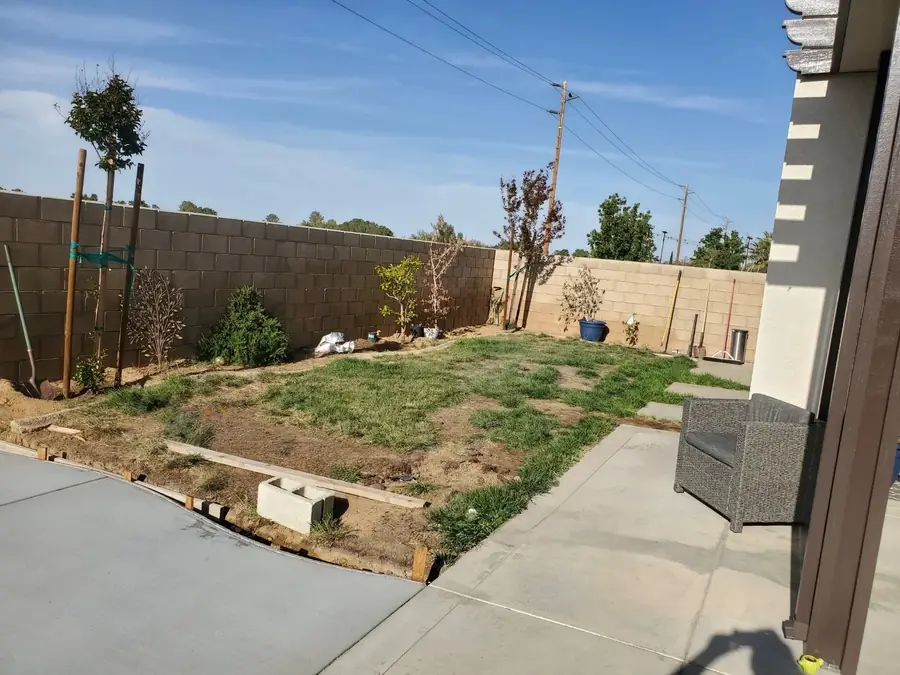
Level and draining are two different things. With no natural fall to work with, every bit of slope in your yard has to be created on purpose, and that happens during grading. A shallow, deliberate pitch carries water away from the foundation and toward a drain, a swale or the street, and it stays gentle enough that nobody notices it walking across the lawn. The upside of terrain like this is that there is no terracing, no retaining and no erosion control absorbing part of the budget.
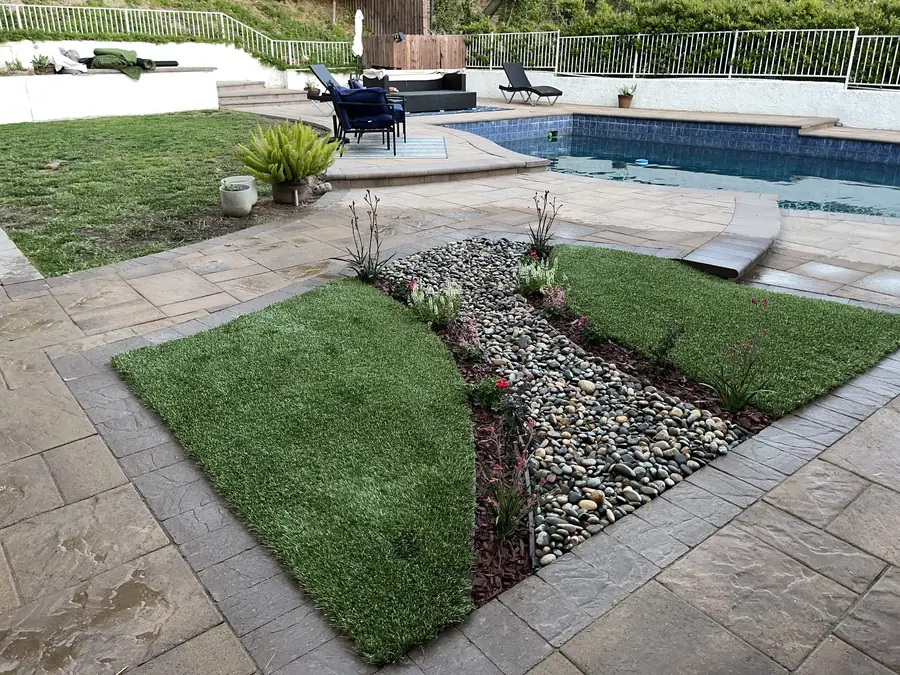
This comes up constantly in a neighborhood built to a small set of repeated plans. The fastest way to break the pattern is to change the geometry rather than only the plants. Move the walkway off the straight center line, replace the standard rectangular lawn panel with a different shape, add a low seat wall or a specimen tree where every other lot has open turf. A distinct plant palette and varied paving material do the rest. Same lot dimensions, completely different read from the sidewalk.
Plant selection starts with material that thrives in heat rather than merely enduring it. Olive, desert willow and crape myrtle carry the upper canopy. Below that, rosemary, westringia, salvia, lantana, agave and ornamental grasses fill in and keep their shape through the hottest stretch without daily water. If a client wants a lusher pocket, we group the thirstier plants together near the house so one valve serves them and the rest of the yard stays on a low water schedule. Every plant is checked against its exposure before anything gets ordered.
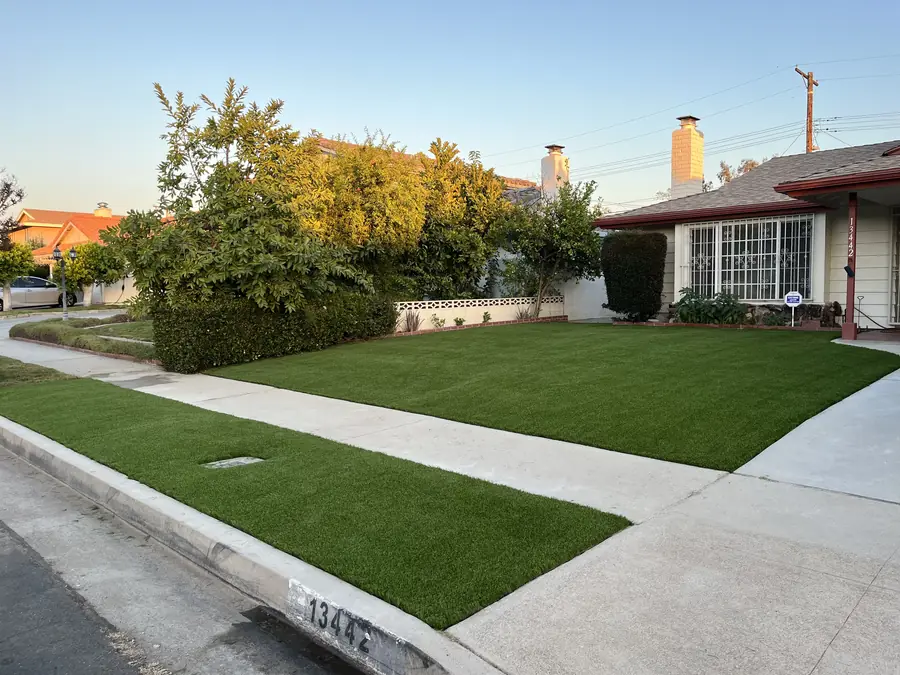
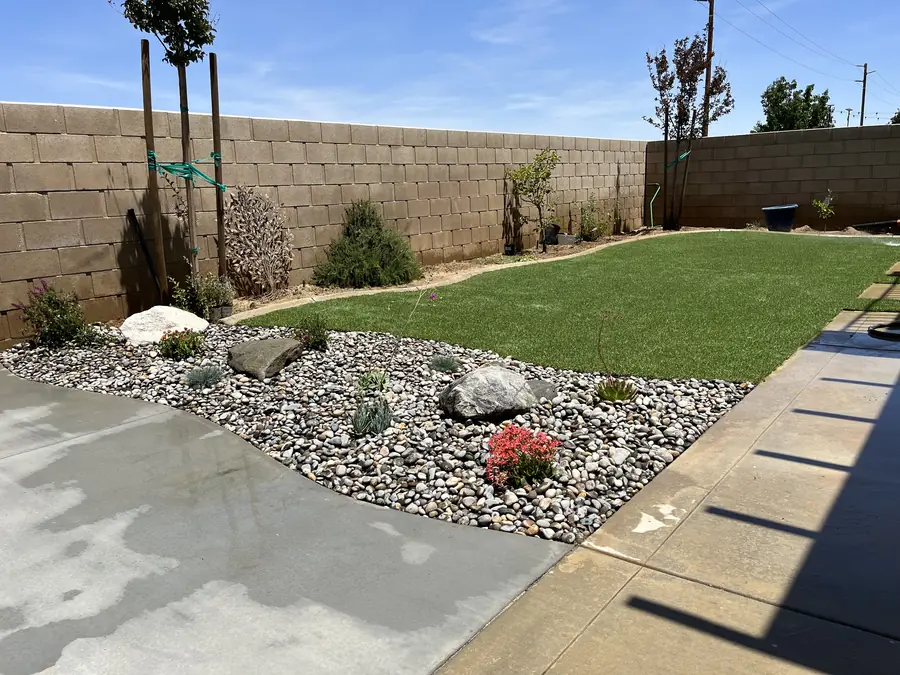
Decide by use, not by preference. Living lawn earns its water where children and dogs are actually on it, and in this sun it will want steady summer irrigation to stay green. Synthetic turf gives the same open green surface with no watering, which is why it lands so often on the modest lots around here. Drought tolerant beds cover the most ground for the least water and read as a real garden when they are laid out well. A small lawn panel framed by low water planting is a common answer.
Our own people, from the first day to the last. One licensed contractor stays accountable for the whole job. The same people who tear out the old yard also set the grade, run the irrigation, place the plants and spread the mulch. Nothing gets passed to an outside company at any stage of the job. We run the business this way deliberately, because it is the only way to hold one standard across every phase and to know exactly who is on your property each morning.
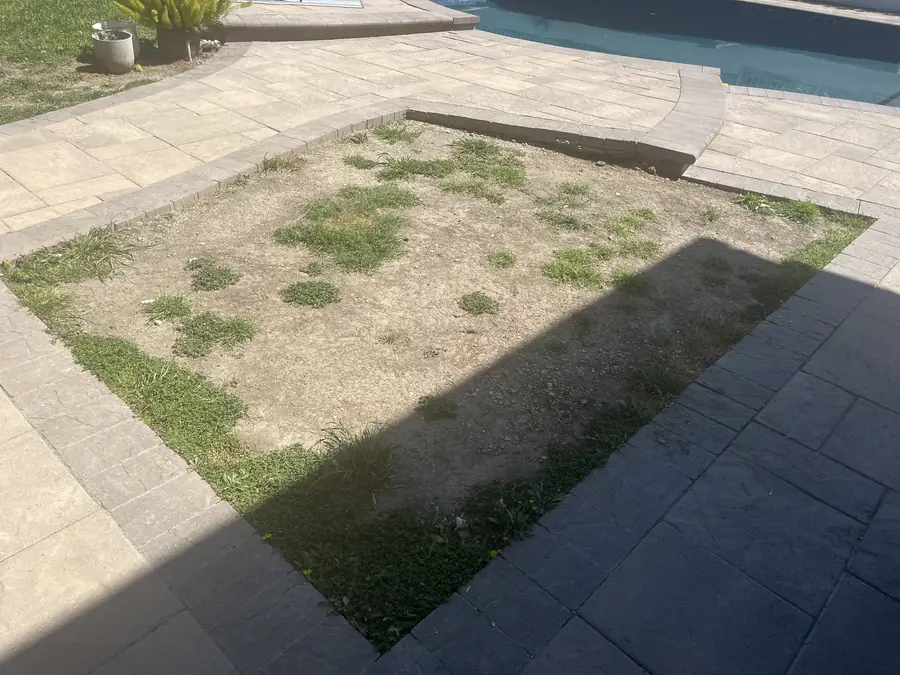
Almost always yes, though it needs work. Ground that has carried lawn, foot traffic and equipment for that many decades is compacted, and compacted soil sheds water instead of taking it in. We rip or till the planting areas, blend in compost, and adjust once we see what is actually under the surface. Beds often get built up slightly so plant crowns sit above the surrounding grade. Strong plants dropped into tired ground will struggle for years, while ordinary plants in well prepared soil take off.
Rarely in full. A large share of the homes here still run pipe and valves from the original build, and after that many decades we expect brittle line, weeping valves and a mix of heads that no longer throw matched amounts of water. We pressure test what is there. A sound mainline can sometimes stay while the zones above it are rebuilt, but a failing system costs far less to replace during construction than after a finished yard is sitting on top of it.
Most of it comes out. The flatwork on these properties went in with the house, and much of it is now cracked, lifted at the joints or pitched the wrong way, so patching buys very little. We break it up, haul it off and rebuild on a properly compacted base. Sound sections do occasionally stay, and a slab that is level and intact can be designed around. Pulling the old paving is also the moment to correct drainage the original layout never handled well.
Phasing is normal here and we plan for it. The rule is that everything underground belongs to the first phase, because grading, drainage, the irrigation mainline and any sleeving under future paving all require open ground. Those are the items nobody ever sees and the ones that hurt to add later. Once that structure is in, planting, surfaces and finish work can follow in stages on your schedule. We lay the plan out with clear stopping points so each phase looks complete on its own.
Fewer, larger moves. Chopping a small yard into many little areas makes it read smaller, so we tend to set one generous open space and push planting to the perimeter. Running paving on a diagonal stretches the longest sight line. Keeping the plant palette tight rather than collecting one of everything calms the whole space down. A single well placed tree adds height and pulls the eye up instead of across. Lot sizes in this part of the valley are practical, and discipline matters more than square footage.
Trees go in first since they are the largest element and set the structure everything else answers to. Shrubs form the middle layer and do the screening and seasonal interest. Ground cover ties the base together and shades the soil so it holds moisture longer. Spacing is set for mature size rather than for installation day, which is why fresh planting looks a little open at the start. Filling every gap right away only means pulling plants back out in two seasons once they crowd each other.
Mulch earns its place several times over on an exposed lot. Two to three inches slows evaporation, holds soil temperature down through the worst of summer, keeps weed pressure low and breaks down over time to feed the ground. In this climate it is the cheapest single thing you can do to reduce irrigation demand. We pull it back from trunks and stems so nothing sits wet against bark, and it gets topped up as it decomposes. Bare soil here bakes hard, sheds water and grows weeds.
Neighbors sit close on these lots, so screening is one of the most common requests we get. A layered mix works better than one long row of a single species, because a mixed screen looks like a garden and does not fail all at once if one plant sulks. Upright evergreens, tall grasses and vines on a trellis all pull weight. Where a client needs results quickly, we place larger stock at the two or three points that matter most and let smaller material fill in behind.
Year one carries the most attention. New plants want deeper, more frequent water while roots establish, then the controller gets dialed back as they settle. Expect some weeding while the mulch is fresh, a little settling in the beds, and light pruning for shape rather than shearing. Before we leave we walk you through the controller and show you where the valves are, then set a starting schedule for the season your yard goes in. Adjusting that schedule as weather shifts is the habit worth building.
Planting, irrigation and soil work do not require a permit. Permits attach to structures, electrical, gas and retaining walls above a certain height, none of which belong to a standard planting install. Water use rules do apply, and we design irrigation to meet the restrictions in force rather than work around them. If your project grows to include a patio cover, an outdoor kitchen or anything structural, we will tell you up front what needs review. We do not begin permitted work without the permit in hand.
Call (818) 443-9300 and we will arrange a time to walk your property. We look at exposure, drainage, soil condition, whatever irrigation is still in the ground, and what you actually want the yard to do, then put together a free written estimate that spells out the scope in plain language. Every yard we build is covered by California license 1138709. The visit costs nothing, the written estimate costs nothing, and there is no obligation to proceed once you have it in your hands.