
FAQ
Irrigation in Panorama City, answered
The questions we hear most from Panorama City homeowners.
They were built together and watered the same way. These blocks went up as a planned postwar development, with the houses following a small number of plans and the irrigation of that period installed at the same time. So the failures arrive together too. We find pipe that snaps at the fitting, valves that will not seat or that seep after shutdown, heads settled below the lawn surface, and controllers with no weather awareness of any kind. Once you have worked on one system on a street, the next one on the block rarely holds surprises.
Ask how often you are already fixing it. Pipe that has spent that many decades in the ground goes brittle, and once it starts breaking, every repair puts pressure on the next weak section. If we are returning for separate breaks in different corners of the yard, patching has stopped being economical. Full replacement also lets us correct the layout rather than inherit it, which usually means fewer zones fighting each other and heads placed for genuine coverage. Where the mainline is sound and the trouble concentrates at valves and heads, targeted repair remains the right call.
Lot size decides it. Narrow parkways, side strips, and small front lawns are best served by fixed spray heads or rotary nozzles, which lay water down in a controlled pattern over a short throw. Larger open rear lawns do better with rotors, which cover more ground per head at a lower application rate. Spacing matters more than brand. Heads must be set head to head so the arc of one reaches the next, and everything on a single zone must share a matched precipitation rate. Mixing throw distances and nozzle rates on one valve guarantees dry rings and soggy corners.
It matters a great deal. A head that has settled or been buried under years of thatch and mulch sprays into the turf around it instead of over it, so the zone runs longer to compensate and the far end still browns. We reset heads to finish grade on flexible risers or swing joints, which also allows a head to take a foot or a mower wheel without cracking the fitting below. While we are in there we check nozzle type, adjust arcs off the sidewalk and driveway, and replace worn seals letting the head weep after the valve closes.
By what the plants need, not by what is convenient to pipe. Hydrozoning puts lawn on its own valve, shrub beds on another, trees on their own where possible, and separates anything in deep shade from anything in full sun. Exposure changes demand enormously, so a strip against a west facing wall cannot share a schedule with a shaded side yard. Available flow and pressure set the practical ceiling on zone size, so each valve is sized to what the service can actually deliver at once. Correct zoning is what makes a smart controller worth having.
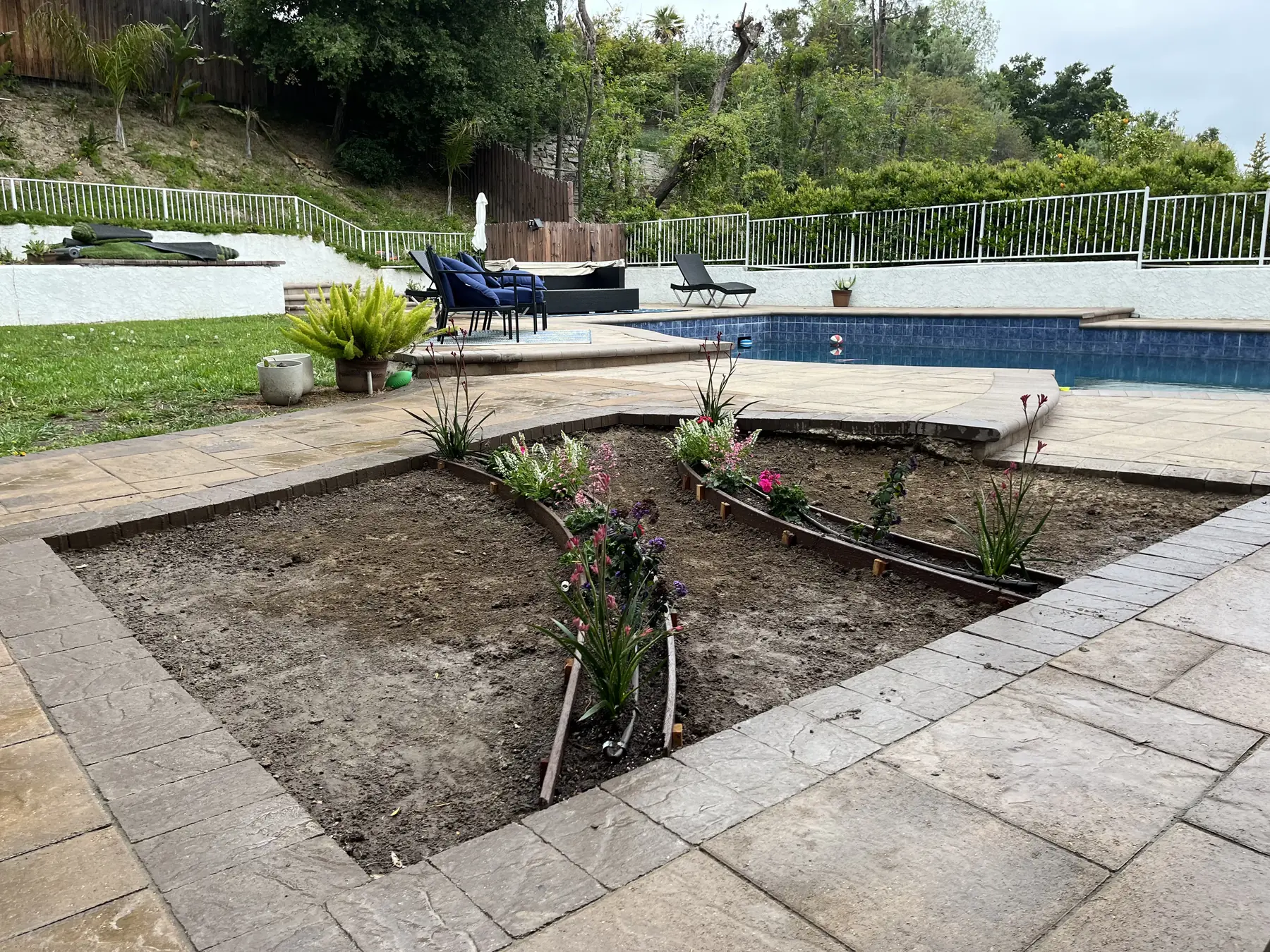
Yes, and beds are the best place to start. We cap or remove the spray heads, fit a conversion assembly at the riser or rework the valve with a filter and pressure regulator, then run distribution tubing with emitters placed at each plant rather than blanketing the bed. Water reaches root zones instead of the mulch surface and the fence, evaporation losses drop, and weed seed between plants gets far less encouragement. Drip runs longer and less often than spray, so the zone earns its own program. Emitters want checking now and then, since they clog if filtration is skipped.
Filtration and pressure control at the valve come first, because most drip failures trace back to grit or to pressure the emitters were never built for. Tubing gets sized to the run length, and emitters are placed by plant size and water need, with more added as plants mature instead of leaving one lonely dripper at a full grown shrub. Lines are staked and covered with mulch rather than buried deep, so they stay serviceable. Flush ends stay accessible. Once a year the system should be flushed and walked while running, which catches chewed tubing or a blown fitting early.
If it is the original style timer with a dial and no weather input, yes. Those units water on a fixed schedule regardless of what the weather actually did, which in this climate means running full summer programs through the one week it rains and underwatering during a heat spell. A weather based controller adjusts run times using local conditions and plant data, zone by zone. It also gives you real programming for drip zones, cycle and soak, and separate schedules by exposure. The controller only helps as much as the zoning behind it, so we look at both together.
Rarely is not never, and sprinklers running during a winter storm are both wasteful and conspicuous. A rain sensor, or a weather based controller with a rain skip, interrupts the cycle when measurable rain falls and holds it off until things dry out. Many controllers now manage this through a forecast feed instead of a physical sensor, which avoids another device on the eave waiting to fail. Either way it is inexpensive protection against the schedule doing something obviously wrong while you are away. Local water rules increasingly expect the capability to be present.
Too much pressure at the nozzle. When supply pressure exceeds what the head was designed for, water leaves as fine mist instead of droplets, and mist drifts off target and evaporates before it lands. The remedy is regulation, not smaller nozzles. Pressure regulating heads, or a regulator at the valve, bring each zone into its design range. Low pressure has its own signature, with heads failing to pop up fully or arcs falling short of the target. We measure static and operating pressure before specifying anything, since guessing is how zones end up mismatched.
Some form of it is mandatory, because an irrigation system tied to potable water can pull contaminated water back into the house supply if pressure drops. Which device applies depends on the connection and the local requirement, ranging from atmospheric vacuum breakers on individual valves to a pressure vacuum breaker or a reduced pressure assembly on the mainline. Height above the highest head and clearance for testing govern placement. We install it correctly and somewhere it can genuinely be serviced, rather than tucked behind a shrub where nobody can reach it when a test comes due.
Underground, most likely, and on flat ground with heavy summer watering a leak can disappear without ever surfacing. We begin at the meter with everything off and watch the low flow indicator, which tells us whether water is moving at all. From there we isolate the irrigation mainline from the house, then test zone by zone, checking valves for a leaking diaphragm that lets a zone weep continuously. A cracked mainline fitting, a valve that never fully closes, and a broken lateral each leave a different signature. Finding it is systematic work, not digging holes and hoping.
Two reasons, and neither is slope. The first is application rate. Soil here accepts water slowly once the surface compacts, so a long single run puts down more than the ground can absorb and the excess spreads until it finds pavement. Cycle and soak solves that by splitting the run into shorter bursts with soak time between them. The second is aim. Heads at the edge of a lawn on a flat lot throw straight across a walk unless arcs are adjusted and correct nozzles are fitted. Fixing both usually saves water and ends the staining on the concrete.
In practice they set watering days, watering hours, and rules about runoff and broken heads, and they tighten during drought. An efficient system meets them without you thinking about it much, which is the real goal. That means drip in beds, matched precipitation on lawn zones, a weather based controller, and no head throwing water onto concrete. Local water agencies sometimes run rebate programs for efficient equipment or for replacing lawn, though terms and availability change and we cannot promise you will qualify. Checking with your provider before we finalize a scope is worth the phone call.
Yes, and it is a sensible way to spread cost on a modest property. We usually begin at the controller and the valves, since the largest efficiency gain sits there and it improves every zone at once. Converting bed zones to drip often comes next, because those are the ones losing the most water. Lawn zone rework and any mainline replacement can follow later. The important part is designing the finished system first, so each stage builds toward the same layout instead of being torn out by the one after it.
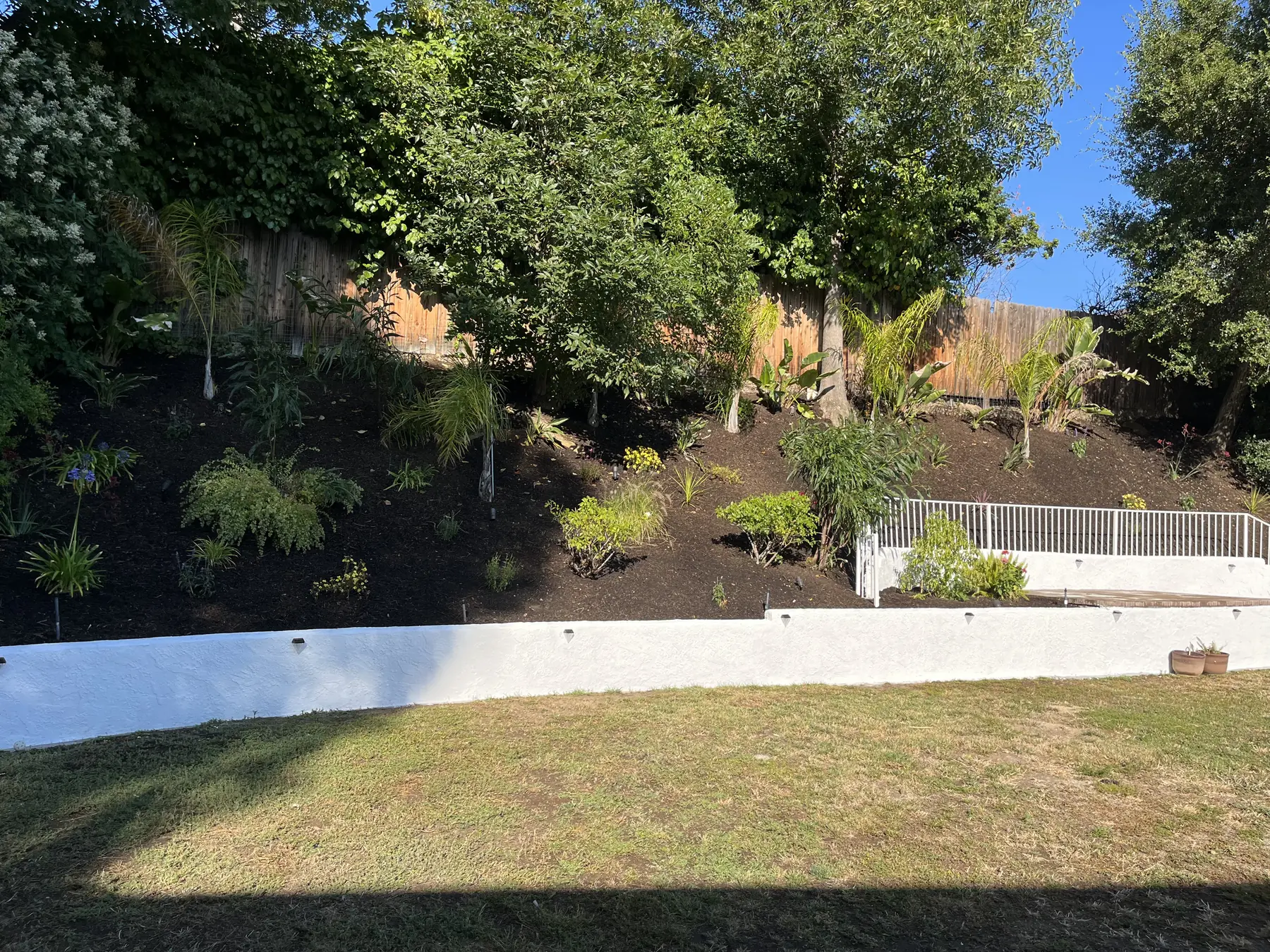
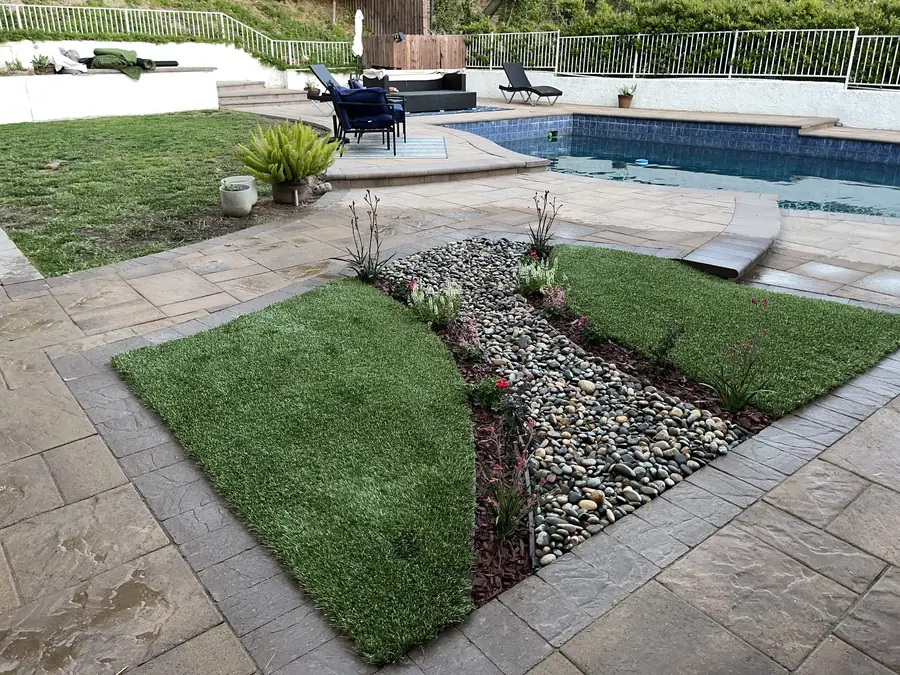
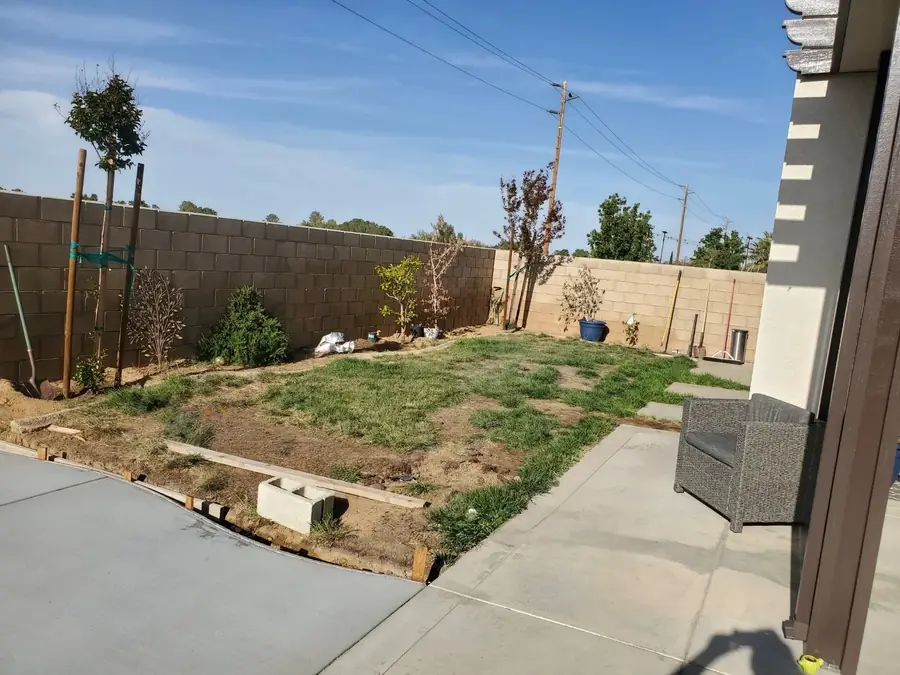
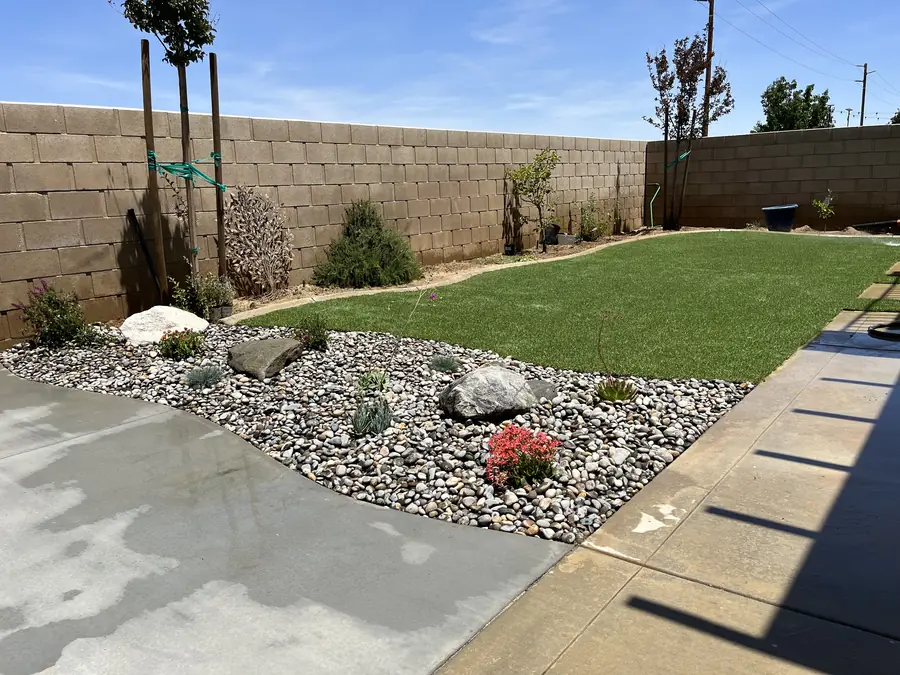
The watering system is what makes a different planting scheme survivable. Trading part of the lawn for drought tolerant planting only works when that area comes off the turf schedule and gets drip on its own valve, because keeping it on a lawn program will drown the very plants chosen for their toughness. Grasses, succulents, native shrubs, and a shade tree read completely differently from a flat green rectangle, and under full sun they hold up better. We plan valve locations and sleeving during design so the planting you want is not limited by pipe that was never run.
We do. Daniels Landscaping stays accountable for the whole job, start to finish. The same company that walks your yard, maps the existing lines, cuts the trenches, sets the valves and controller, and tests every zone at the end is the one you hired. Keeping it under one contractor is why the details hold up, because buried work is invisible once it is backfilled and there is nobody to blame later if it was rushed. If something needs adjusting after the first watering cycle, you call us and we come back.
Reach us at (818) 443-9300 and we will schedule a visit. We run each zone while we are there, note what is broken, what is misaimed, and what is simply the wrong equipment for the area it waters, and we check pressure at the source. Then you receive a free written estimate that separates repairs from upgrades so you can see what is urgent and what is optional. Daniels Landscaping holds California license 1138709. There is no charge for the visit or the estimate, and no obligation attached to either.