
FAQ
Renovations in North Hollywood, answered
The questions we hear most from North Hollywood homeowners.
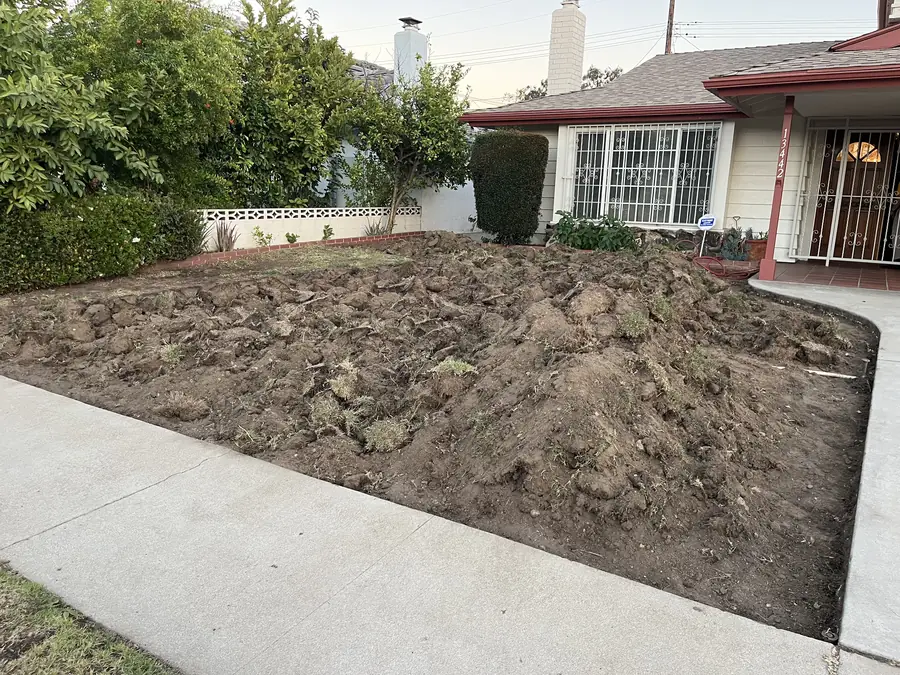
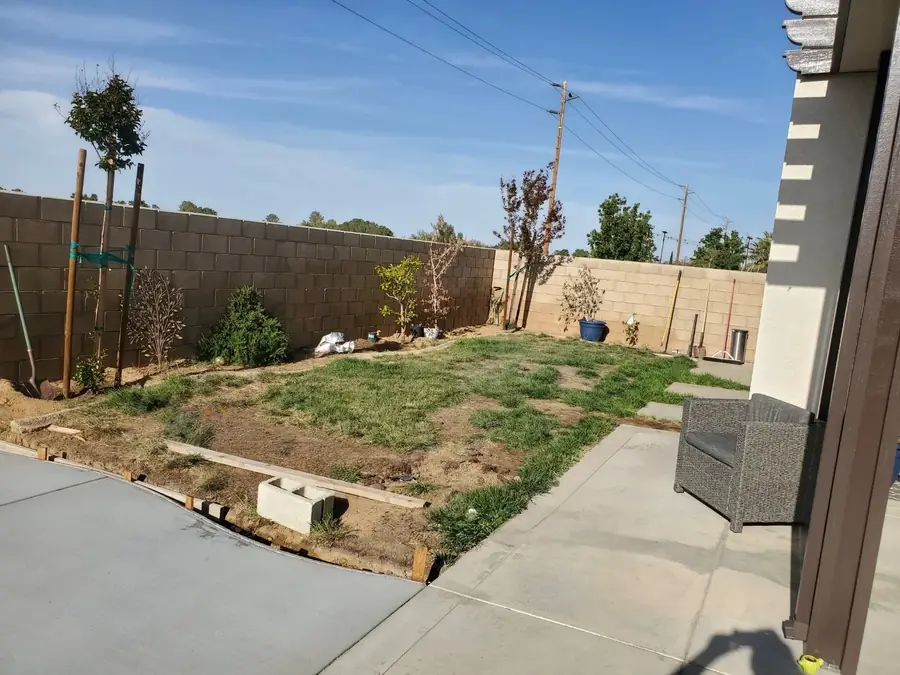
Start with an honest inventory of what is already out there. Healthy trees, sound paving, and drainage that works have earned their place. Dead lawn, failing concrete, irrigation patched one time too many, and shrubs planted where nothing was ever going to thrive come out. From there the work follows a fixed order, since every later stage depends on the one before it. A renovation is rarely a complete replacement. On many properties around here a good portion of the yard stays and the remainder gets rebuilt properly.
Three tests settle most of it. Does the thing function, is it in the right place, and would you pay to build it again today. A mature shade tree passes all three easily. A walkway that heaved and now sends water back toward the house fails the first two. Older single family properties here have often been added to in layers by several owners, so what you inherit is a collection of separate decisions rather than a plan. We mark the yard out with you on site before equipment arrives.
Frequently by hand, and that is worth knowing before an estimate is signed. We measure the gate and the tightest point along the house first, then decide whether a compact machine can pass or whether broken concrete comes out in wheelbarrow loads. That single decision drives labor, timeline, and cost, which is exactly why it belongs in the plan instead of being discovered halfway through. Loads are staged and cleared promptly, since a driveway heaped with rubble is not something to leave sitting on a dense residential street.
Staging is the norm rather than the exception on these properties, and it works when the stages are drawn at the outset. Everything living underground belongs in the first stage: regrading, drainage, sleeves beneath future paving, and the irrigation mainline. After that a stage can stop cleanly and the yard still looks finished rather than abandoned. Waste comes from deciding late to add a feature that needed a line run under a patio already built. Putting now and later on paper costs nothing and saves a great deal.
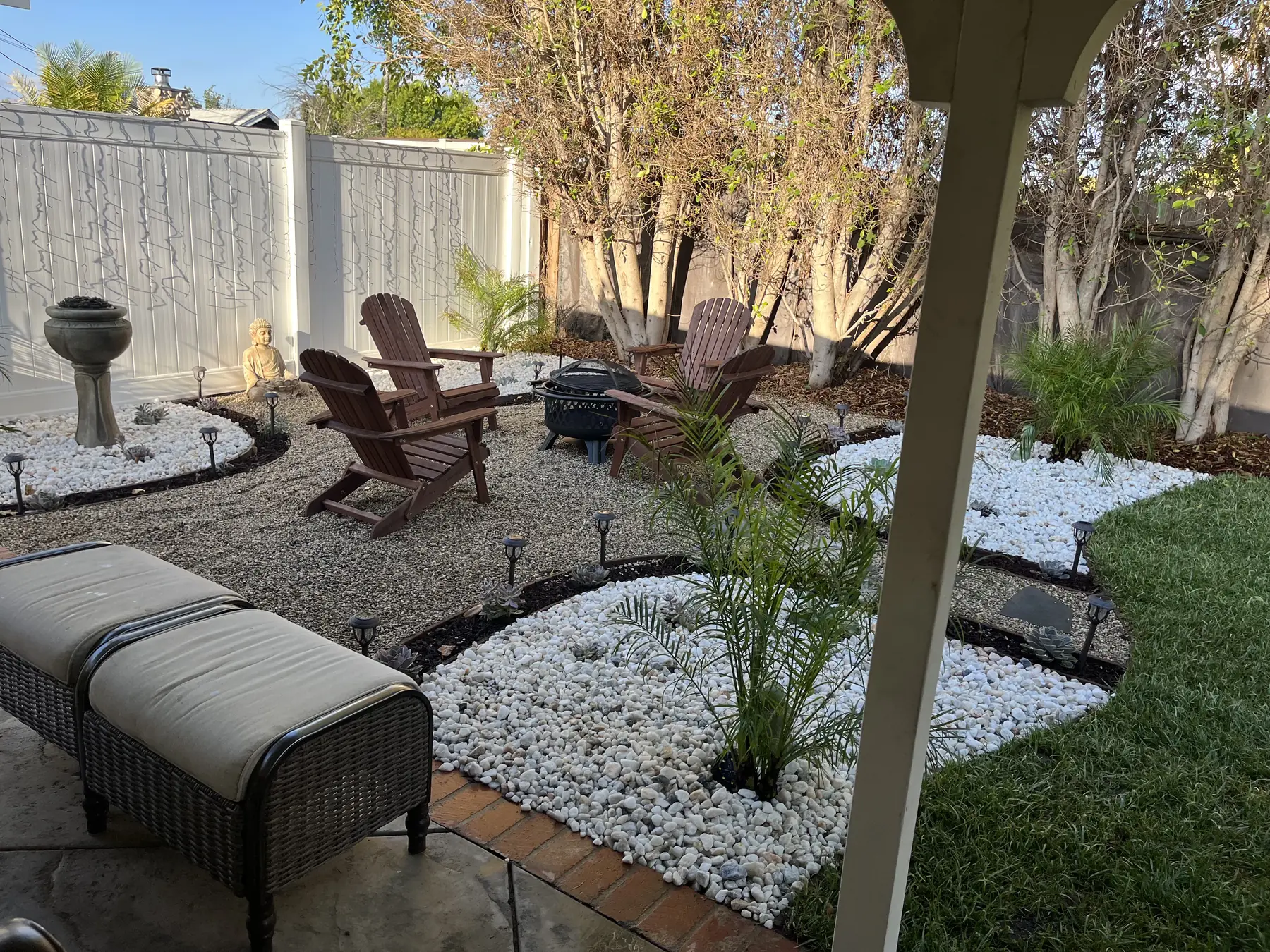
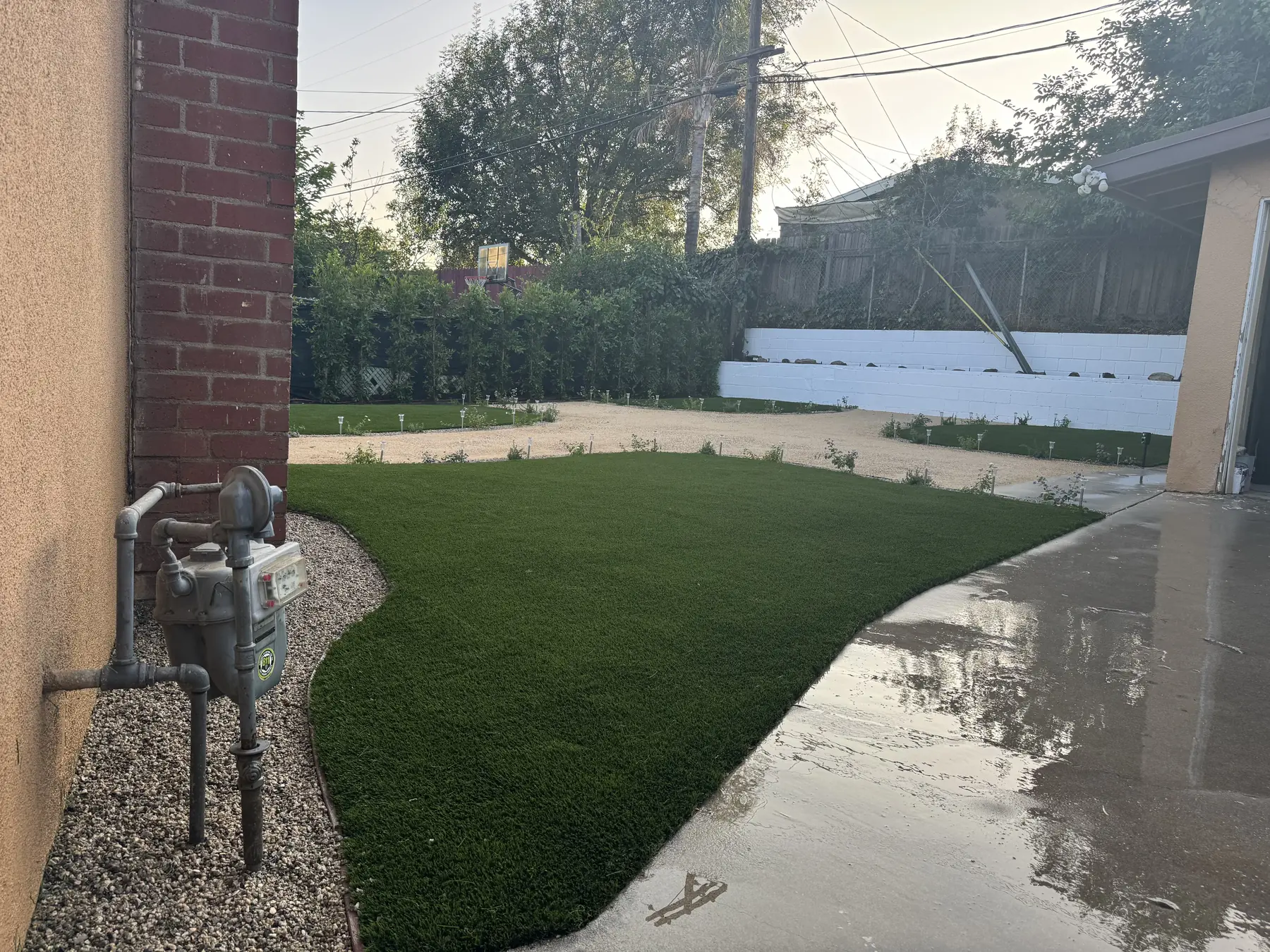
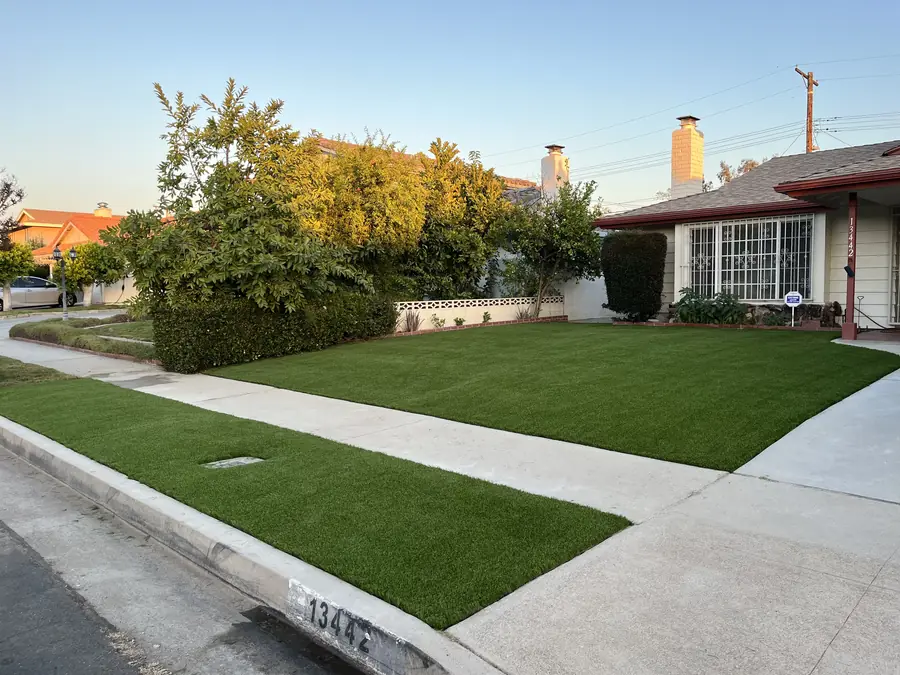
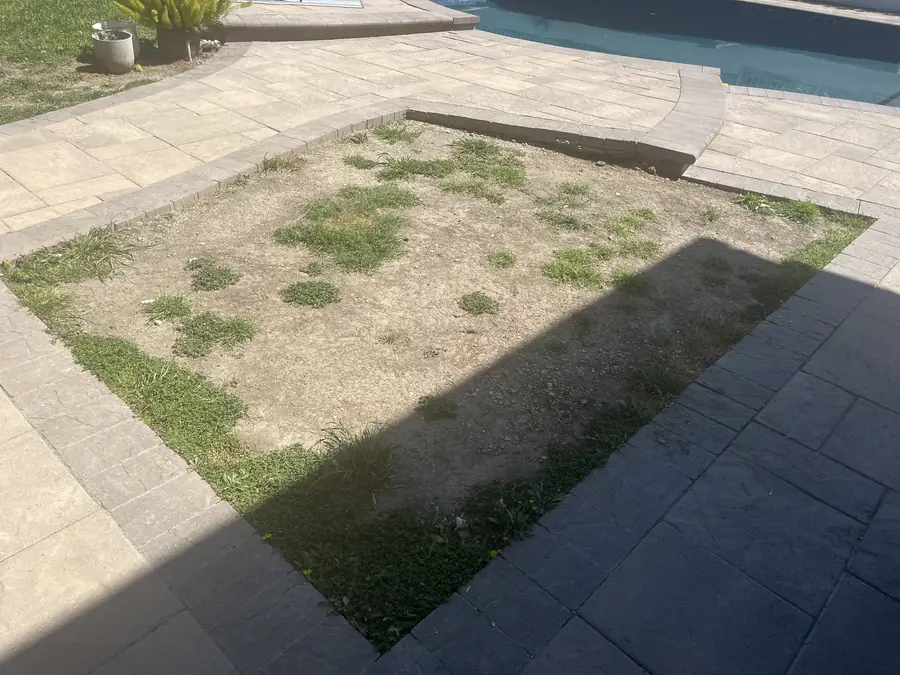
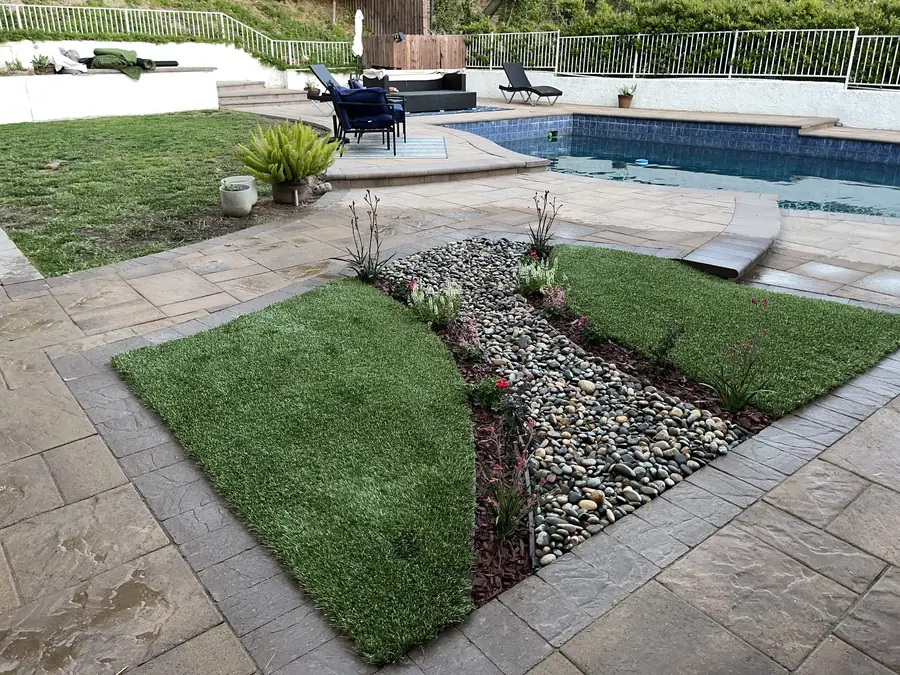
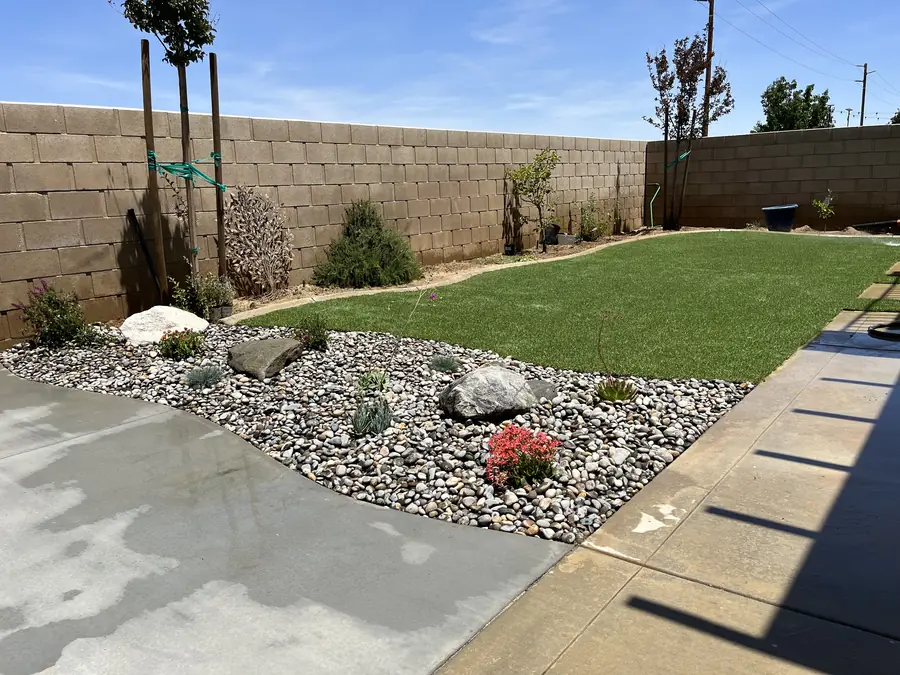
There are three realistic directions. Replant a smaller lawn where there is genuine use for it and real sun. Install artificial turf where the space takes hard use and you want green year round. Or convert to drought tolerant planting with mulch and drip, which suits most small yards in this part of the valley. What we would not do is put the same thirsty lawn back into the same shaded corner where it failed. If a lawn died, the cause was usually water, soil, or sun, and one of those has to change.
Most of it gets replaced while the ground is open, because that is the only inexpensive moment to do it. Systems in older yards here are typically a mainline of unknown age feeding zones that were extended every time somebody added a planter. Heads end up mismatched, pressure runs uneven, and half a zone is watering a fence. We reset the zones to match how the new yard is actually planted, convert spray to drip where beds replace lawn, and put a weather based controller in charge of the schedule.
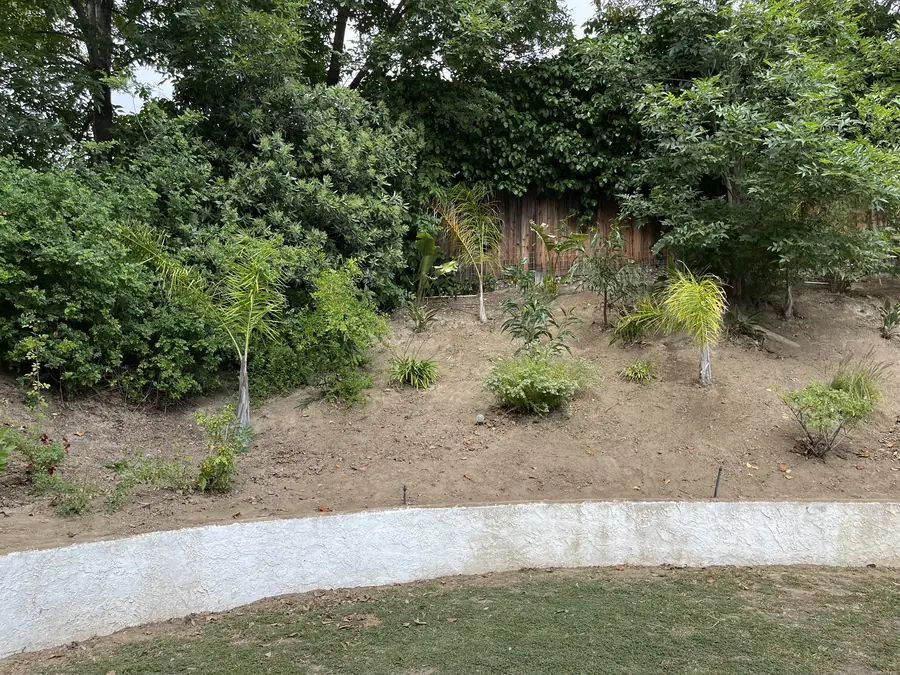
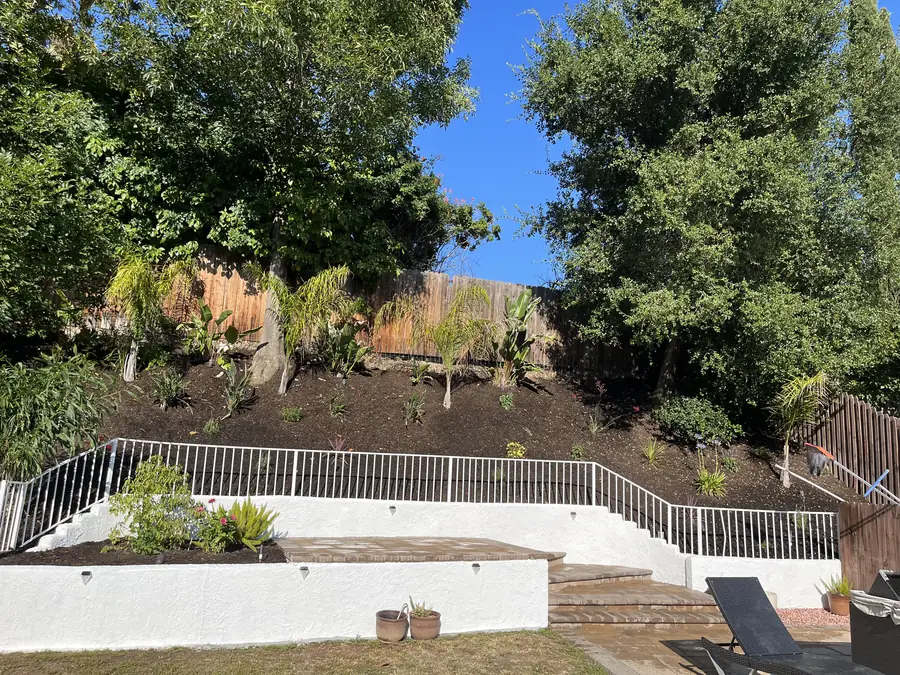
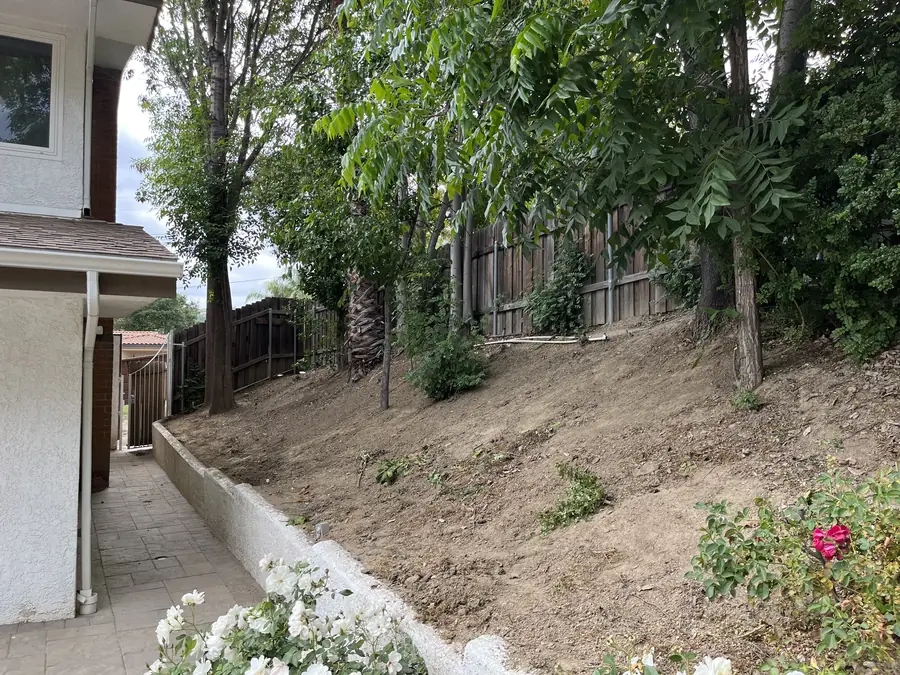
That is one of the better reasons to renovate, since correcting grade is only affordable while the yard is torn up anyway. Flat ground drains nothing on its own, so fall gets cut into the subgrade, low points receive area drains, and solid pipe carries water to the street or another legal outlet. Where a fence line pinches tight against the neighbor, we make certain the fix does not simply push the puddle onto their side. Paving, planting, and turf all go in after the grade is right, never before.
It depends on what that concrete is doing. A slab that is sound, level, and draining can sometimes accept a new surface on top. A slab that has cracked, lifted at the joints, or settled toward the house makes a poor foundation for anything, and covering it only hides the trouble for a season. Old patios in these neighborhoods are often thin and poured without proper base or steel, and they broke for a reason. Removing them also opens the soil beneath, which is where a drainage correction has to happen.
In almost every case it should. A tree that size is the one element in a small yard you cannot buy back, and on a lot with little room it supplies shade the house genuinely benefits from. Work happens around the root zone rather than through it, which means hand digging near major roots, no trench cut straight across the base, and no soil raised or lowered against the trunk. Paving nearby can be set on a flexible base so future root growth does not crack it.
Lean toward built surfaces and tough planting. Paving, gravel, decomposed granite, and artificial turf hold their appearance without a weekly hand on them. Planting goes on drip, spaced at mature size so nobody has to shear it into submission, and mulched deep enough to suppress weeds. Lawn demands the most attention of anything in a yard, so on rental and multi family property it usually gets reduced or dropped entirely. A clean system on a smart controller matters more than any single plant choice, because failed watering is what kills a yard.
Yes, and the pool generally sets the layout because it is the one thing not moving. Old decking around water is often the worst surface on a site, since it takes sun, splash, and years of movement. We look at whether that deck can be resurfaced or should come out and be rebuilt, at whether the deck drains still carry water away, and at the equipment pad, which on a narrow lot tends to be wedged into the side yard. Planting near water is chosen so it does not shed into it constantly.
Largely by removing things. A compact yard holding a little lawn, a little gravel, three planters, a shed, and a stretch of stamped concrete looks cluttered because no single piece is big enough to matter. The renovation consolidates: one generous surface, one planted edge, one focal point, and clear circulation between the back door and the seating. Restraint reads as generosity on a lot this size. Adding more separate features into a small footprint is precisely what made the yard feel crowded in the first place.
That request comes up on nearly every job here, since houses sit close and upstairs windows look down into yards. A renovation is the right moment to solve it, because planting positions can be set while the ground is open and irrigation run straight to them. Columnar trees and narrow evergreen shrubs screen without stealing floor space. Where a plant would take too long or spread too wide, a built screen or a raised planter with a trellis covers the gap immediately and the planting fills in behind it.
Demolition and haul away first. Grading and drainage second, while nothing stands in the way. Utilities and irrigation third, including any sleeving beneath future paving. Hardscape fourth, planting last. That sequence is not a preference, it is the only order in which each stage avoids damaging the one before it. Renovations go sideways most often when paving is set before the grade is corrected, or when plants go in before the trenching is finished. On a tight lot the sequence also governs where material can be staged each week.
Often it should, and not purely for appearance. On a dense street where houses sit close, the front is the part of your property everyone sees, and a tired parkway strip or a dying lawn stands out immediately. It is also usually where the water meter, the main valves, and the oldest pipe live, so opening it during a renovation is efficient. Front yards in these blocks tend to be shallow, which means a simple, well proportioned scheme performs better than a busy one crammed into a narrow band.
It is a genuine consideration when properties sit this close, so we manage it deliberately. Equipment and material stay staged in the driveway rather than spilling along a shared fence. Debris leaves promptly instead of accumulating for a week. Access through a narrow side yard is planned so the crew is not repeatedly dragging tools past a bedroom window all day. Where a fence, a wall, or a shared drainage path is involved, we discuss it with you before work starts. Good site discipline protects your own property just as much.
Daniels Landscaping does, using one licensed contractor. The same employees who tear out your old concrete regrade the yard, run the irrigation, set the hardscape, and put the plants in the ground. One licensed contractor stays accountable for the work. That is how the standard holds level across every stage, and why one company remains accountable when you have a question. It also keeps a small site orderly, since a single crew manages access, staging, and cleanup rather than several outfits taking turns in your driveway.
Reach Daniels Landscaping at (818) 443-9300 and we will visit your North Hollywood property. We walk the existing yard with you, sort out what is worth keeping, check where water collects, and measure the access we will be working through. You then receive a free written estimate laying the scope out stage by stage, so you can see what gets built now and what is left ready for later. California contractor license 1138709 covers the work, and one licensed contractor carries out every phase of it.