
FAQ
Landscaping in North Hollywood, answered
The questions we hear most from North Hollywood homeowners.
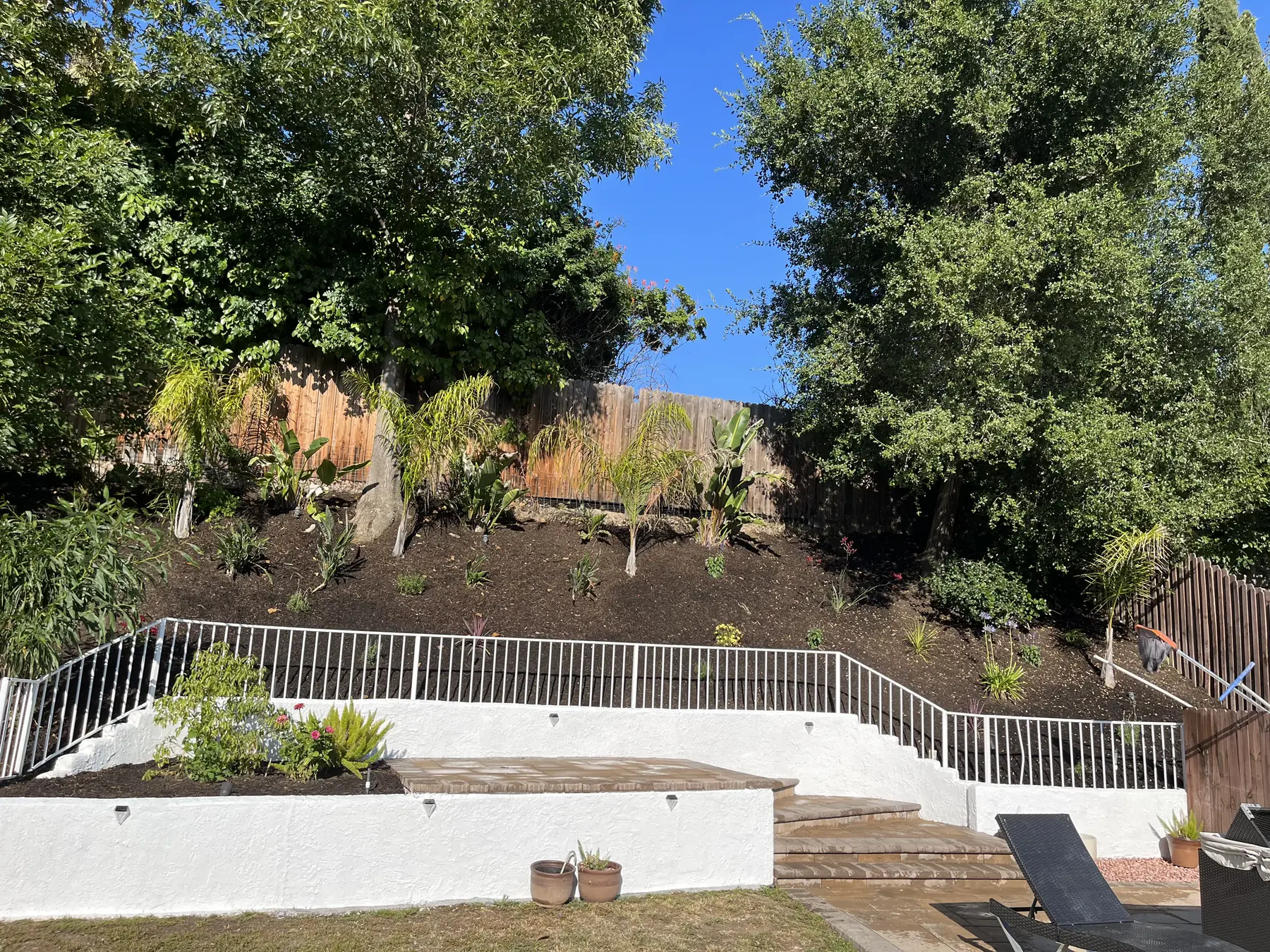
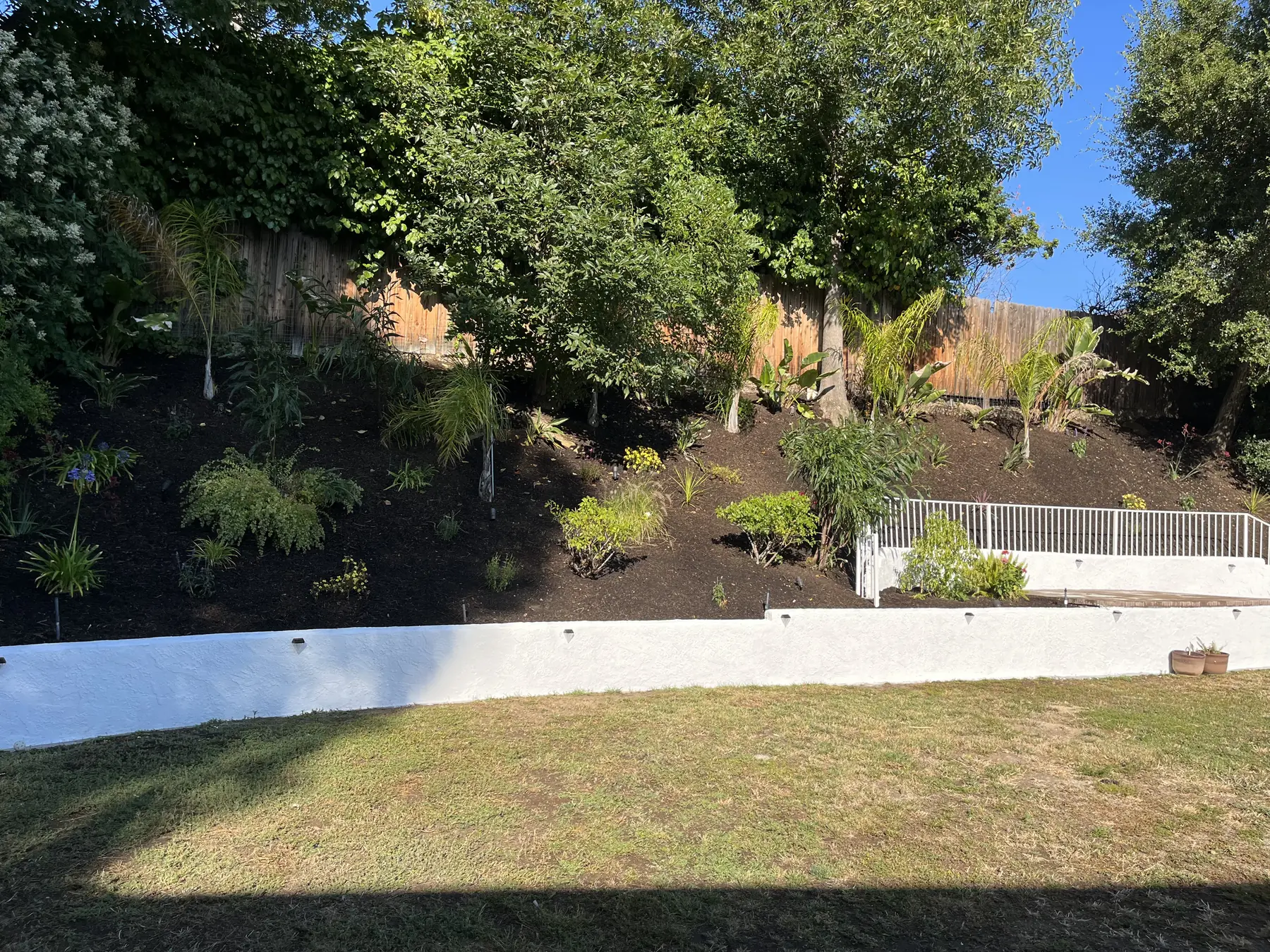
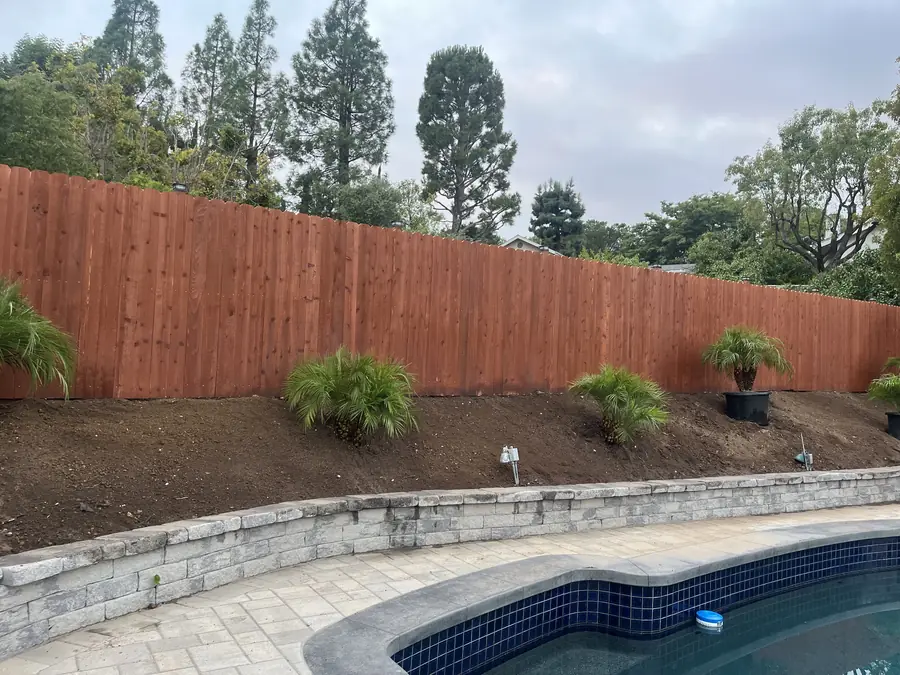
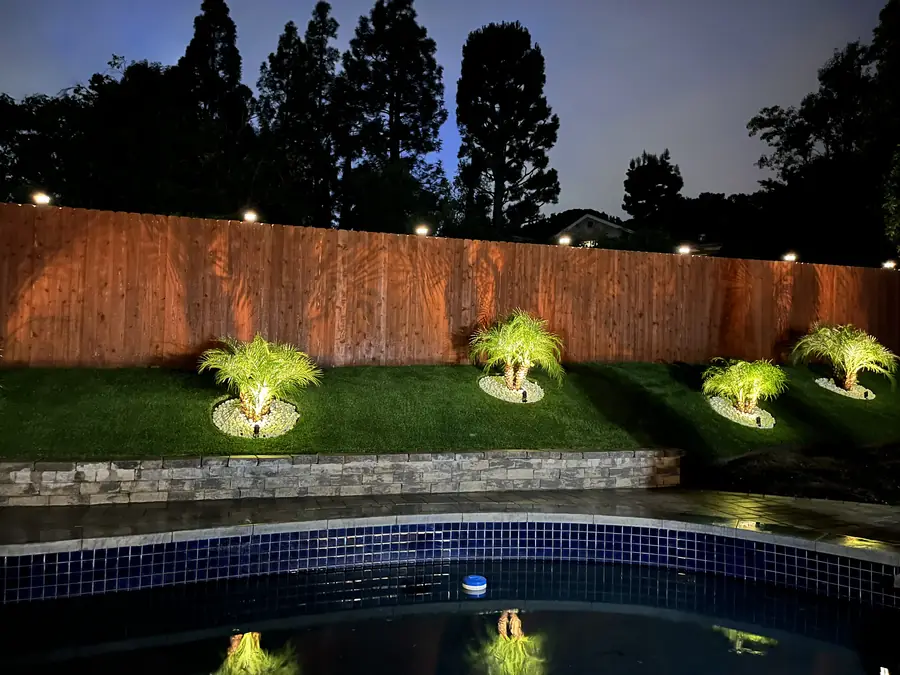
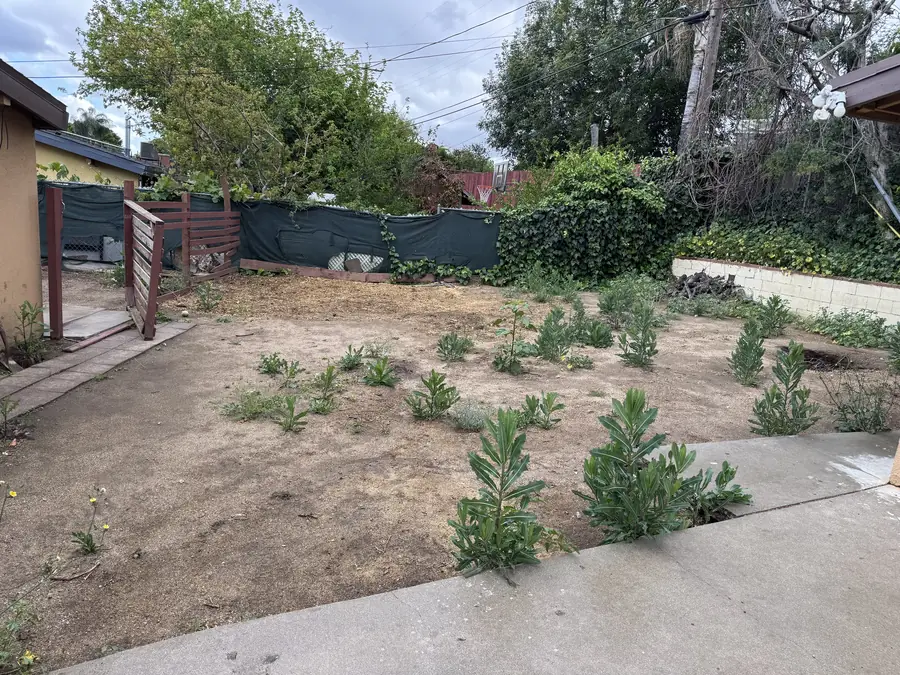
A full install starts with clearing whatever is failing and ends with a planted, watered, finished yard. In between comes grading, soil amendment, a planting layout built around trees and larger shrubs first, smaller plants and ground cover, the surface choice for open areas, mulch, and irrigation reworked so it actually serves the new beds. Small lots often add edging, a short path, or a screen planting along a fence to make the layout function. Scope gets written out line by line before anyone starts, so you know what is in the price and what is not.
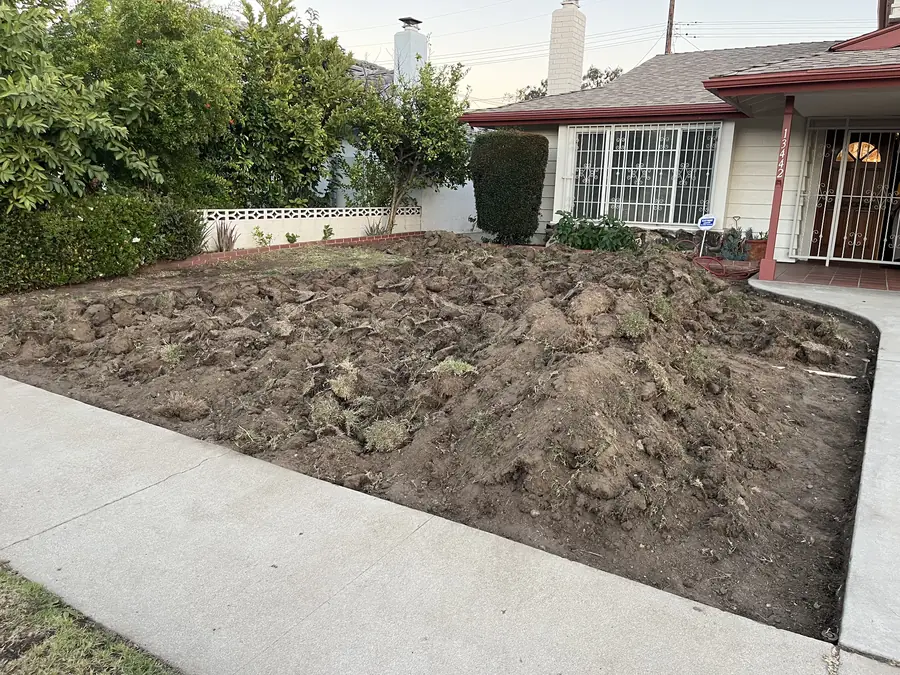
Sequence is not flexible. Demolition and haul away come first, then grade gets shaped, because moving soil around finished planting ruins it. Irrigation goes in while trenching is still easy and nothing is in the way. Soil amendment follows, then trees and structural shrubs, since those are the hardest to place and they decide how the rest of the yard reads. Filler planting and ground cover come after, then lawn or turf, then mulch last so it does not get buried under spoil. Any paving in the plan gets built before the final round of planting.
Most of these lots have one narrow side yard and no other way through, so access drives the plan. We measure the gate and the tightest pinch point before pricing, then choose equipment that actually fits, which sometimes means a compact machine and sometimes means barrows and hand work. Material gets staged in small loads rather than dumped in one pile on the driveway. Debris leaves the same way it came in, bagged or barrowed out to a truck at the curb. None of that is glamorous, but pretending a machine will fit is how projects stall.
Houses here sit close, and fence line screening is one of the first things most owners ask about. Tall narrow evergreens set in a staggered line give cover through the whole year without eating the yard, and they beat a single row of one species that dies out in patches. Vines on a trellis or a wire frame work where there is almost no bed depth. For quick height beside a window or a patio, large containers or a raised bed lift the planting a foot or two before it even grows. We size screening at mature width so it does not swallow the walkway later.
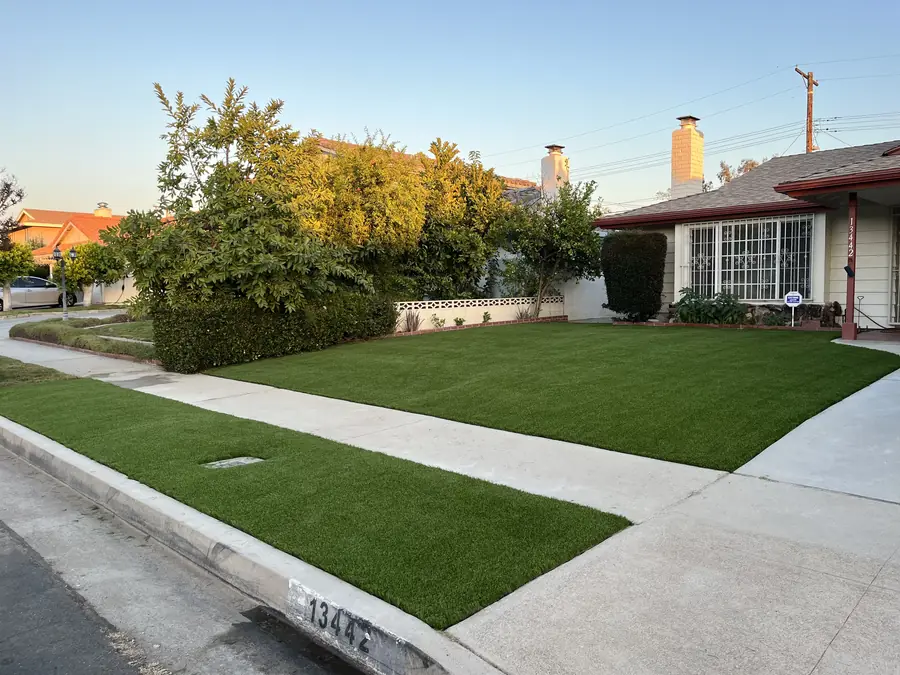
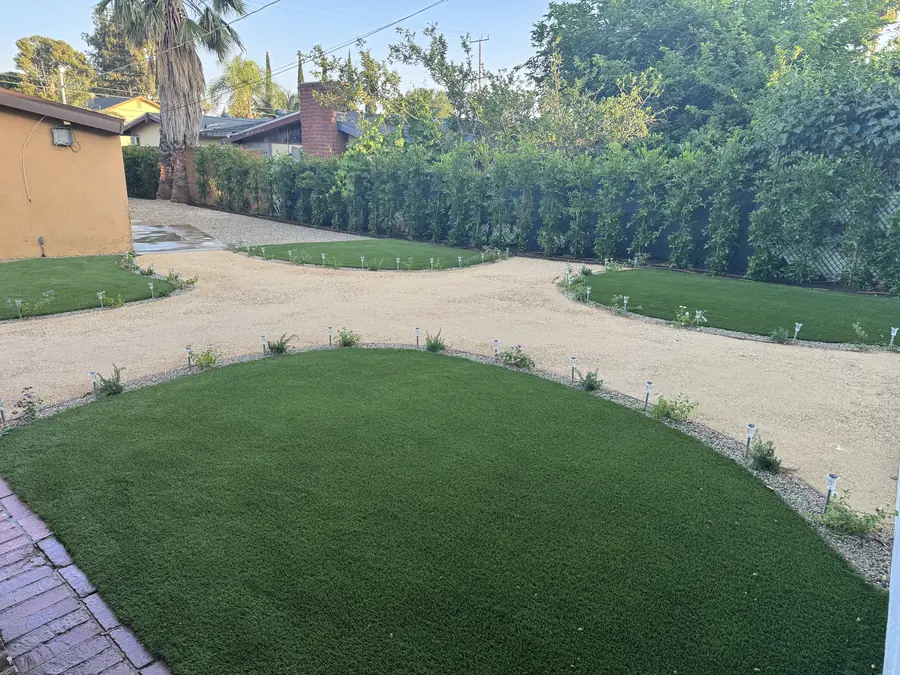
In a compact yard every square foot has to earn its place, so the surface choice matters more than it would on an acre. Real lawn is fine if children or dogs use it hard and you accept mowing and watering. Artificial turf keeps a small area green through a full summer with almost no water, which is why it shows up so often on lots this size. Drought tolerant beds cost the least to run and give the most seasonal interest, but they do not give you open floor. A frequent answer is a modest turf or lawn panel framed by low water planting.
Full sun and a long dry summer are the two conditions that decide the plant list. Mediterranean climate material, California natives and tough evergreen shrubs carry the structure, because they hold their shape through heat without constant water. Thirstier or softer plants go only where the site protects them, such as a north facing wall or a shaded corner behind the garage. On a dense block, a neighbor's two story wall can also throw real shade across part of a yard, which changes what belongs there. Selection happens after we walk the site, not off a standard list.
Flat is not the same as drained. Level ground gives water nowhere to go, so it sits against foundations, drowns planting and turns a low corner into a permanent wet spot. On a flat lot we build in deliberate fall away from the house, and where there is no room for that we add area drains and a solid line running out to the street or another approved discharge point. Neighboring properties are close, so water has to be sent somewhere sensible rather than pushed over a fence. Grade gets corrected before a single plant goes in.
Older yards around here usually have soil compacted by decades of foot traffic and a lawn nobody ever fed, while newer infill construction often leaves subsoil, rubble and equipment ruts under a thin skin of topsoil. Both need opening up before planting. We break compaction to root depth, blend in compost matched to what is going in, and pull out construction debris where we find it. Low water and native planting frequently wants better drainage rather than richer soil, so beds do not all receive the same treatment. Where soil is genuinely spent, importing is the honest answer.
Phasing is normal here and there is a right order to it. Ground work has to happen first, meaning demolition, grade, drainage and irrigation sleeves, because doing that later means tearing up finished surfaces. After that a yard can go in stages, with the main sitting area and the screening planting now and the far side or the front yard in a later round. We plan the whole yard on paper even when only part gets built, so the second stage connects to the first instead of fighting it. Each phase gets its own written scope and price.
Owners of rentals and multi-family buildings usually want the same three things: it has to look good from the street, survive tenants, and demand very little. That points toward durable ground covers, shrubs that hold their shape without shearing every month, mulch or gravel instead of bare dirt, hard edges that keep beds from creeping into walkways, and drip on a controller rather than sprinklers hitting a wall. We avoid fussy plants and anything that collapses the moment nobody waters it. The goal is a yard that still looks intentional two years after we leave.
It looks clean and complete the day we pull out, and it looks mature much later. Ground cover generally closes in over a season or two, shrubs read the way the plan intended after a couple of growing seasons, and screening trees take the longest, which is worth knowing if privacy is the whole point. Planting at a larger size shortens the wait and costs more, and very large stock sometimes settles in slower than smaller material. Correct spacing means a new yard looks slightly open on purpose. Crowding for instant fullness buys thinning and disease later.
Often yes, and it is worth testing before spending money on a full replacement. We run each zone, look at coverage, pressure and head condition, and see whether the layout still matches how the yard will be used once it changes. Converting a spray zone to drip for new beds is common and inexpensive. Where valves leak, the controller is failing, or the pipe runs no longer relate to the design, replacing that section beats patching it every year. Whatever we recommend arrives with the reason sitting next to it in the estimate.
Planting, soil work, mulch and routine irrigation changes generally do not trigger review. What commonly does is grading past a certain scope, retaining walls above a set height, and anything that changes where drainage leaves the property. On tight lots the drainage question comes up more often than people expect, because there is little room between buildings and the discharge route matters to the property next door. We confirm what applies to your particular scope with the city before work begins, rather than starting and correcting afterward.
New planting needs genuine attention through the first year while roots establish, and we tell you exactly what that means: how often to water by season, when to taper it back, and what stress looks like. We walk the finished yard with you and go through the controller so you are not guessing at a keypad. Beyond that first year, a low water design cuts the work down considerably, though no landscape is truly maintenance free and we will not pretend otherwise. Ongoing care is a separate conversation, and you deserve a straight answer before signing anything.
Side yards on these lots are narrow, often shaded by the house on one flank and a fence on the other, and they take foot traffic every time somebody walks to the back. Grass almost never survives there. Shade tolerant ground cover, ferns and upright shrubs do, with a defined walking surface of gravel, decomposed granite or stepping stones down the middle so nobody tramples the planting. Keep drip lines and utility access reachable, since that strip usually carries the hose bib, the meter and the panel. Treat it as a corridor that also looks finished.
Fall through early spring is the easier window in Southern California, since cooler air and winter rain let roots establish before the heat arrives. Summer planting still works, it simply needs closer watering attention in the first weeks and a good mulch layer to hold moisture in the soil. Grading, drainage, irrigation and hardscape are not seasonal at all and can be built in any month. If your schedule is open, we will say plainly whether waiting a few weeks buys you a better result or only delays the project.
One licensed contractor does all of it. The people who demo and grade your yard are the same company as the people who set the irrigation, place the plants and finish the job. Daniels Landscaping stays accountable for every part of a project. That is a deliberate choice, because when one crew owns the entire job nothing falls through the gap between trades, the schedule does not hang on somebody else's calendar, and the quality does not drift from the first day to the last. You always know who is on your property.
Call (818) 443-9300 and we will set a time to walk the property with you. We look at grade, soil, sun and shade, side yard access, the irrigation already in the ground and how you want to use the space, then put together a free written estimate that lists scope and materials in plain language. Daniels Landscaping holds California license 1138709, and every phase is performed under one licensed contractor. There is no cost and no obligation for the estimate, and having it in writing makes it easy to compare fairly against anything else you are weighing.