
FAQ
Panorama City landscaping questions, answered
What homeowners in Panorama City ask us most.
Yes, across the entire community and the surrounding central Valley areas. Because the tracts here were built out in a coordinated way, properties tend to share characteristics from one block to the next, which genuinely helps us plan. Even so, we never quote from a description over the phone. Two houses built from the same original plan can be in very different condition today, depending on what previous owners did or never got around to. We come out, look at real conditions, and take measurements.
Landscaping is the easiest place to break the pattern, and it does not require anything loud. Changing the front walkway material and the route it takes does a great deal on its own. So does layering planting at varied heights instead of one flat lawn, adding a low masonry element near the entry, or lighting the front of the house so it has presence at night. The house stays what it is. The approach to it becomes unmistakably yours.
Once flatwork from the original construction has cracked through, lifted at the joints, or settled away from the house, patching buys very little time. The failure normally sits in the base underneath rather than the surface, so a topping or a patch splits again in the same place. Full replacement lets us correct the subgrade, set proper thickness and reinforcement, and fix the drainage fall while everything is open. It also gives you the chance to change the shape and the finish entirely.
It varies, though the pattern is familiar. Lines that old corrode from the inside and lose pressure, heads sink or drift out of alignment, and a single valve often waters three kinds of plants with completely different needs. Add a controller with no weather input and you have a system spending money without much reaching any roots. During a renovation we generally rebuild rather than repair, because new irrigation installed under new planting costs far less than opening finished work a year later.
Some parts might. Planting, irrigation, low voltage lighting, artificial turf, and most ground level flatwork are generally simple. Structures, roofed patio covers, line voltage electrical, gas lines for an outdoor kitchen, and work in the public right of way at the curb go through City of Los Angeles review. We flag anything permit related during the estimate so you understand the path before the project starts, and we take care of the process rather than leaving it on your kitchen table.
Restraint and good geometry. On a smaller lot every square foot has to earn its keep, so we tend to build one clear destination instead of three competing ones, keep circulation tight and deliberate, and use planting vertically along fences to gain privacy without eating floor space. Pulling a patio slightly away from the house and running a path to it can make a yard feel larger than one enormous slab covering everything. Lighting then extends that space into the evening.
We keep the work contained. Demolition and saw cutting are the loud stages and we push through them early rather than dragging them across weeks. Dust gets controlled with water, material stays stacked where it will not block a neighbor driveway, and the street gets swept at the end of each day. On tract streets where houses sit close together this matters more than it would elsewhere, and being considerate about it costs nothing.
Los Angeles restricts how often and when outdoor watering is allowed, so we design yards that thrive inside those limits rather than fighting them. That means drought tolerant and heat tolerant plant material suited to full sun, drip lines through the beds, efficient rotating nozzles only where overhead water is truly needed, and separate zones so nothing gets watered on another plant schedule. If you want green that never browns regardless of the calendar, artificial turf handles that portion with no water at all.
Scope decides it. Replacing a front yard with new flatwork, planting, and irrigation is a different animal from a full front and back rebuild with masonry and an outdoor living area. Concrete also sets its own pace, since cure time is not something any crew can hurry along. What we can promise is a sequence you see in advance, so you know which week the noisy part happens and roughly when the yard becomes usable again.
It begins with the walkthrough, where we listen more than we talk. We want to know how you actually use the yard, who uses it, what you cannot stand about it now, and what you have been saving photos of. Then we take measurements and note the practical constraints, meaning sun, drainage, access, and utilities. From there we develop a layout and a material palette, and we adjust it with you until it fits both the property and the amount you want to spend.
One licensed contractor, on every job, with. The same company that designs your Panorama City yard is the company that demolishes the old work, pours the concrete, sets the masonry, runs the irrigation, plants the material, and cleans up at the end. Keeping it under one contractor is how the quality stays identical on the last day and the first. You will see familiar faces on your property rather than a rotating cast of strangers.
Anything we install has to take strong sun, real heat, and wide daily temperature swings without complaint. Properly based concrete, pavers, and natural stone all do that well. For planting we favor species that handle full exposure and lean water rather than anything that only looks good for six weeks in spring. Underneath all of it, base preparation determines lifespan. A beautiful surface over a poorly compacted base will fail, and no amount of finish work rescues it.
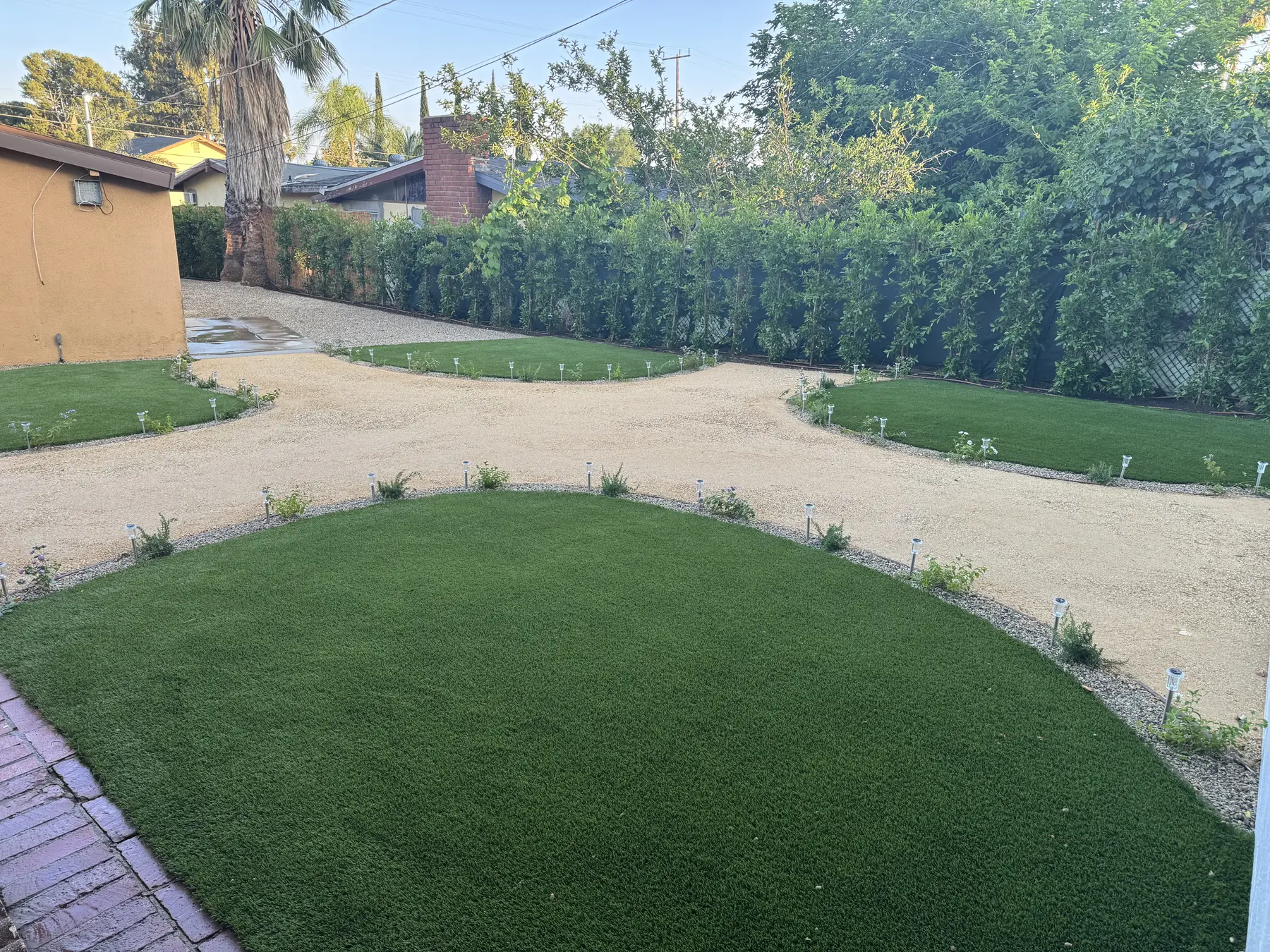
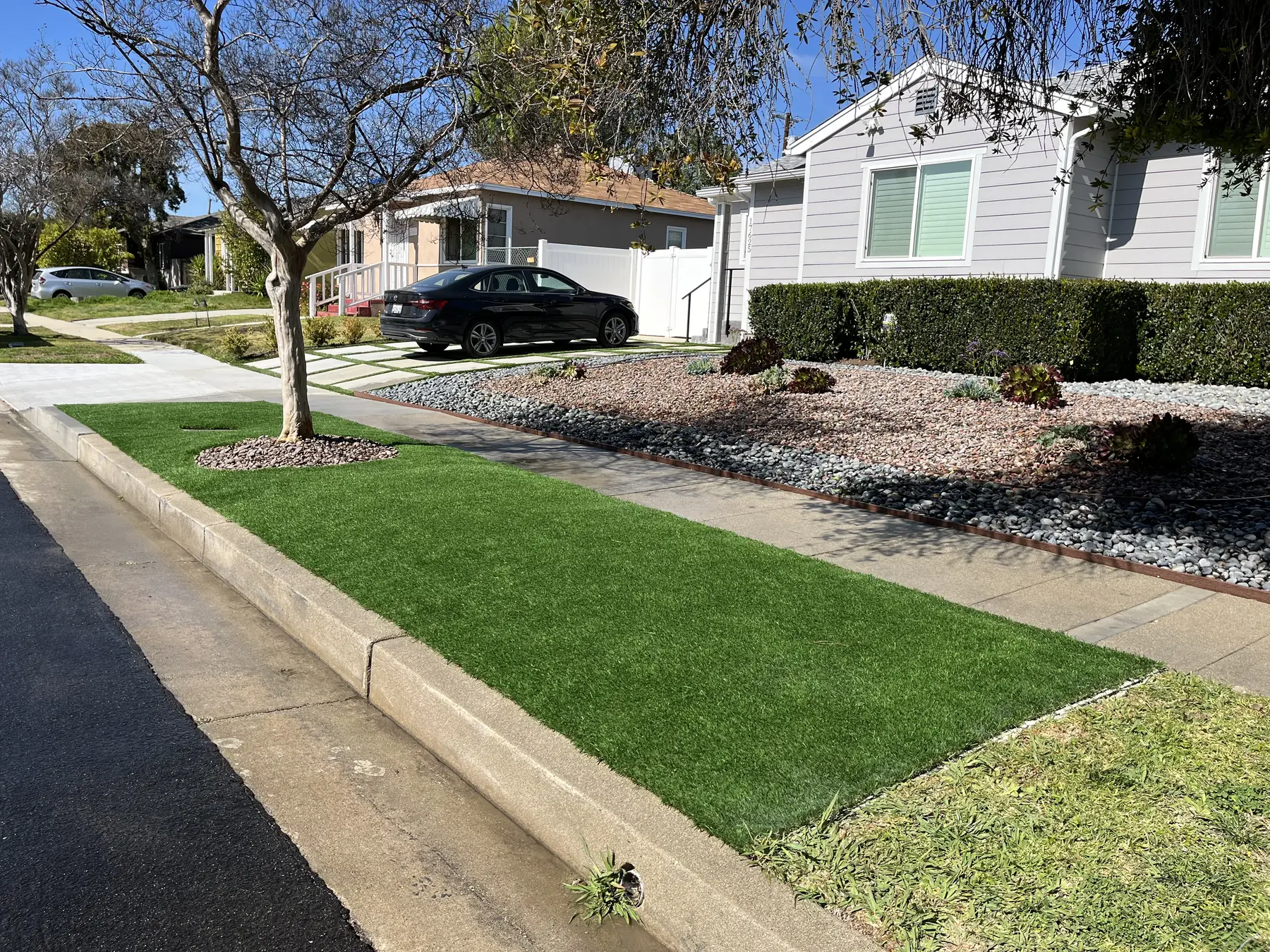
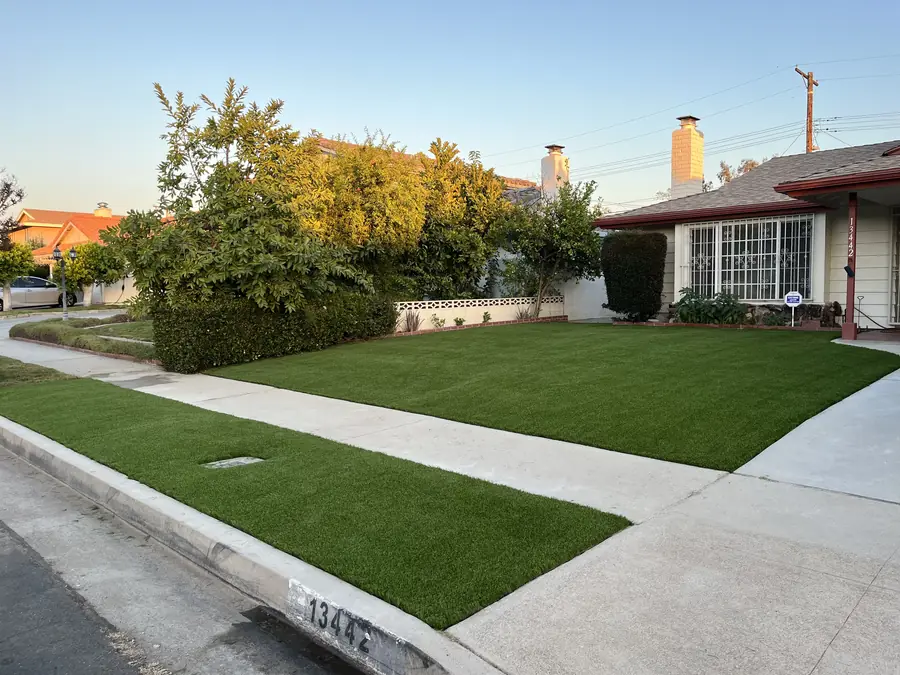
Often it does. A modest yard where the lawn gets heavy use, from kids or dogs or both, is exactly where natural grass struggles, because wear has nowhere to spread out. Turf gives you a clean green panel that stays that way through a Panorama City summer without watering. It still needs proper base work and drainage underneath to perform, which is where most poor installations go wrong. We treat turf as hardscape, not as carpet rolled over dirt.
Less than the old one did, assuming it was designed properly. New planting wants attention through establishment, then settles into a lighter routine as it matures. Drip systems need a periodic check of emitters, and the controller deserves seasonal adjustment. Hardscape essentially wants cleaning. At the final walkthrough we go through the system with you, show you the valves, the controller programming, and the shutoff, so you are never guessing about your own yard later.
Reach us at (818) 443-9300 and we will set a time to visit your Panorama City property. You get a free written estimate, with scope, materials, and pricing laid out so you can compare it fairly against anything else you receive. Daniels Landscaping is licensed in California under number 1138709 and stays accountable for the build. If the timing turns out not to be right yet, the conversation still costs you nothing.