
FAQ
Landscape Lighting in Tarzana, answered
The questions we hear most from Tarzana homeowners.
A complete system starts with a low-voltage LED layout, which runs on twelve volts instead of household current and stays safe around kids, pets, and irrigation. From there you add the pieces that fit your yard, such as path lights, tree uplights, wall washing, and step lights. A transformer steps the power down, and a timer or app turns everything on at dusk. Daniels Landscaping designs the mix around your property in Tarzana, not around a boxed kit.
Low-voltage LED has become the standard for good reasons. The twelve-volt wiring is safe to bury and safe to handle, so it suits family yards. LED heads sip power, run cool, and hold their brightness for a long time, which keeps your electric bill and your ladder time low. The light quality is also better than the old halogen look, with steady color and no harsh hot spots. For a Tarzana yard of almost any size, it is the sensible base to build on.
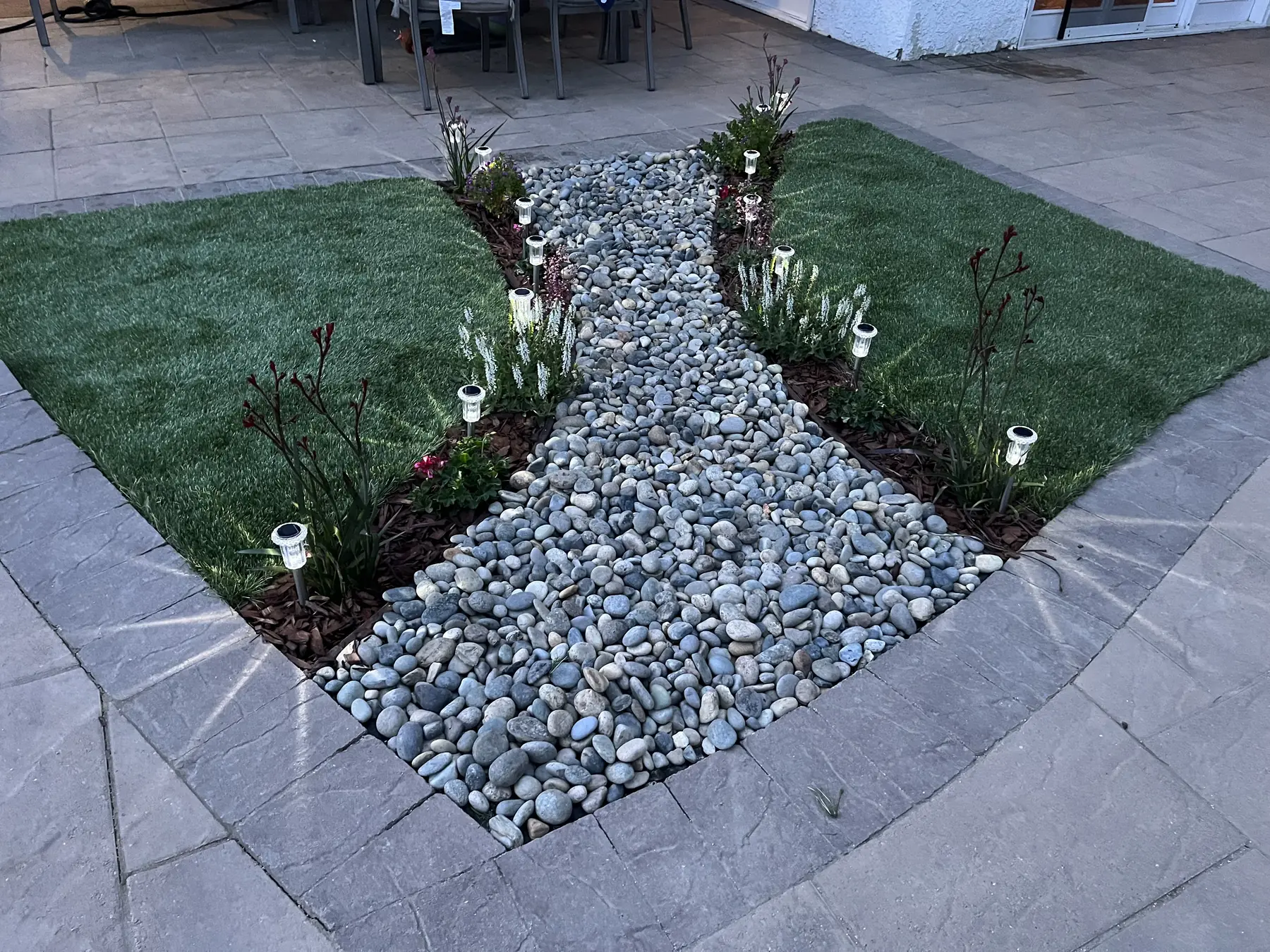
Path and walkway lights sit low and cast a soft pool of light down onto the ground, so you see the edge of the walk without staring into a bare bulb. Good spacing matters, since lights placed too close read like a runway and lights placed too far leave dark gaps. On the flat tracts north of Ventura Boulevard, a clean run of path fixtures along the front walk gives a Tarzana home a warm, welcoming approach and steadier footing after sunset.
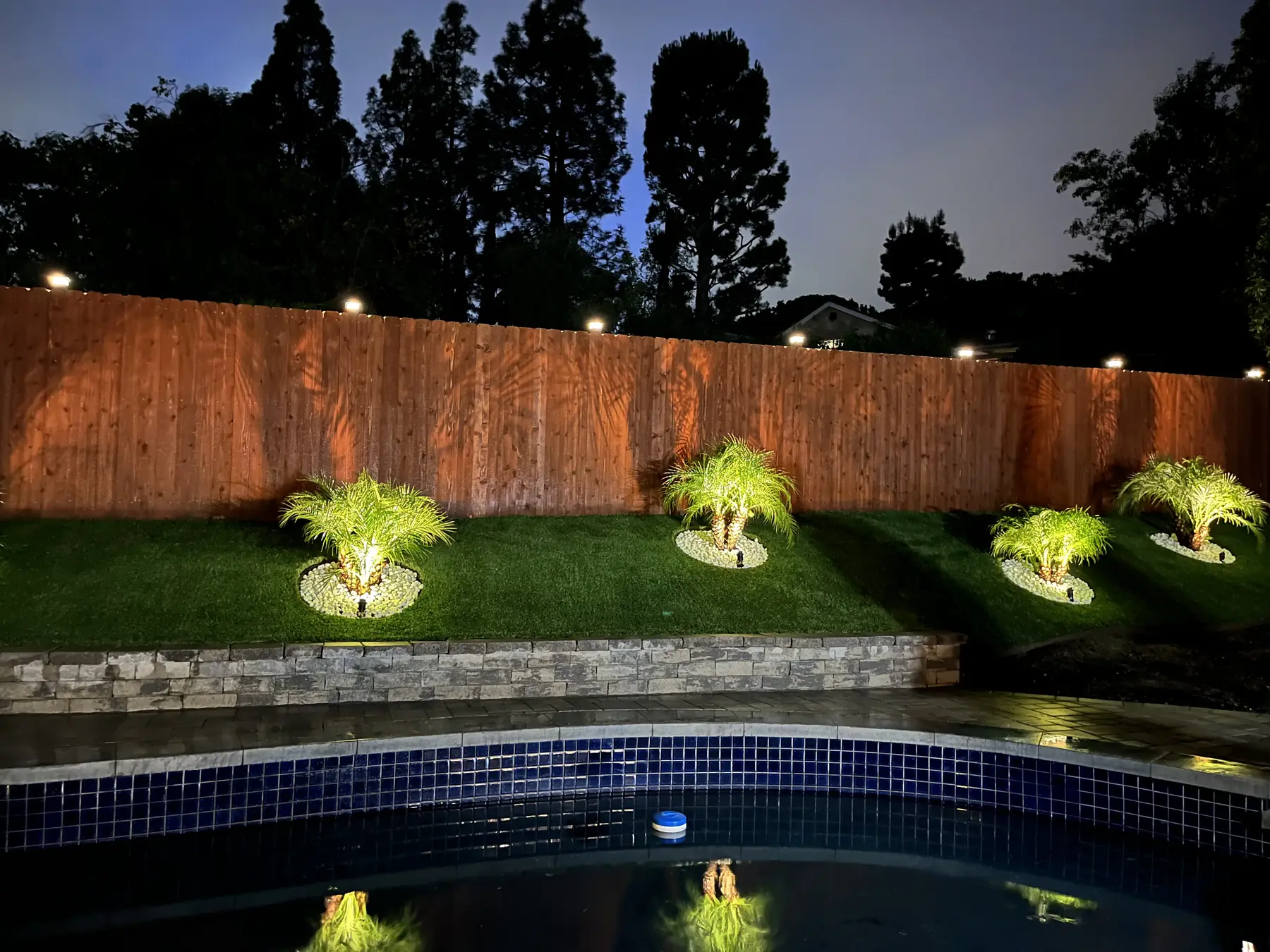
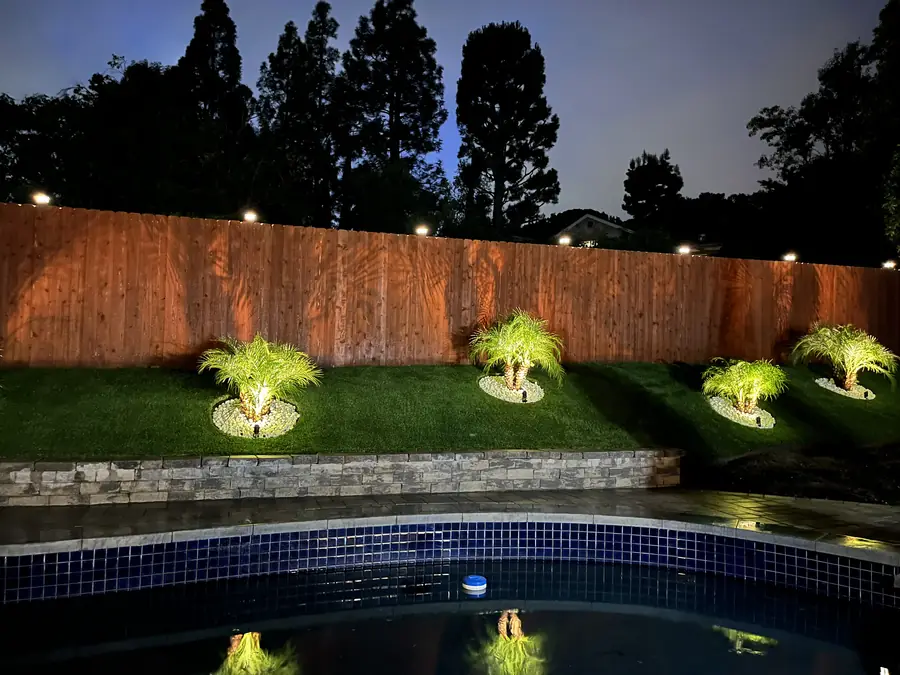
Uplighting places a fixture at the base of a tree, wall, or column and aims the beam upward to draw the eye and add depth. Mature trees with interesting bark or a broad canopy take it beautifully, and so does the face of the house, where a few well-aimed lights show off architecture and texture. In Tarzana yards we often uplight a specimen oak or a row of palms, then step down the brightness on smaller plants so the scene feels layered rather than flat.
Both light a vertical surface, but they do different jobs. Wall washing sets the fixture back and spreads an even, gentle glow across a wall or fence, which smooths the surface and gives you a soft backdrop. Grazing places the light close to the wall and aims it sharply along the face, so every ridge in stone, stucco, or wood throws a shadow and the texture jumps out. On a Tarzana property, we pick between them based on the material and the mood you want.
If your property has stairs, a raised deck, or a change in level, step and deck lights are less a luxury than a safety feature. Small fixtures tucked under the tread or the rail cast light exactly where your foot lands, so nobody misjudges an edge in the dark. They also look clean by day, since the hardware stays hidden. Around Tarzana pools, patios, and hillside stairways, these little lights prevent the kind of trip that turns a nice evening sour.
Lighting works on both fronts at once. On safety, it removes the dark spots along walks, steps, and driveways where a fall or a turned ankle happens. On security, a yard that is softly lit all over gives a prowler nowhere comfortable to stand, which is often more effective than one glaring floodlight that only creates deep shadow beside it. We aim for even, layered coverage on a Tarzana property, then add a timer so the lights greet you and stay on through the evening.
The transformer is the heart of the system. It sits near an outdoor outlet and steps household power down to the safe twelve volts the fixtures run on. From there, control is your choice. A basic timer switches the lights on at dusk and off at a set hour, while a smart transformer or an added module lets you run everything from a phone app, adjust zones, and change the schedule with the seasons. On most Tarzana installs, we set it and walk you through it.
Voltage drop is the loss of power that happens as electricity travels down a long wire. Push a twelve-volt run too far without planning for it, and the fixtures at the end glow dim and slightly off color while the ones near the transformer stay bright. On a big or spread-out Tarzana lot, and especially on a long hillside run, we size the wire, split the load into zones, and balance the layout so every light reads the same from the first fixture to the last.
For a couple of lights by a door, a boxed kit can be fine. For a whole yard, the limits show quickly. Kit fixtures are usually thin plastic that clouds and cracks in the sun, the wire is undersized, and the small transformer runs out of capacity once you add fixtures. You also get no design, so lights end up spaced by guess. A professional install in Tarzana uses solid brass or copper fixtures, correctly sized wire, and a plan, which is why it lasts and looks intentional.
Upkeep on a quality low-voltage system is light. Once or twice a year you clear leaves off the lenses, trim any plant that has grown into a beam, and check that fixtures still sit at the right angle after wind or foot traffic. LED heads run a very long time before they fade, and solid brass or copper bodies weather to a handsome finish rather than falling apart. If a driver or a lamp ever does quit, we swap the part instead of the whole fixture.
Color temperature sets the whole mood, so it deserves thought. Warm light, in the range most people call soft white, flatters stucco, wood, and greenery and makes a yard feel inviting, which is why we lean warm for most Tarzana homes. Cooler light can suit modern architecture or read like moonlight through a tall tree, but too much of it turns a garden clinical and blue. The trick is consistency, since mixing warm and cool fixtures in one view looks like a mistake rather than a choice.
Good lighting is felt more than seen, and part of that is courtesy to the people next door. We aim fixtures away from property lines, use shrouds and glare guards on uplights, and tuck the source behind a plant or a rock so you see the effect, not the bulb. Beam angle and placement do most of the work. On the closer Tarzana lots, this care keeps your yard glowing while your neighbor's bedroom stays dark, which keeps everyone friendly.
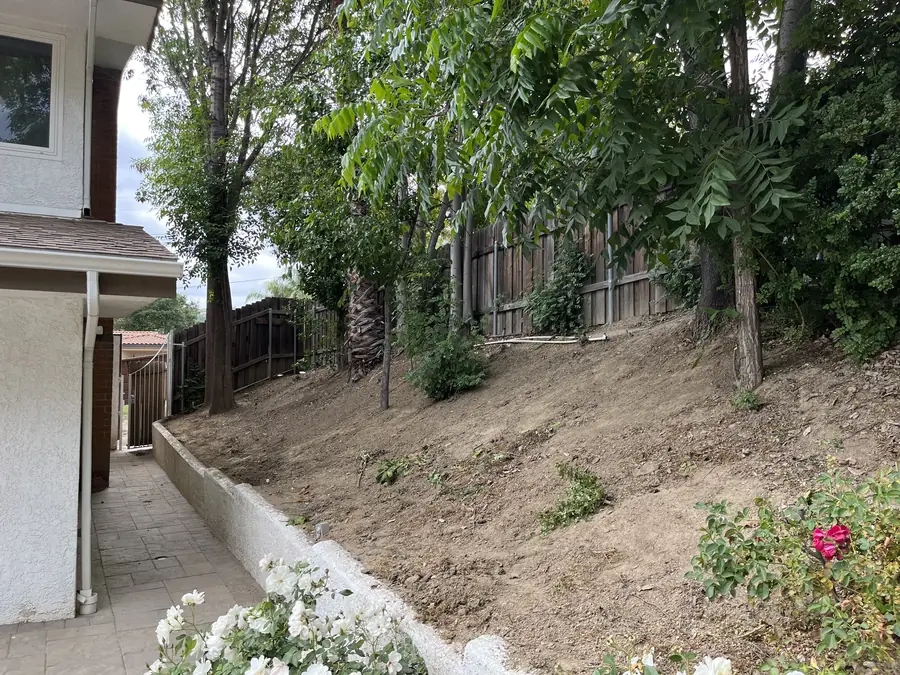
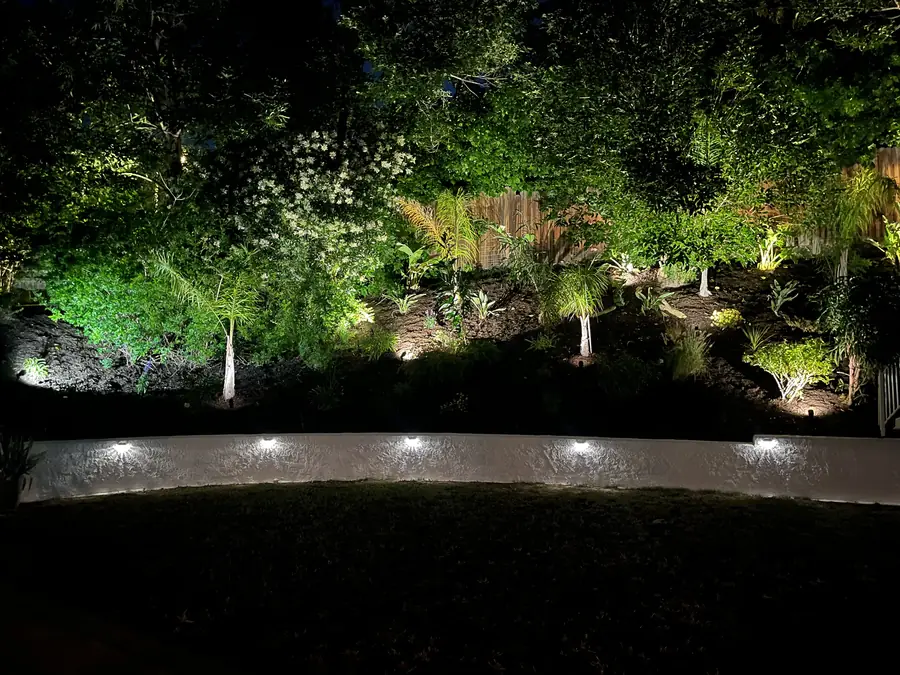
A grade changes everything about a lighting plan. On the hillside lots climbing toward Mulholland south of Ventura Boulevard, we treat the steps, switchbacks, and retaining walls as the priority, since a missed edge on a slope is far riskier than on flat ground. Low path lights mark the safe line of travel, step lights wash each tread, and we keep the beams downward so a descent never leaves you looking into glare. The look stays elegant, but safe footing comes first.
It can, as long as the lighting respects the view instead of fighting it. The mistake is flooding the foreground so bright that your eye cannot see past the railing to the lights of the Valley below. We keep the near lighting low and warm, frame the edge of the yard, and leave a soft, dark middle so the distant view reads clearly. On a Tarzana hillside property, that restraint turns your patio into the best seat in the house after sunset.
The flats reward a clean, classic approach. Without a slope to manage, the design turns to curb appeal and usable evening space. A run of path lights defines the front walk, warm uplights lift two or three specimen trees, and a wash across the front of the house gives the street a handsome face after dark. Around the back, lights on the patio and a few key plants stretch the hours you can enjoy the yard. It is straightforward, and on a Tarzana flat lot it looks polished.
Yes. Tarzana is home base, and we also light homes in the neighboring parts of the Valley, including Encino and Woodland Hills. The design thinking travels with us, since the same mix of flats and hillsides runs right across this stretch of the corridor. Whether your lot is a flat tract or a slope with a view, the approach is the same, which is a plan built for your property, quality fixtures, and one licensed contractor doing the work. Ask us about your street and we will tell you honestly.
Getting started is easy. You reach out to Daniels Landscaping and tell us a little about your Tarzana property and what you want the lighting to do, whether that is safer steps, a warmer front yard, or a framed view. We come out, walk the yard with you at the times that matter, and put together a written estimate at no charge. Once you approve the plan, one licensed contractor handles the install start to finish. Call us at (818) 443-9300 to set up your visit.