
FAQ
Irrigation in Tarzana, answered
The questions we hear most from Tarzana homeowners.
It starts with walking the property and reading the ground: where it is flat, where it falls away, what the soil does with water, how much pressure and flow the meter actually delivers. From there we lay out zones, size the mainline and laterals, set valves in accessible boxes, choose heads or drip based on what each planting area needs, and mount a controller. Installation includes trenching, assembly, pressure testing, head adjustment for matched coverage, and programming. You get a walkthrough at the end so the system is not a mystery box on the garage wall.
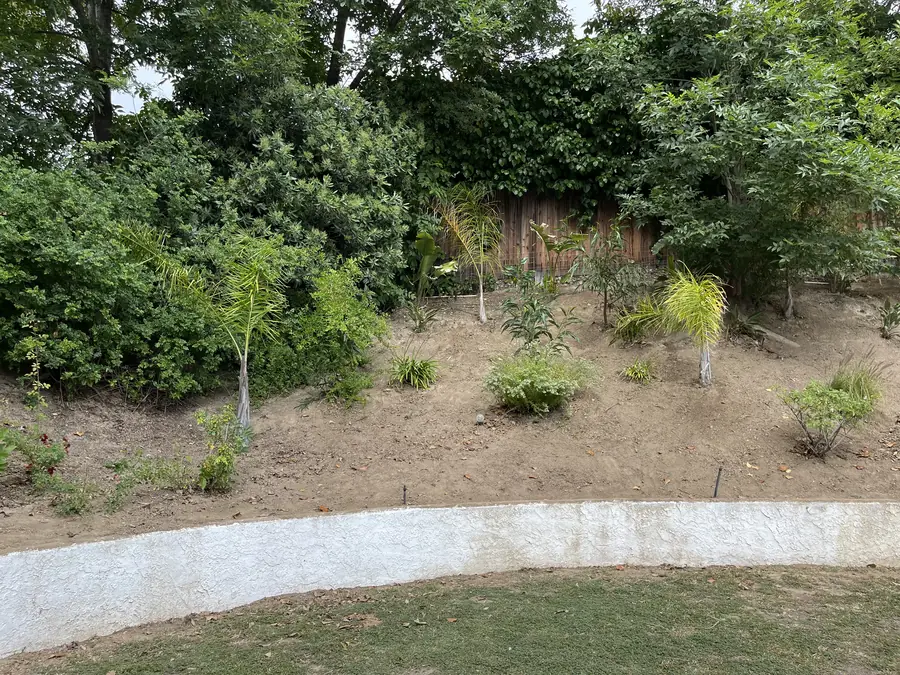
Runoff on the slopes south of Ventura Boulevard is almost always a rate problem, not a volume problem. The soil can only take water so fast, and once you exceed that rate the rest heads downhill. The fix is applying water slower and in shorter bursts. Low precipitation rate nozzles put water down at a fraction of the speed of standard sprays, and cycle and soak scheduling breaks one long run into several short ones with soak time between. Drip handles terraced beds better than overhead spray. Together those three moves keep water in the root zone instead of in the street.
They are nozzles that apply water at a much slower rate than a conventional spray head, typically as multiple rotating streams rather than a fan of mist. MP rotator style nozzles are the common example. Because the water goes down slowly, heavier or sloped soil has time to absorb it before gravity takes over. The streams also resist wind drift better than fine spray, which matters on exposed hillside lots. Run times are longer than you may be used to, since you are applying less water per minute, but far more of it stays where you put it.
Elevation and pressure are directly tied together. Every foot of rise costs you pressure, and every foot of drop adds it. On a Tarzana hillside property with meaningful vertical distance between the top of the lot and the bottom, heads at the high end can be starved while heads at the low end are over pressurized and misting. Both conditions waste water and produce uneven coverage. We measure pressure at the actual elevations rather than guessing, then use pressure regulating heads, appropriate valve selection, and separate zoning so each part of the system operates in its proper range.
Yes, and this is one of the most common problems we find on properties that straddle the grade. Flat ground can accept water at a normal rate for a normal run time. Sloped ground cannot. If both share a valve, you are forced to pick one schedule, and whichever you pick, half the yard suffers. Splitting them lets the flat lawn run its cycle straight through while the slope runs shorter, repeated cycles with soak time. It also lets you use different nozzles and different pressure regulation on each. Separate zones cost a little more up front and save water every month after.
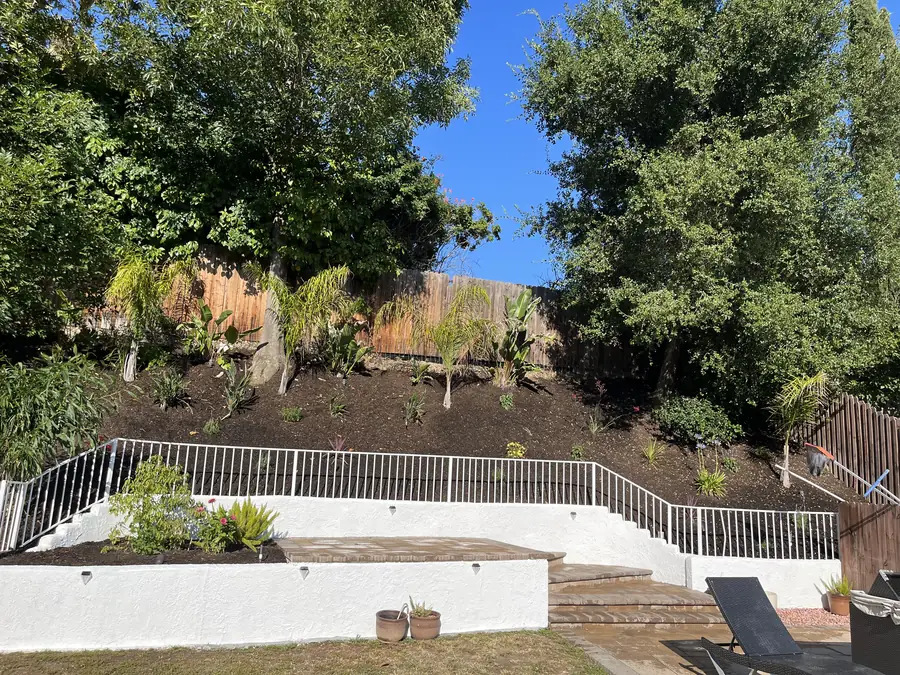
Terraces stack up quickly on the south side of Tarzana as the land rises toward Mulholland, and each level tends to hold moisture differently than the one above it. Drip is usually the right answer. Inline emitter tubing laid along the planting rows, or point emitters at individual shrubs, puts water directly at the roots with no spray to blow off the edge or sheet down a retaining wall. Each terrace or group of terraces can get its own valve so upper levels are not overwatered to satisfy lower ones. Pressure regulation and filtration go in at the valve to keep emitters flowing evenly.
For shrub beds, planters, hedges, vegetable areas, and anything on a slope, drip is generally the better tool. It delivers water at the soil surface where roots are, loses almost nothing to evaporation or wind, and keeps foliage dry, which helps with disease. Lawn is the exception, since turf needs uniform overhead coverage. Many Tarzana properties end up with a mix: rotors or rotator nozzles on the lawn, drip everywhere else. Converting existing spray zones to drip is straightforward work and often one of the fastest ways to bring water use down without losing plants.
A smart controller connects to WiFi and adjusts run times based on local weather data, soil type, plant type, slope, and sun exposure rather than repeating the same program all year. When a storm rolls through it skips the cycle. When a heat wave hits it adds minutes. You can also check and change everything from your phone, which is genuinely useful when you are away. For most properties it pays for itself in water savings and prevented overwatering. Some local water agencies periodically offer rebates on qualifying controllers, so it is worth checking with your provider, though eligibility and availability change.
A zone is one valve controlling one group of heads or emitters that all run at the same time. Hydrozoning means grouping plants with similar water needs and similar site conditions onto the same zone so the schedule fits everyone on it. Thirsty turf does not belong with established drought tolerant shrubs. A sunny south facing slope does not belong with a shaded side yard. Getting this right at design time is the single biggest factor in whether a system waters efficiently, because no controller, however smart, can fix a zone that contains plants wanting opposite things.
Instead of running a zone once for fifteen minutes, cycle and soak runs it three times for five minutes with a rest period between each pass. During the rest, water that is sitting on the surface has time to move down into the soil. The next cycle then goes into ground that can accept it rather than ground that is already saturated. On the hillside lots above Ventura Boulevard this technique matters enormously, and it helps on compacted clay flats too. Most modern controllers handle the scheduling automatically once the cycles and soak intervals are programmed in.
Repair work is a steady part of what we do. Cracked risers, heads mowed off at the collar, nozzles clogged with grit, valves that will not close or will not open, solenoids that have quit, diaphragms that have hardened, split poly and PVC laterals, wire breaks between controller and valve, and leaking manifolds all come across our path regularly. We locate the actual failure rather than swapping parts hopefully. On older Tarzana systems a repair visit often turns up a coverage or pressure issue worth correcting at the same time, and we will tell you what we see before doing anything extra.
The usual signs are a water bill that jumped without explanation, a soft or persistently green patch when the system is off, gravel or silt washing up around a head, a zone that has lost pressure, or the meter dial creeping while every fixture in the house is closed. On sloped ground the wet spot frequently shows up well downhill of the actual break, which sends people digging in the wrong place. We isolate zone by zone, watch the meter, and pinpoint the failure before opening the ground so the repair stays small.
Backflow prevention keeps irrigation water, which has been in contact with soil, fertilizer, and whatever else is in the ground, from being drawn back into the drinking water supply if pressure in the main drops. Every irrigation system tied to a potable supply needs some form of protection, and the required device type depends on your water purveyor and the site conditions. We install the appropriate assembly and set it at the correct height and location. If your existing device is failing, corroded, or was never installed properly, that gets addressed as part of the work.
Coverage on irregular terrain comes down to three things: head placement, matched precipitation rates, and adjustment. Heads are spaced head to head so each throw reaches the next, which sounds excessive but is how sprinklers are designed to work. Within a zone every nozzle must apply water at the same rate, otherwise the quarter circle heads drown their area while the full circles come up short. Then each head gets arc and radius adjusted on site with the water running. On grade we also account for throw distance changing as the spray travels uphill or downhill.
Usually, yes, and often more than people expect. Most of the waste we find is not dramatic. It is a zone running twenty minutes when it needs eight, a broken head no one noticed behind a hedge, spray heads misting away in the wind, or one schedule trying to cover both a flat lawn and a slope. Correcting those things reduces consumption while the landscape actually looks better, since overwatering damages plants too. Efficient systems also make it far easier to stay inside whatever watering day and duration limits your agency has in effect.
We program it before we leave, with seasonal adjustments already built in and cycle and soak configured on any zone that needs it. Then we walk the property with you, run each zone so you can see exactly what it covers, and label everything clearly at the controller. If it is a WiFi model we connect it to your network and get the app on your phone. You will know how to skip a cycle, run a manual test, and shift schedules for summer and winter. Questions later are fine, just call us.
Everything is done by one licensed contractor. One licensed contractor stays accountable for the work. The people who design your system are the people who install it, and they are the people who come back if something needs adjusting. That is deliberate. When one company holds the whole job, nothing falls through the cracks between trades, the quality stays consistent, and there is never a question about who is responsible. It also means our crew knows Tarzana properties, both the flats north of the boulevard and the hillsides above it, because they have worked on them.
Call us at (818) 443-9300 and we will set up a time to come out and look at the property. We walk the site with you, check pressure and flow, look at what is already in the ground, and talk through what you want the landscape to do. Then you get a free written estimate that spells out the scope, the materials, and the price, with nothing hidden in the margins. Daniels Landscaping is licensed in California, license number 1138709. Whether you are on the flats or up the hill toward Mulholland, we are happy to take a look.