
FAQ
Artificial Turf in Sylmar, answered
The questions we hear most from Sylmar homeowners.
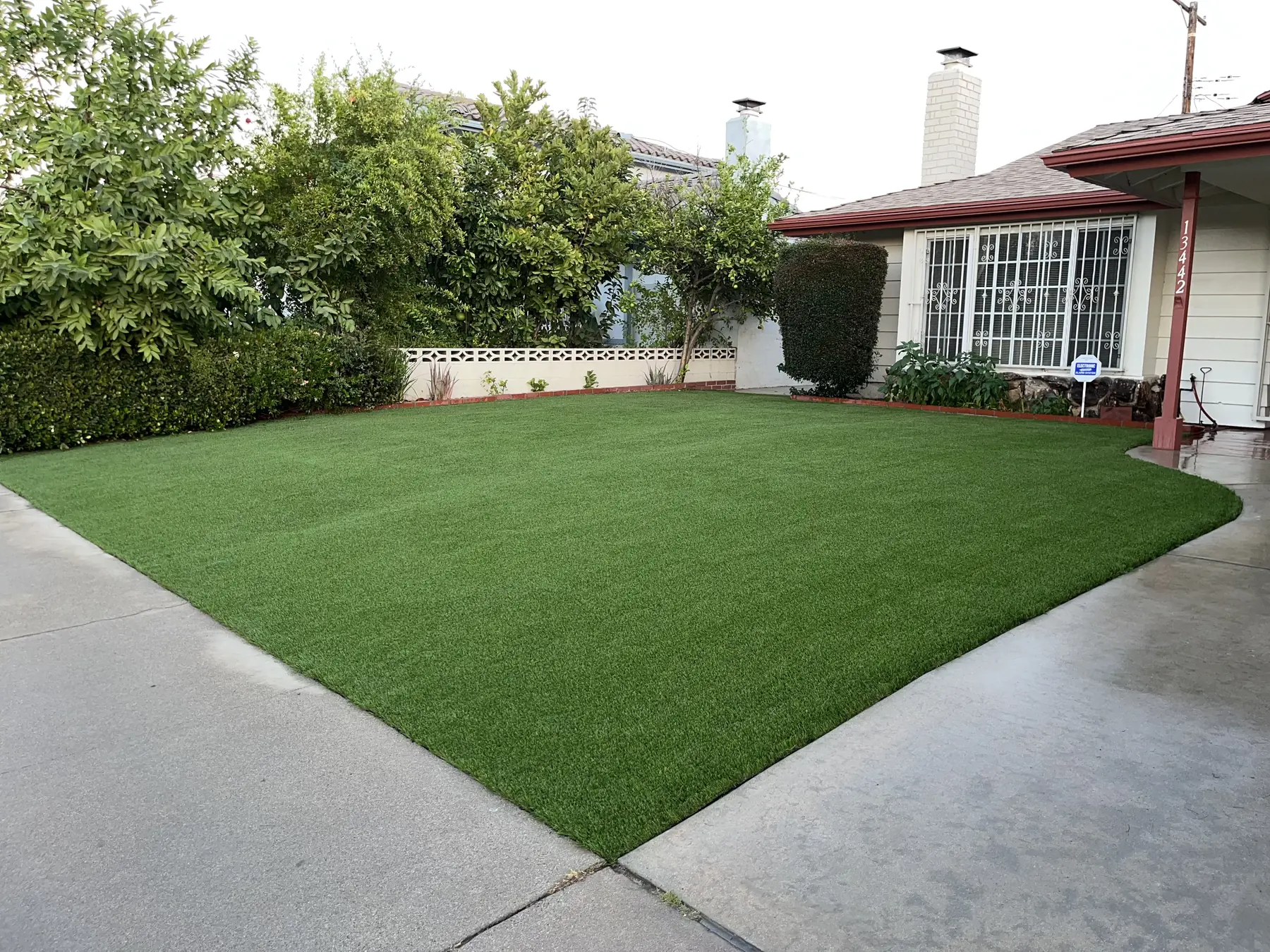
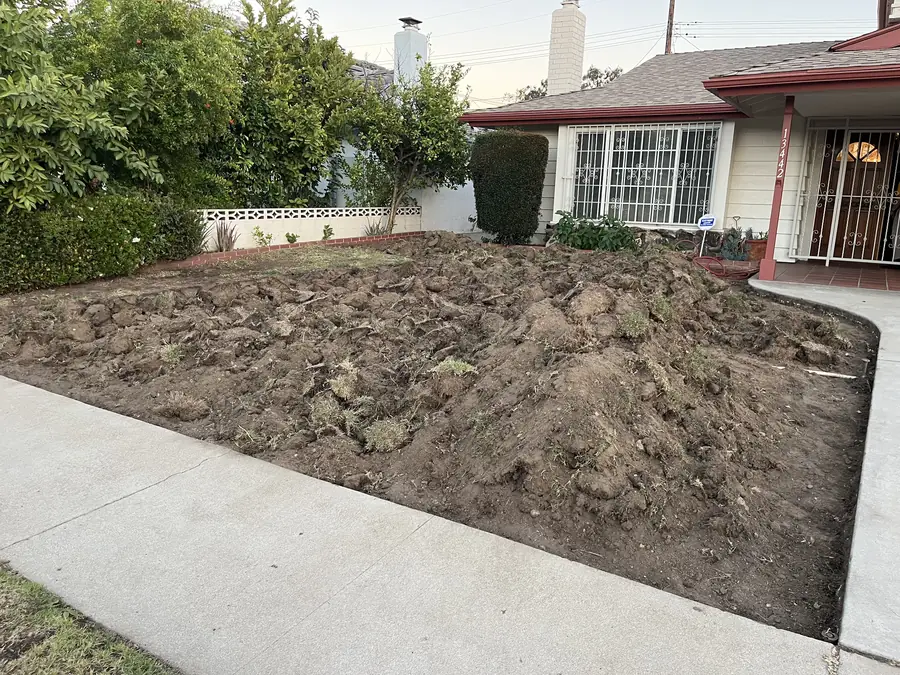
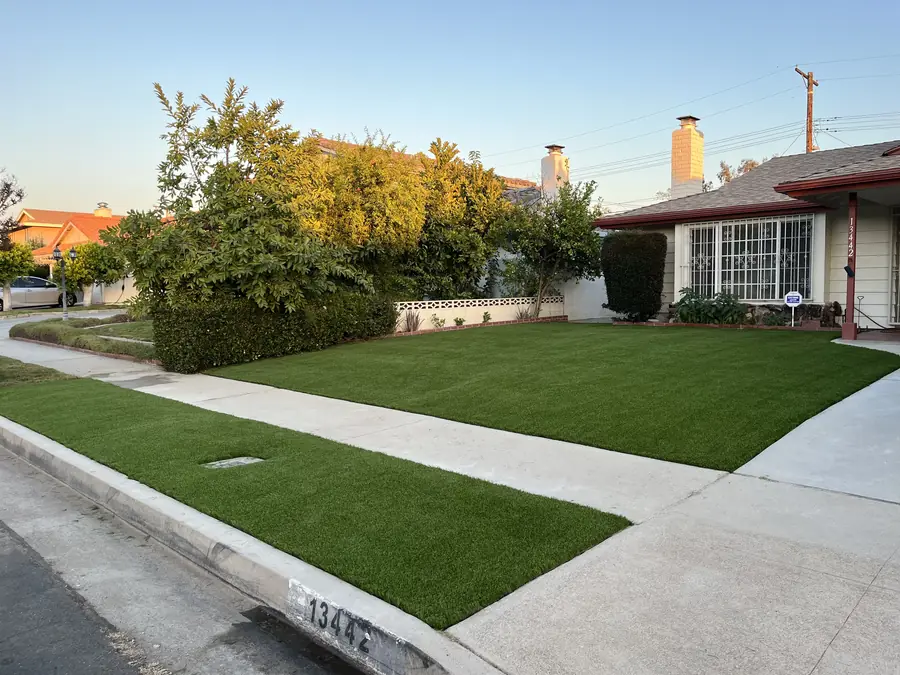
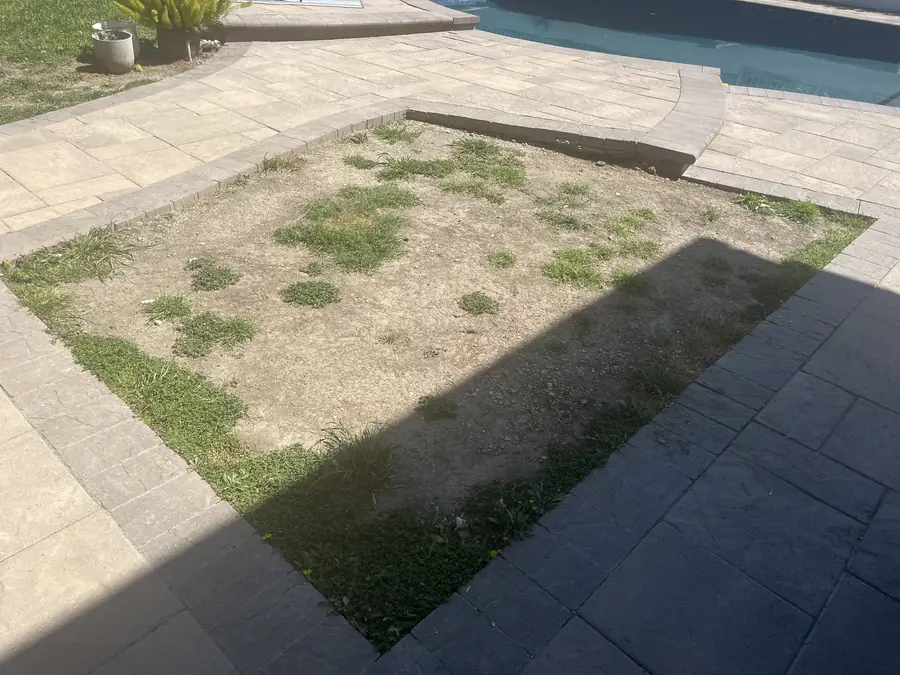
The old surface comes out first, sod, weeds, and enough soil to make room for the section beneath. Aggregate base goes in next, spread in layers and compacted separately, then shaped to the finished contour and to a slight fall. Turf is rolled out and left to relax before anything is cut, so the backing releases its memory from the roll. Panels are then trimmed, seamed, and nailed, the perimeter is fastened to the edge detail, infill is brushed into the fibers, and the pile is groomed upright.
Every flaw people complain about later starts underneath. Ripples, low spots that puddle, a soft patch that shifts under a footstep, and edges that lift all trace back to base work rather than to the product. The aggregate has to be placed in thin layers, compacted layer by layer, and screeded true, because the turf is thin and will telegraph whatever it lies on. A modest turf over an excellent base outperforms a premium turf over a rushed one every single time, which is where we spend the labor.
Digging is the hard part. Alluvial ground washed down from the mountains is full of cobble, and clearing it to depth takes real effort compared with the soft soil further down the Valley. What you get in exchange is worth having. That ground percolates fast, so water coming through the perforated backing and the base keeps moving down instead of stalling. A lot of turf failures elsewhere involve saturated ground holding water against the backing, and Sylmar simply does not present that problem often.
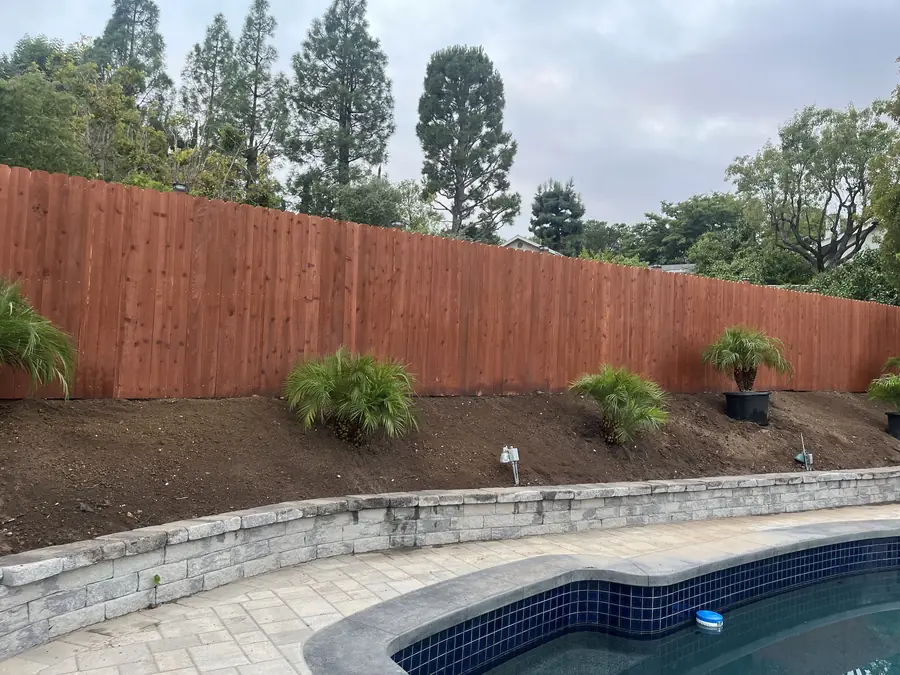
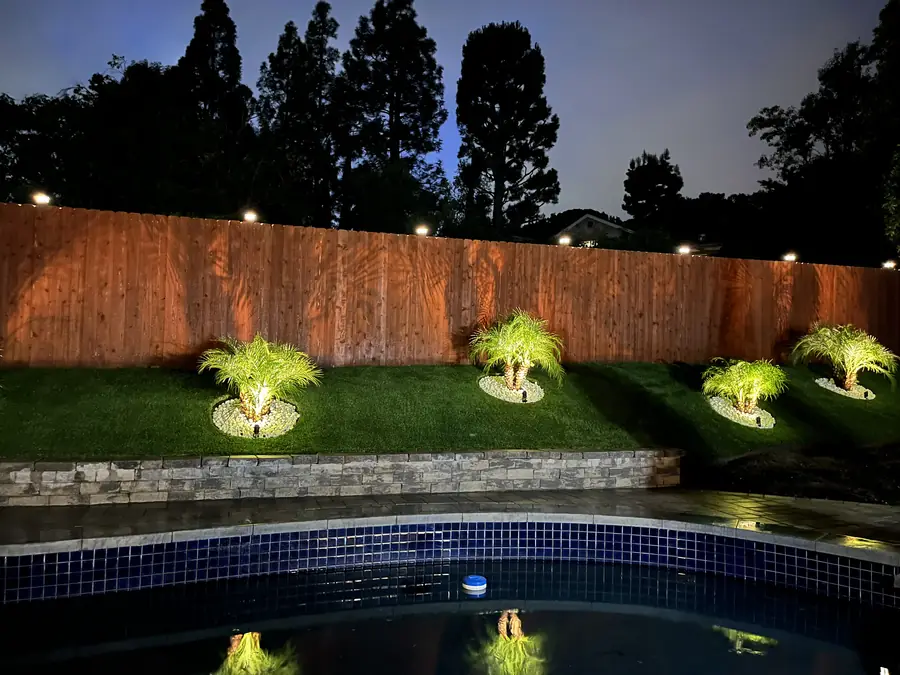
Yes, and grade changes very little except the anchoring, which gets stricter. Nailing along seams and perimeters goes in tighter, since gravity works on the panel continuously rather than only when someone walks on it. We orient panels so seams run across the slope instead of straight down the fall line, because a seam pointed downhill is a channel for both water and movement. Base compaction on the low side gets extra passes. Where the pitch is steep enough to feel awkward underfoot, terracing a flat platform serves better than turfing the incline.
Wind finds any edge that was not fastened properly and works it loose over a season. That is why the perimeter is the detail we are strictest about: turf is either tucked and secured against a solid border such as a paver course, bender board, or a concrete edge, or nailed at close spacing into compacted base, with no free flapping margin anywhere. Infill weight helps as well, since a well filled lawn simply sits heavier. Blown dust and leaf litter collecting in the pile is a broom job, not a defect.
Keep it away from the wall lines. Synthetic fiber is a petroleum product and it does not belong in the narrow band right against a structure at the wildland interface, where an ember landing has to find nothing to catch. In that zone we use gravel, decomposed granite, pavers, or stone, all of which are noncombustible. Turf then starts beyond that band, out where the yard is actually used. A stray barbecue coal or fire pit spark will also melt fibers, so we hold turf back from fire features too.
Almost never, and not because of the product. On a large parcel the honest question is which ground people genuinely use. Turf earns its place in the areas that see feet, meaning play space, a dog run, the area right off the patio, and paths between them. Extending it across acreage buys square footage nobody stands on. The rest of a Sylmar property is usually better served by drought tolerant planting, native ground cover, and gravel, which suits the foothill setting and reads far more naturally than a synthetic field.
Face weight measures how much yarn is packed into a given area of turf, so a denser product has more fiber standing up per square foot. Density is what makes a lawn feel full underfoot and what helps blades recover after being walked on, which is why heavier goods hold their look longer in a busy yard. It is not the only factor though. A dense turf laid over a poor base still fails, and a moderate density product suits a low traffic area perfectly well.
Shorter pile stands up better and reads tidier under sun, while a longer pile looks lush at first and lies flatter as it gets used, especially where children and dogs are running. For most Sylmar yards a mid range height is the sensible compromise. Blade shape governs resilience: shapes with a spine or a fold down the blade, such as an S or W profile, resist matting far better than a flat ribbon. Color blend matters too, since a mix of tones with a tan thatch layer reads far more like grass than a single flat green.
Infill is the granular material brushed down between the fibers, and it does three jobs. It weighs the lawn down, it holds the blades standing upright, and it cushions the surface. A rounded silica sand covers most residential installations and does the job well. Where dogs are part of the picture, an antimicrobial coated infill or a zeolite product helps by capturing ammonia rather than letting it linger. Quantity is set by the pile height, and infill gets brushed in progressively rather than dumped, so it reaches the backing evenly.
Modern turf uses a perforated backing, so water passes vertically through the panel and into the base rather than running across the top. The base is graded to a slight fall as well, which matters here because runoff arrives from higher ground during a real storm. On lots that collect water we add a drain line under the base and pipe it to daylight. Given how quickly Sylmar ground accepts water, the combination usually clears a downpour without any standing water left on the lawn.
Done properly they disappear. Every panel is laid running the same direction, because turf has a grain and two panels facing opposite ways will show as different shades in sunlight no matter how tight the joint is. Selvage edges are trimmed off, the two pieces are butted without overlap and without a gap, and the seam is joined and secured to the base. We plan panel layout ahead of time to keep seams out of the middle of the main sight line from the house and away from any traffic path.
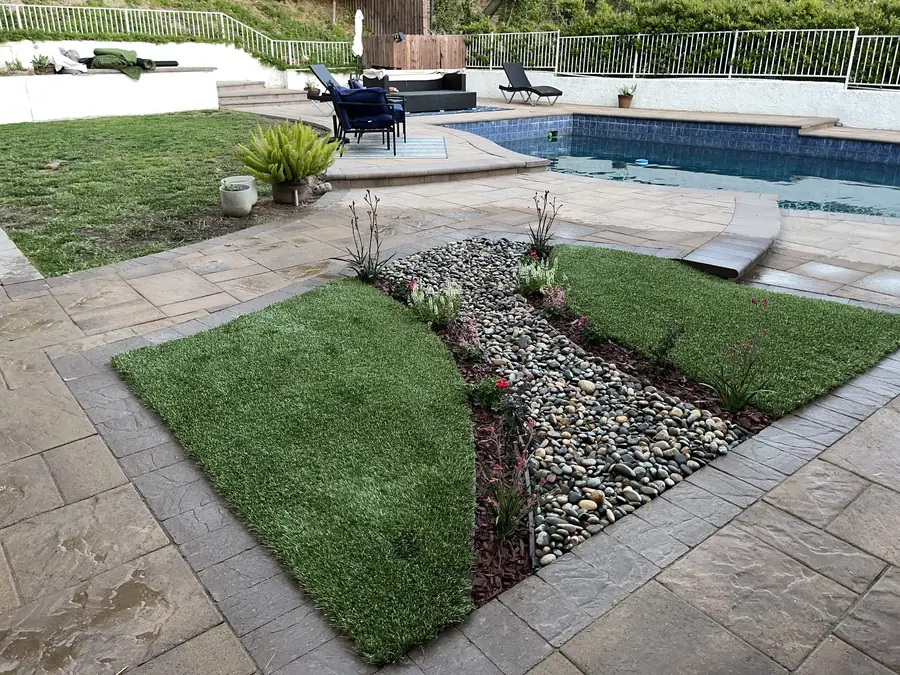
The perimeter needs something solid to terminate against, and we decide what that is before the base goes in. A paver soldier course, a concrete mow curb, bender board, or steel edging all work, and the turf is tucked and fastened to it so nothing shows and nothing can be pulled up. Against a wall or a fence the material is trimmed tight and nailed close. Left unsupported, an edge is what a dog finds, what wind lifts, and what starts every unraveling problem we get called out to fix.
Dogs do very well on it. Nothing gets dug up, nothing turns to mud, and the yellow patches a real lawn develops never appear. Liquid drains through the backing into the base. Solids get picked up as normal and the area rinsed, and a deodorizing infill together with an occasional enzyme rinse handles odor for heavy use. Routine care is genuinely light: rinse it down, cross brush the pile against the lay every so often to stand it back up, and blow off leaves and dust.
Synthetic surfaces absorb heat and run warmer than living grass on a hot afternoon, and summers at this end of the Valley are hot. Several things take the edge off. Lighter color blends absorb less than dark ones, some products carry a heat reducing backing or a cooling infill, and shade is the biggest factor of all, so a tree or a patio cover over part of the lawn changes the experience completely. A quick hose down cools the surface immediately when it is needed.
A quality lawn installed over a properly built base lasts many years, and it is the fibers that give out rather than the base or the backing. Sun exposure gradually dulls color and traffic patterns eventually mat down where people walk the same line. UV stabilized yarn slows the fading considerably. The other thing that stretches lifespan is upkeep, mainly keeping the infill topped up and brushing the pile back upright, since blades supported by infill stand up years longer than blades left to lie over.
Our own employees, from demolition through the final brushing. One licensed contractor is accountable for every part of a job. The same crew that excavates the rocky ground on your Sylmar lot also compacts the base, screeds it flat, cuts and seams the panels, fastens the perimeter, and works the infill in. Turf is a trade where the quality lives entirely in the hands doing the work, so keeping it under one contractor is not a policy detail for us, it is the reason the finished lawn looks the way it does.
Call (818) 443-9300 and we will come out and measure. During the walk we look at the grade, what has to be excavated, where water enters the yard, how close the lawn should come to the house given fire clearance, and whether dogs, children, or shade change the product we recommend. You get a free written estimate covering the base, the turf, the infill, and the edge detail, plus samples to handle. Daniels Landscaping holds California license 1138709 and installs with one licensed contractor.