
FAQ
Renovations in Arleta, answered
The questions we hear most from Arleta homeowners.
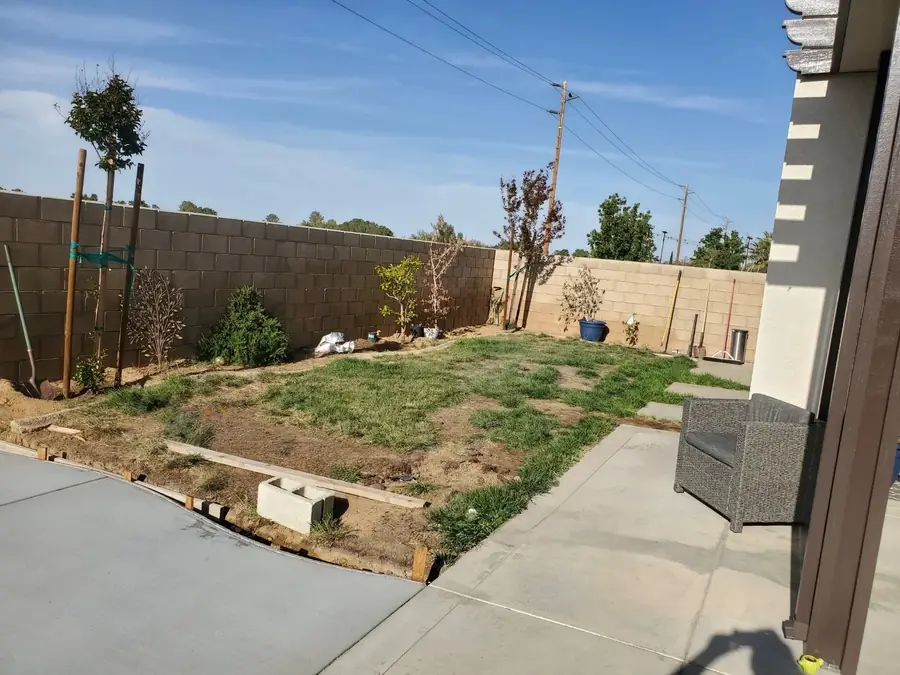
Walk the yard and sort everything into three piles: what is sound, what is tired but fixable, and what has failed. A patio with good base and worn surface units may only need resetting. A lawn that has died more than once is telling you the irrigation or the soil is the problem, not the grass. Mature trees, a healthy hedge, and a solid retaining structure are usually worth keeping and designing around. Anything that will be buried under new work, or that we would have to protect at high cost for little gain, comes out early while the machines are already there.
In most cases yes, and that is one genuine advantage of building on a compact lot. Arleta yards are small enough that demolition, grading, utilities, hardscape, and planting can run as a single continuous project rather than being spread across several seasons. Doing it in one pass also costs less per square foot, because mobilization, access protection, and equipment happen once instead of repeatedly. The other benefit is visual. Since the entire yard is in view from the back door, finishing all of it together avoids the awkward stage where a new patio sits beside an old, failing lawn.
Out the same tight path it came in, which is exactly why we measure that path first. Side yard access in Arleta is often constrained, so before pricing we check gate width, the clear space beside the house, and any overhead obstruction. That determines whether broken concrete leaves by wheelbarrow, by conveyor, or with a compact machine that actually fits, and how many trips the haul away takes. We protect the surface along the route, keep the path clear during the day, and remove debris promptly instead of letting it accumulate.
Because the ground is never that open again. Once demolition is finished and the old surfaces are gone, that is the only moment when the whole yard can be reshaped cheaply, and Arleta lots being flat throughout means the fall away from the house has to be created rather than inherited. We set finish elevations, cut the slope away from the foundation, and place any drain lines while everything is exposed. Correcting a low spot after new paving and planting are in means opening both back up, which nobody enjoys paying for twice.
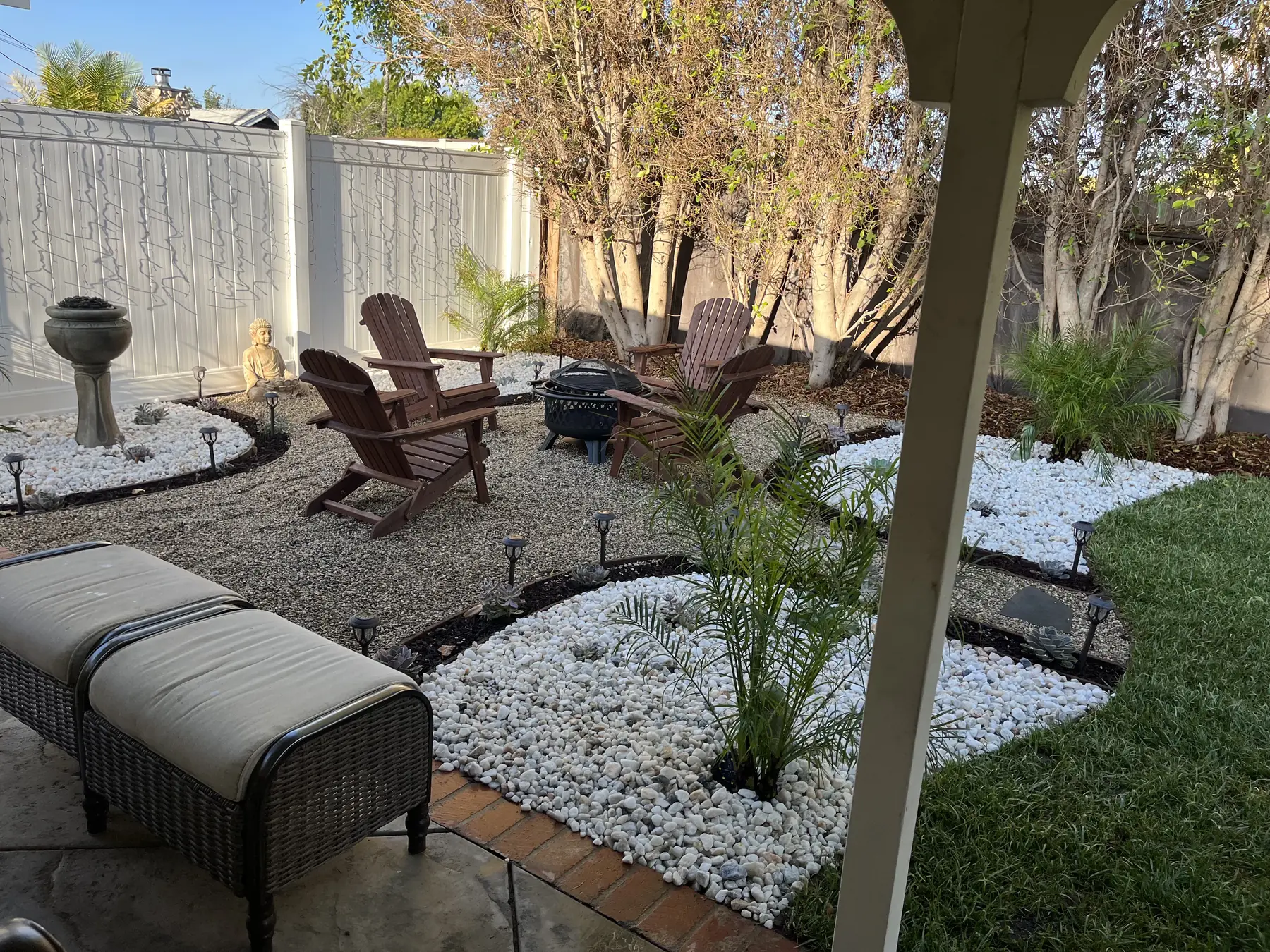
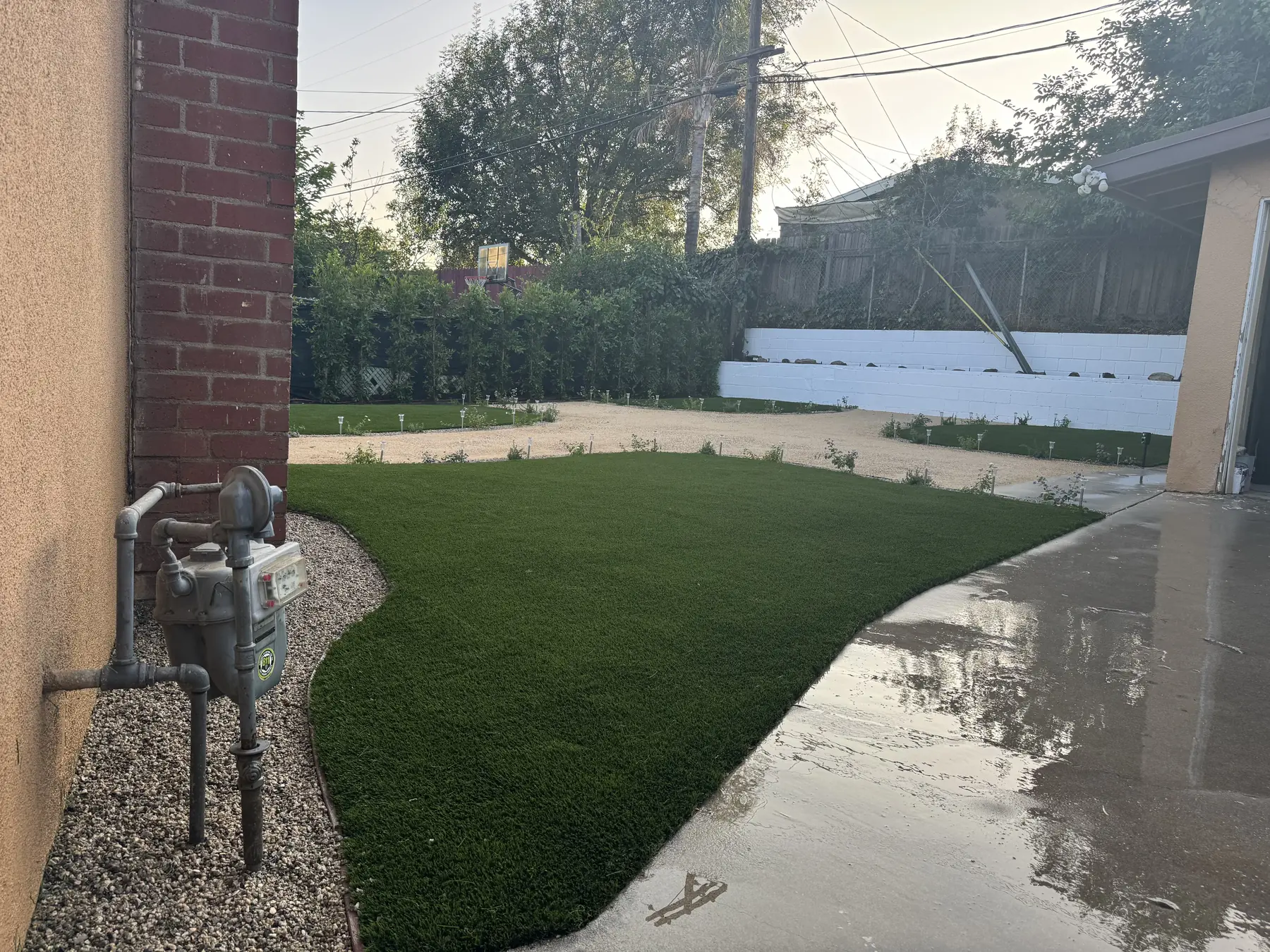
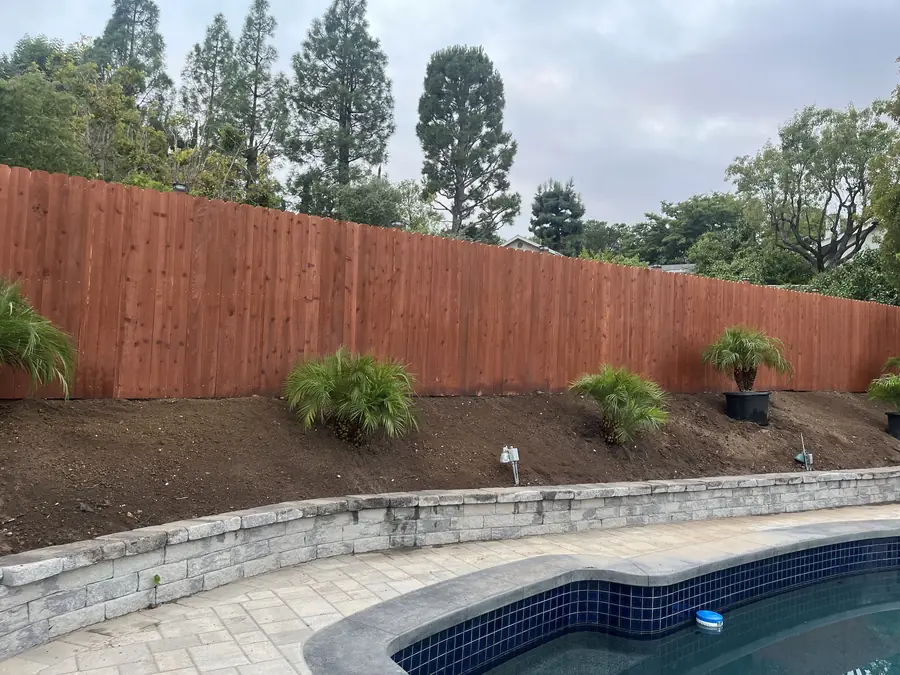
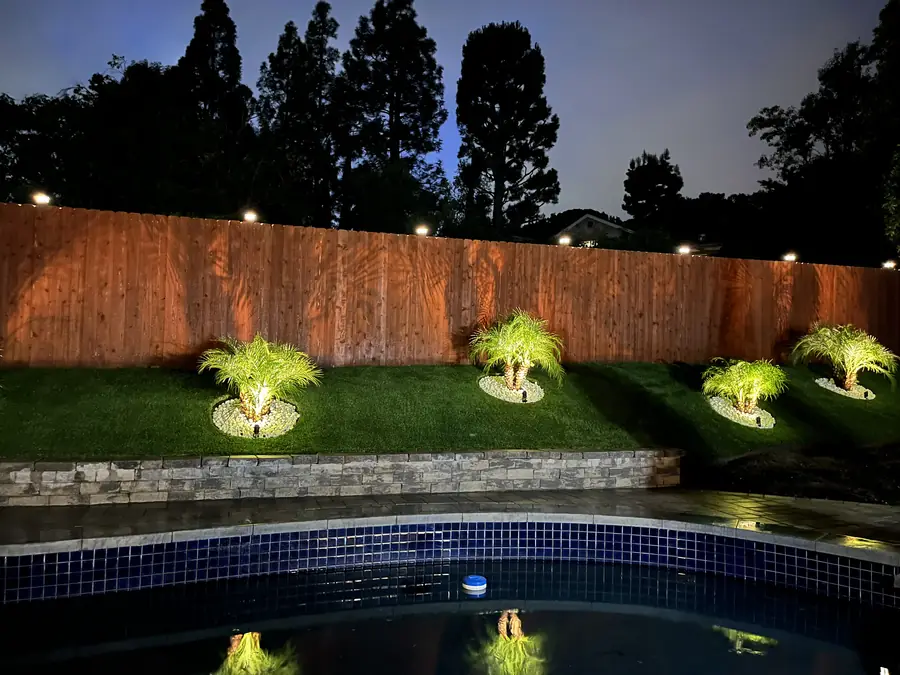
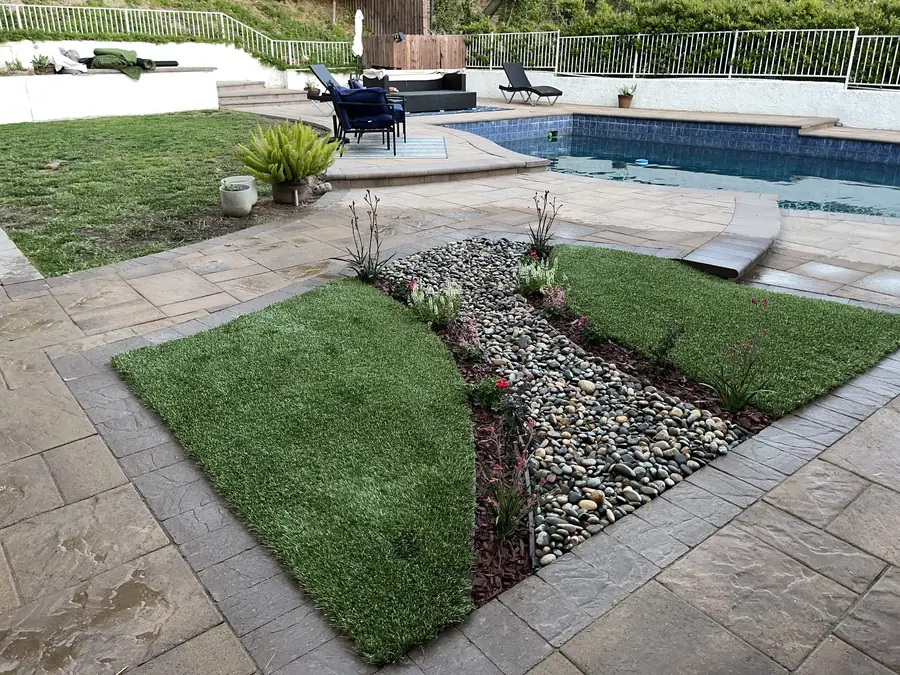
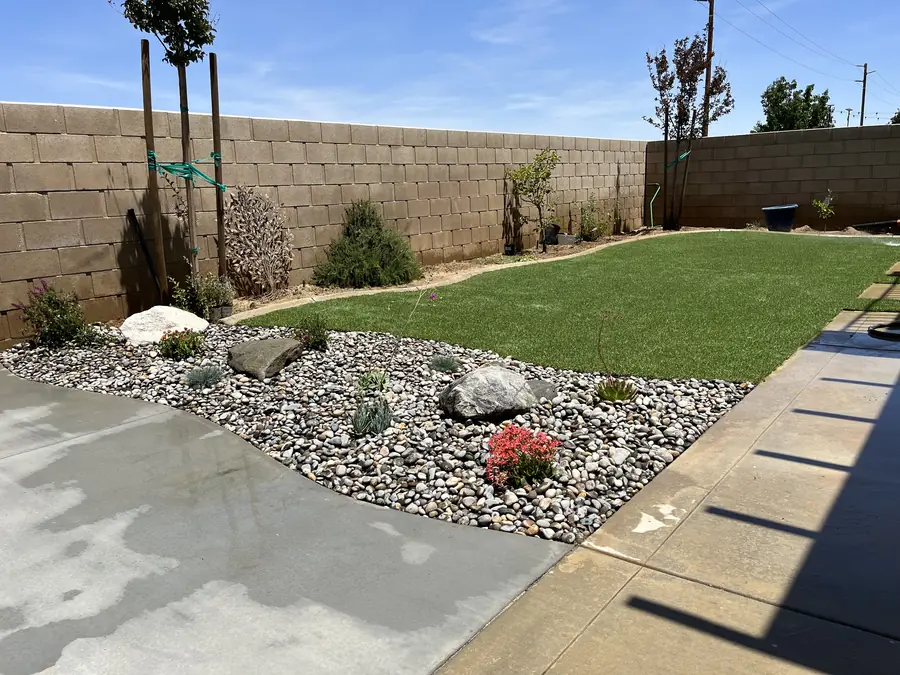
That depends on how the space gets used and how much water you want to buy. Sod is the right answer if children or a dog need real grass and someone will keep up with the mowing and the watering. Synthetic turf gives a green surface year round with no irrigation, which suits a small yard that takes heavy foot traffic. Drought tolerant planting on drip uses the least water and gives the most character, but it is a planted bed, not a play surface. Often the best plan for a compact yard is a modest patch of one plus beds of the other.
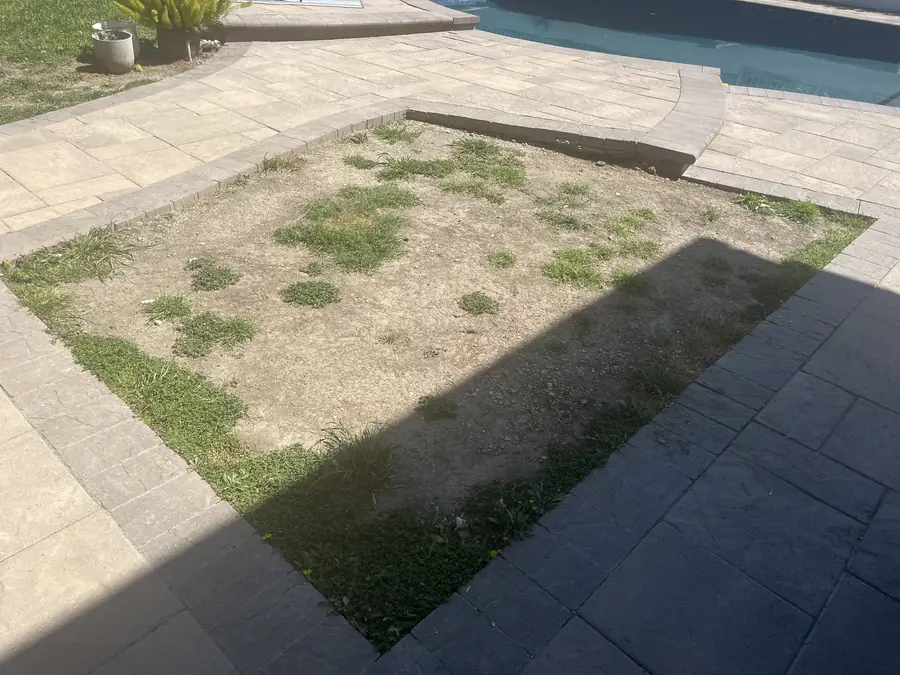
Cracked slabs come out in sections rather than all at once. We saw cut clean lines, break the concrete into pieces sized for the access route, and pull out any wire or rebar with it. Adjacent surfaces that are staying get edge protection so the demolition does not undermine them, and the exposed subgrade gets checked, because a slab that cracked badly often sat on soil that was never compacted or on a spot that holds water. Fixing the cause at that point costs very little. Pouring or paving over the same problem guarantees a repeat.
Old systems get evaluated part by part. Valves, a controller, and mainline in good condition can stay, while cracked poly, mismatched heads throwing wildly different amounts of water, and buried valve boxes nobody can locate are replaced. If the planting plan changes, the zoning almost certainly has to change too, because the old layout was designed for a lawn that is no longer there. Converting spray zones to drip where beds replace turf is common in a renovation. All of this happens while the trenches are open, not after the new surfaces are down.
Yes, and the tree usually sets the rules. Roots extend well past the canopy, so we hand dig in that zone, avoid cutting anything structural, and keep heavy equipment and material stockpiles off the root area to prevent compaction. Paving near a trunk needs either distance or a design that floats over the roots rather than trenching through them. Planting underneath has to accept dry shade. On a small Arleta lot a mature tree is often the best thing in the yard and the hardest to replace, so we design around it deliberately.
The sequence does not vary: demolition and haul away, grading and drainage, utilities and irrigation, hardscape, then planting. Each stage buries the one before it, which is why the order holds. Grading has to be right before pipe is laid, pipe has to be in before base is compacted, and base has to be set before pavers or concrete go down. Plants go in last so they are not trampled, driven over, or coated in dust. Any contractor offering to install the patio first and sort out drainage later is setting up a future demolition job.
Rain reveals what a dry site hides, so we ask what you have actually seen. A puddle that lingers by the back door, water sheeting toward the foundation, a soggy corner that never dries: each points somewhere different. Flat lots throughout Arleta mean water has no natural exit, so the fix is usually a combination of rebuilt slope, area drains at the collection points, and solid pipe carrying it out to the curb or another safe outlet. Downspouts often get tied into the same system. We solve this during grading, while the ground is open and it is inexpensive.
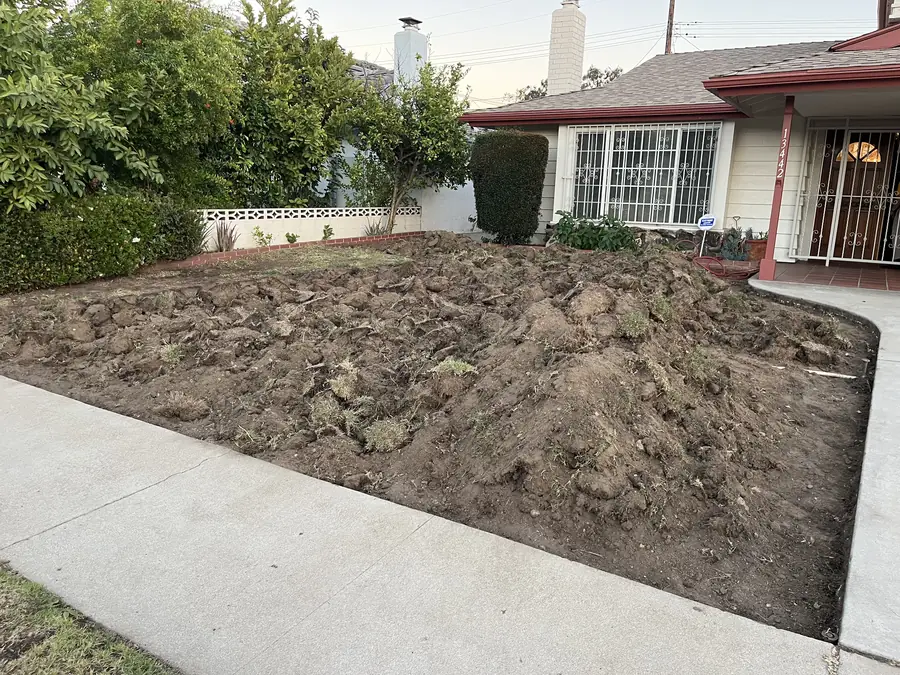
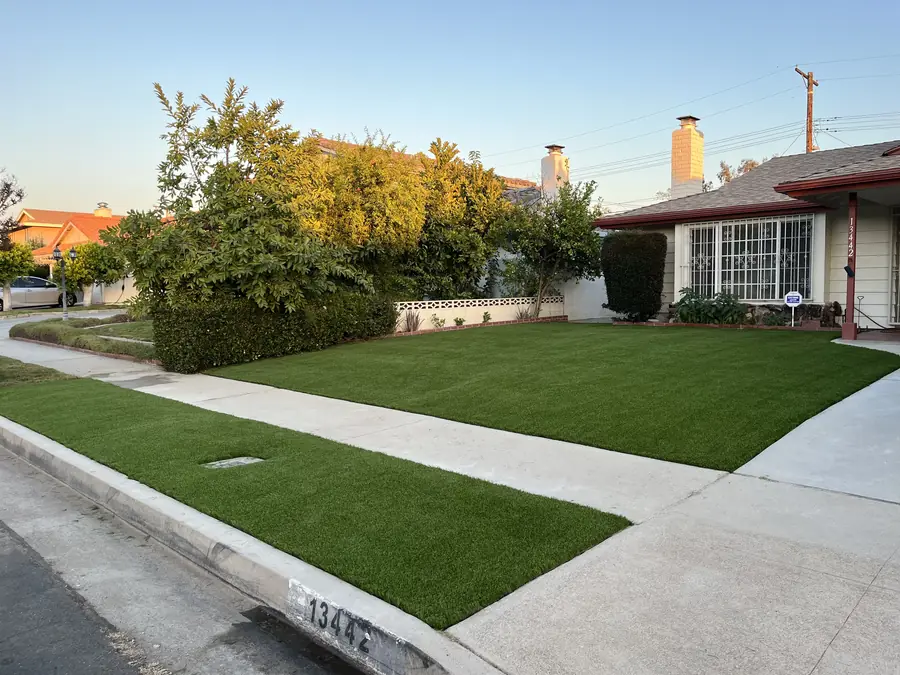
Often it is, because the two are usually the same age and failing in the same ways. The front yard is what everyone sees, it is typically the larger irrigation water user thanks to old lawn, and the crew, equipment, and access protection are already on site. Doing both together avoids paying mobilization twice. It also keeps the property consistent, since a refreshed backyard behind a tired front yard leaves the curb telling a different story. If the budget only stretches to one, we talk through which one gives you more day to day.
By cutting the number of ideas down. A compact Arleta yard shows everything at once, so several small features competing for attention read as busy rather than generous, and there is nowhere to hide an awkward transition. A renovation is the moment to consolidate: one well proportioned patio instead of two small ones, one continuous planting bed instead of scattered pockets, one paving material rather than several. Restraint is what makes a small yard feel finished. We would rather delete an element during planning than build it and watch it crowd everything else.
It can, though on a lot this size the case for staging is weaker than it looks. If staging is necessary, the split has to follow the build order rather than geography. Demolition, grading, drainage, and any utility runs belong in the first stage across the entire yard, even the parts that will not be finished yet, because going back to open the ground later means undoing new work. Hardscape can follow, planting after that. What does not work is completing one half and starting the other from scratch much later.
Some of it does. Arleta falls inside the City of Los Angeles, so Los Angeles Building and Safety is the authority for permits on items such as structures, electrical, gas lines, driveway work in the public right of way, and retaining walls above the height threshold. Straight replacement of planting, irrigation, or a dry laid patio generally does not. We identify which parts of your renovation are permitted work during planning rather than after demolition is finished, because that timing affects the schedule and the sequence of inspections.
Daniels Landscaping crews, and nobody else. One licensed contractor stays accountable for the work. The same team that breaks out the old concrete also sets the grade, lays the pipe, builds the hardscape, and plants the beds. Keeping it all under one roof is why the work matches from stage to stage and why nothing sits idle waiting for an outside company to show up. When something needs adjusting, we adjust it, with no finger pointing between trades. You deal with one company from demolition through the final walkthrough.
Renovation is the easiest time to solve privacy, because the ground is already open and planting is being replaced anyway. Homes in Arleta sit close to one another, so we stand in the spots you will actually use, a seating area or the view out a kitchen window, and identify which sight lines are the problem. Then we treat those specific angles with a screen panel, an upright tree with a narrow footprint, or a hedge planted at the right distance so it does not need constant shearing to stay in bounds. Blanket screening around the whole perimeter is rarely necessary and eats a small yard.
Choose materials and plants that do not demand attention. Drought tolerant species on drip, generous mulch to hold moisture and suppress weeds, hardscape over a properly compacted base so it stays flat, and a smart controller that adjusts watering with the weather all reduce the ongoing workload. Practical budgets in Arleta usually favor exactly this trade, spending on the parts that last and skipping the ones that need constant fussing. A yard that looks good only when someone works on it every weekend is not a successful renovation, however well it photographs on the first day.
Reach Daniels Landscaping at (818) 443-9300 to schedule a site visit. We walk the existing yard with you, note what is worth keeping, check the access path for demolition and delivery, look at how water currently behaves, and listen to how you want to use the space. Afterward you receive a free written estimate laying out the scope, the materials, and the stages, so the price is on paper before any work begins. Our California license number is 1138709, and the crew doing the work is our own.